Which Country Has the Oldest Heritage? India's Ancient Sites Explained
Ancient Heritage Site Explorer
Select a Category
Click on any site below to view details.
Select a Site
Choose a category and click a site to see its historical significance, dates, and unique features.
When you think of "ancient," what pops into your head? Egypt’s pyramids? Greece’s Acropolis? Or perhaps the stone circles of Stonehenge? It is a common trap to assume that only a few nations hold the title for the world’s oldest history. But if we are talking about continuous civilization and unbroken cultural heritage, one country stands out above the rest: India.
This isn’t just about finding old rocks in the ground. It is about living traditions, languages, and spiritual practices that have survived for thousands of years without breaking. While other great empires rose and fell, leaving behind only ruins, India’s heritage has evolved continuously from its earliest roots to the present day. Let’s look at why India claims this title and which specific sites prove it.
The Case for Continuity: Why Age Isn't Just About Ruins
To understand why India holds the crown for the oldest living heritage, we need to define what we mean by "heritage." In archaeology, there is a difference between an "ancient site" and a "continuous civilization." Many places have incredibly old artifacts-like Göbekli Tepe in Turkey, which dates back to 9500 BCE-but these were isolated settlements that did not evolve into a continuous modern culture.
Indian Civilization is unique because it offers an unbroken chain of history. The Vedic period, the Gupta Empire, the Mughal era, and British colonialism all layered onto a foundation that was already thousands of years old when Alexander the Great arrived in 326 BCE. Unlike Rome or Athens, where the original language and daily religious practices largely vanished or transformed beyond recognition, Sanskrit liturgy, yoga, and Ayurveda are still practiced today exactly as they were millennia ago. This continuity makes India’s heritage "living" rather than just "historical."
The Indus Valley Civilization: The Foundation
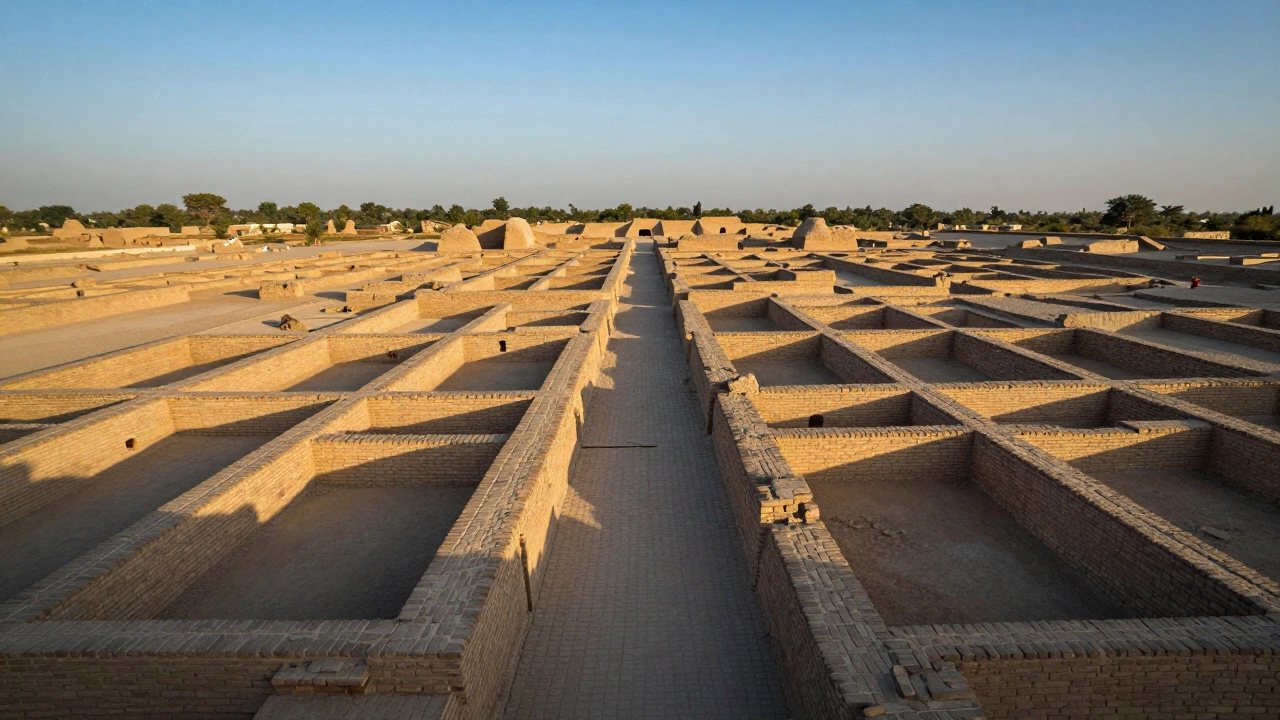
If you want to see the physical proof of India’s antiquity, you start with the Indus Valley Civilization (Harappan Civilization). Dating back to roughly 3300 BCE, this urban culture predates the Egyptian pyramids and the Sumerian ziggurats in Mesopotamia. It covered a massive area across modern-day Pakistan and northwest India.
What makes this civilization so impressive is not just its age, but its sophistication. The cities of Mohenjo-daro and Harappa featured grid-planned streets, advanced drainage systems, and standardized weights and measures. These weren't primitive villages; they were highly organized urban centers. Although the script of the Indus Valley remains undeciphered, the archaeological evidence shows a complex society that laid the groundwork for later Indian culture.
| Civilization | Approximate Start Date | Key Feature | Continuity to Present? |
|---|---|---|---|
| Indus Valley (India/Pakistan) | 3300 BCE | Urban planning, drainage | Yes (Cultural/Spiritual) |
| Sumerian (Mesopotamia/Iraq) | 4500 BCE | Writing (Cuneiform), Cities | No (Language/Culture lost) |
| Egyptian (Egypt) | 3100 BCE | Pyramids, Hieroglyphs | No (Pharaonic culture ended) |
| Chinese (Yellow River) | 2070 BCE | Bureaucracy, Bronze work | Yes (Strong continuity) |
Note that while Sumer is older in terms of writing, the cultural link to modern Iraq is weak. China is the only other major competitor for "continuous civilization," but India’s spiritual and philosophical exports (Buddhism, Hinduism) have had a wider global impact on human thought patterns.
UNESCO World Heritage Sites: A Timeline of Antiquity
India is home to 42 UNESCO World Heritage Sites, making it one of the top countries globally for protected heritage. But which ones are the oldest? Here are the heavy hitters that demonstrate India’s deep historical roots.
1. Nalanda Mahavihara (Bihar)
Founded around the 5th century CE, Nalanda was the world’s first residential university. It attracted students from China, Korea, and Southeast Asia. The ruins show a massive complex of monasteries and viharas (monastic quarters). It proves that India was a center of higher learning and intellectual exchange long before European universities existed.
2. Ajanta and Ellora Caves (Maharashtra)
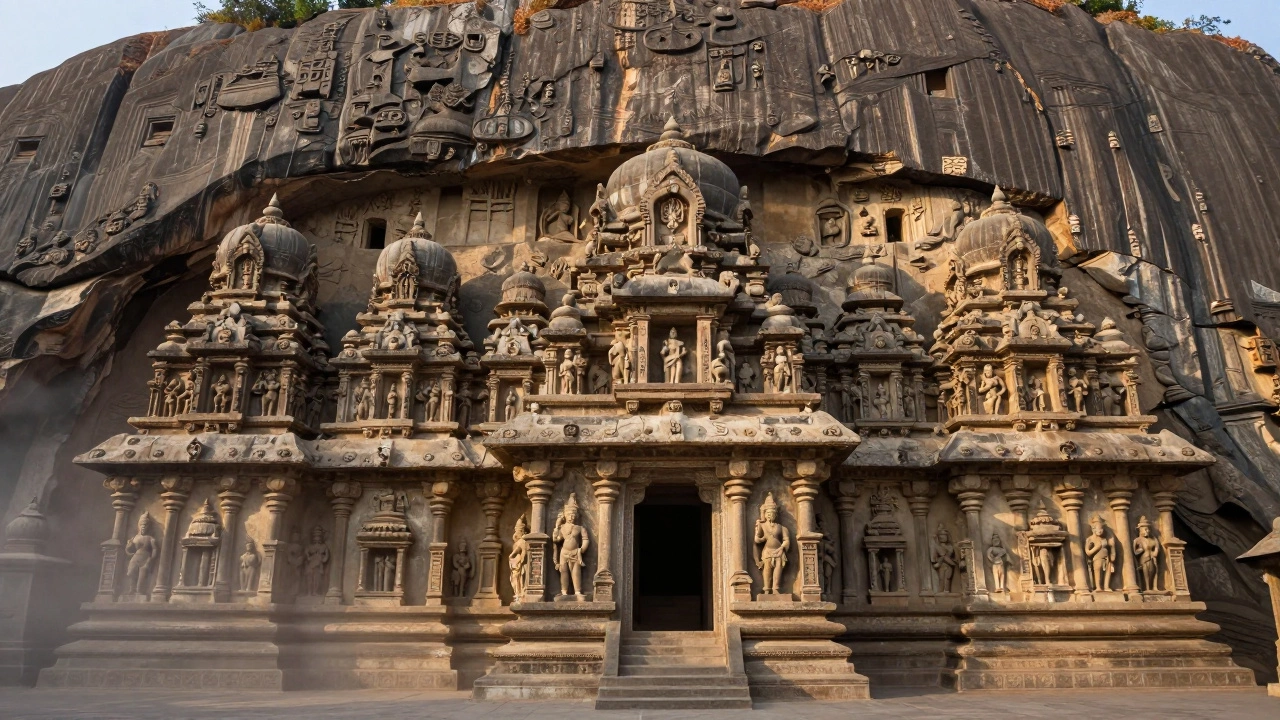
These rock-cut cave temples date from the 2nd century BCE to the 10th century CE. The Ajanta caves feature some of the finest examples of ancient Indian art, particularly murals depicting Jataka tales (stories of Buddha’s past lives). The Ellora Caves include the Kailasa Temple, carved entirely from the top down from a single volcanic rock face. The engineering skill required to do this without collapsing the structure is mind-boggling even by today’s standards.
3. Sanchi Stupa (Madhya Pradesh)
Commissioned by Emperor Ashoka in the 3rd century BCE, the Great Stupa at Sanchi is one of the oldest stone structures in India. It represents early Buddhist architecture and features intricate gateways (toranas) carved with scenes from Buddha’s life. It serves as a tangible link to the time when Buddhism spread across Asia.
4. Hampi (Karnataka)
While slightly younger (14th-16th century CE), the ruins of Hampi, the capital of the Vijayanagara Empire, showcase a peak of Dravidian architecture. The Virupaksha Temple complex has been active for centuries, demonstrating how religious sites in India often layer new construction over ancient foundations.
The Spiritual Thread: Temples That Never Closed
One argument for India having the "oldest heritage" is the existence of temples that have been in continuous worship for over 1,000 years. Most Western cathedrals or mosques were built, used, destroyed, and rebuilt. In India, many temples have seen priests perform rituals every single day for a millennium.
- Kashi Vishwanath Temple (Varanasi): Varanasi is considered one of the oldest continuously inhabited cities in the world. The temple itself has been rebuilt several times due to invasions, but the site’s sanctity dates back to the Vedic period (c. 1500 BCE).
- Brihadeeswarar Temple (Thanjavur): Built in 1010 CE by Rajaraja Chola I, this granite marvel is still fully functional. The main tower (vimana) is 66 meters high and was constructed without mortar. It remains a center of daily worship and festival activity.
- Meenakshi Amman Temple (Madurai): Legend says the city of Madurai was founded by Shiva himself. The current temple structure dates to the 17th century, but it sits on a site that has been sacred since at least the 3rd century BCE, mentioned in the Sangam literature.
This unbroken ritual practice means that the "heritage" isn't locked behind glass cases. It is experienced through sound, smell, and participation. You can hear the same chants recited today that were recited 2,000 years ago.
Comparing India to Other Contenders
It is fair to ask: What about Greece or Egypt? They are undeniably ancient. However, their "heritage" is largely archaeological. If you walk through Athens, you are looking at ruins of a civilization that ended with the Roman conquest and later Christianization. The ancient Greek religion is gone. In contrast, if you walk through Varanasi or Rishikesh, you are stepping into a living tradition that has absorbed foreign influences but retained its core identity.
China is the closest rival. It has a written history dating back to the Shang Dynasty (c. 1600 BCE) and a strong sense of cultural continuity. However, India’s diversity adds another layer. India’s heritage includes multiple distinct linguistic, architectural, and culinary traditions that coexist. From the Dravidian style of the south to the Nagara style of the north, the variety within a single country is unmatched.
How to Experience India’s Oldest Heritage
If you want to witness this depth of history firsthand, here is a practical guide to visiting the most significant ancient sites.
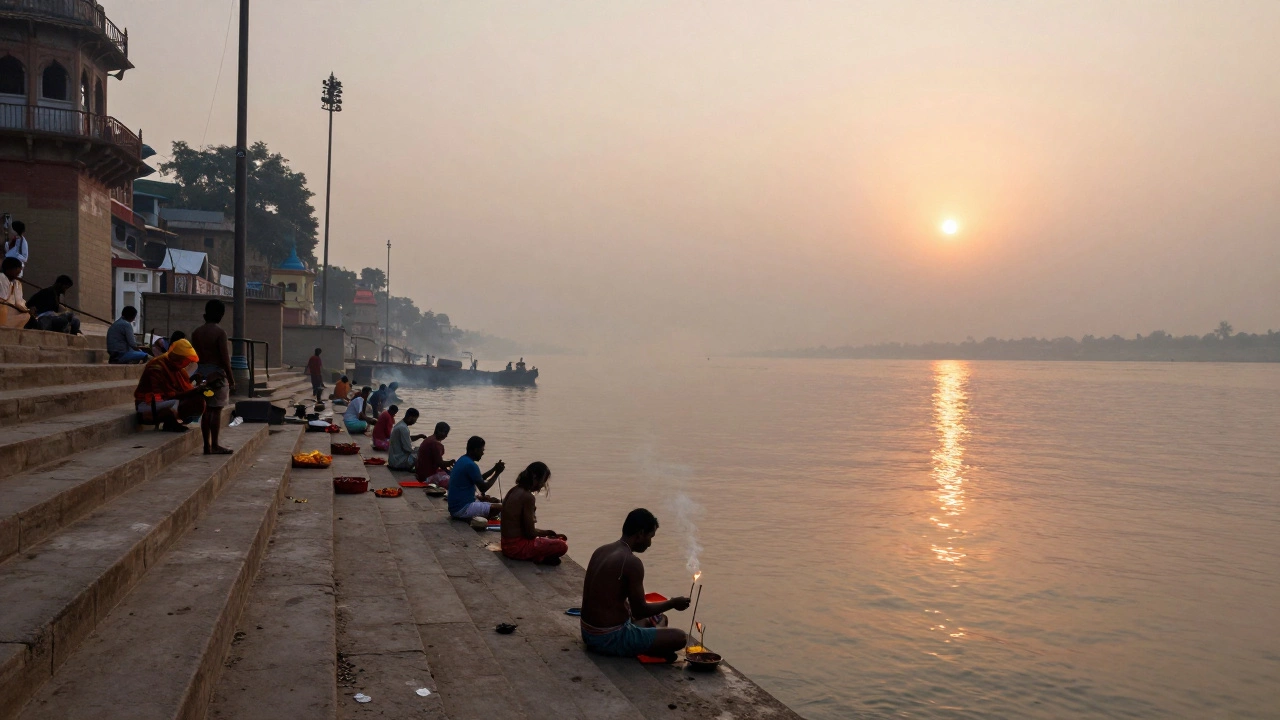
- Start in Varanasi: Take a boat ride on the Ganges at dawn. Watch the rituals along the ghats. Visit the Sarnath Museum to see artifacts from the time of Buddha. This gives you a feel for the spiritual continuity.
- Head to Madhya Pradesh: Spend two days in Sanchi and Ujjain. Sanchi shows you the architectural roots of Buddhism. Ujjain hosts the Kumbh Mela every 12 years, one of the largest peaceful gatherings of humans on Earth, rooted in myths older than recorded history.
- Explore Maharashtra: Visit Ajanta and Ellora. Hire a local guide who can explain the symbolism in the paintings. Without context, they look like beautiful art; with context, they reveal the social and religious life of ancient India.
- End in Tamil Nadu: See the Brihadeeswarar Temple in Thanjavur and the Meenakshi Temple in Madurai. Notice the intricate carvings and the scale of the structures. Talk to the priests about the daily rituals-they will likely tell you stories passed down from their grandparents.
Preservation Challenges and Future Outlook
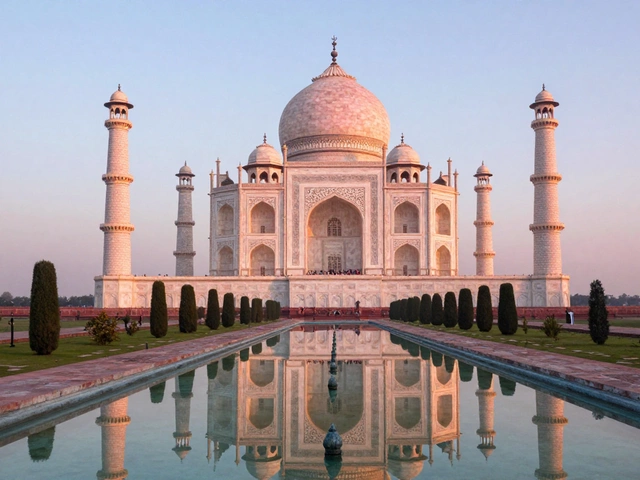
With such old heritage comes the risk of decay. Pollution, humidity, and overtourism threaten these sites. For example, the Taj Mahal (though Mughal, not ancient) is turning yellow due to air pollution. Older stone temples suffer from lichen growth and water damage.
The Archaeological Survey of India (ASI) works tirelessly to conserve these sites using traditional techniques combined with modern science. Digital archiving projects are also underway to create 3D models of fragile structures. As a traveler, you can help by respecting guidelines, not touching ancient surfaces, and supporting local conservation efforts.
India’s claim to the oldest heritage is not just about being "first." It is about being "still here." The ideas, arts, and spirituality born in the Indus Valley and refined in the Gupta courts continue to shape millions of lives today. That resilience is what makes it truly ancient.
Is India older than Egypt?
In terms of urban civilization, yes. The Indus Valley Civilization (c. 3300 BCE) emerged around the same time as early dynastic Egypt (c. 3100 BCE). However, Egypt’s Pharaonic culture ended with the rise of Christianity and Islam, whereas India’s cultural and spiritual traditions have continued uninterrupted for millennia.
What is the oldest building in India?
The Great Stupa at Sanchi is one of the oldest surviving stone structures, commissioned by Emperor Ashoka in the 3rd century BCE. However, many wooden structures and earlier mud-brick buildings from the Indus Valley have not survived. The cave temples at Barabar Hills (3rd century BCE) are also among the oldest intact rock-cut structures.
Why is India considered to have continuous civilization?
India is considered to have continuous civilization because its core religious practices (Hinduism, Buddhism, Jainism), languages (Sanskrit derivatives), and social structures have persisted despite political changes and foreign invasions. Unlike Rome or Greece, where the original pagan religions died out, Indian spiritual traditions remain vibrant and widely practiced today.
Which UNESCO site in India is the oldest?
Among UNESCO World Heritage Sites, the Rock Shelters of Bhimbetka are the oldest, with paintings dating back to the Paleolithic era (over 30,000 years ago). For structural heritage, the Great Stupa at Sanchi (3rd century BCE) and the Ajanta Caves (2nd century BCE) are among the oldest monumental sites.
Can tourists visit the Indus Valley ruins?
Yes, but most major Indus Valley sites like Mohenjo-daro and Harappa are located in modern-day Pakistan. In India, you can visit sites like Dholavira (Gujarat) and Kalibangan (Rajasthan), which are part of the same civilization and offer excellent insights into Harappan urban planning and agriculture.

About Author