How Much Should a 3-Day Trip Cost? Real Budget Breakdowns for 2026
3-Day Trip Budget Calculator
Plan Your Trip
Your Estimated Budget
Planning a 3-day trip shouldn’t feel like guessing how much money you’ll need. Too many people either overspend because they’re scared of cutting corners, or end up miserable because they skimped too hard. The truth? A solid 3-day getaway can cost anywhere from $300 to $1,200-and it all depends on where you go, how you travel, and what kind of experience you want. No fluff. No vague advice. Just real numbers from real trips taken in 2026.
What Drives the Cost? The Big Three
Every 3-day trip breaks down into three major buckets: transport, accommodation, and daily spending. Skip one, and you’ll feel it. Overdo one, and you’ll burn cash fast.
Transport is usually the biggest surprise. If you’re flying domestically in Australia, a round-trip ticket from Sydney to Melbourne can cost $180 on a budget airline if you book 3 weeks ahead. But if you wait until the last minute? That same flight jumps to $450. Train tickets? A sleeper on the Indian Pacific from Sydney to Adelaide runs about $320 one-way. For shorter hops, driving might be cheaper-if you factor in fuel, tolls, and parking. A 4-hour drive to the Blue Mountains? Fuel and parking will run you $60 total.
Accommodation is where people get stuck. A basic motel in a regional town like Byron Bay or Coffs Harbour? $120 a night. A mid-range hotel in a city center? $200. Luxury? $400+. For 3 nights, that’s $360 to $1,200 just for a bed. Hostels? $45 a night. Airbnbs? $100-$160, depending on location and amenities. If you’re traveling solo, a hostel can cut your lodging costs in half. Travel with a friend? Splitting a room makes a huge difference.
Daily spending includes food, entry fees, local transport, and random souvenirs. In a city like Melbourne or Brisbane, a decent meal at a local café runs $20-$25. A pub dinner? $30. A fancy dinner? $60+. Coffee? $5. A museum ticket? $15-$25. A bus or train ride? $3-$5. If you’re eating cheap-groceries, sandwiches, street food-you can keep daily spending under $50. If you’re dining out and doing paid activities? You’ll easily hit $120 a day.
Real Trip Examples from 2026
Here’s what three different 3-day trips actually cost last month.
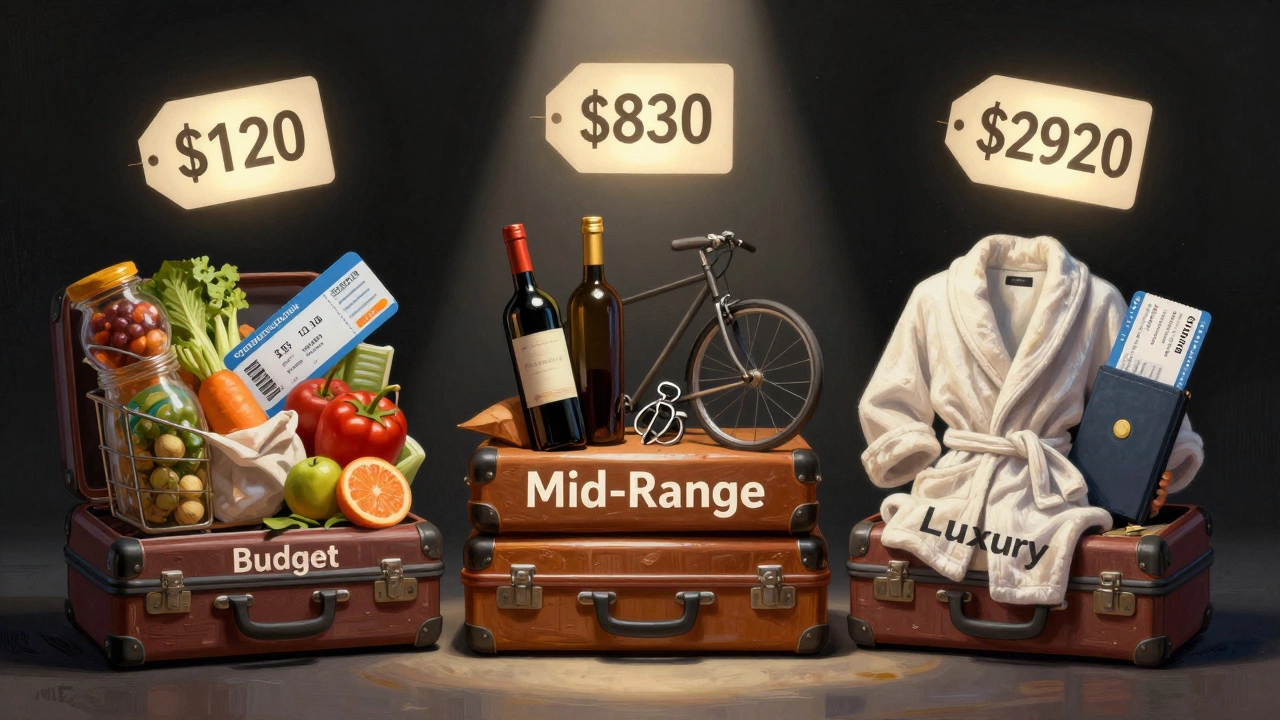
- Budget Backpacker Trip (Sydney to Wollongong): Took the train ($28 round-trip), stayed in a hostel ($42 total for 3 nights), ate mostly from supermarkets and a few $12 street dumplings. Hit up the beach, free coastal walk, and a $10 art gallery. Total: $120.
- Mid-Range Couple’s Escape (Sydney to Hunter Valley): Drove ($50 fuel + $20 parking), stayed in a boutique B&B ($280/night × 2 = $560), had two nice dinners ($120 total), did a wine tasting ($40), and rented bikes ($30). Total: $830.
- Luxury Solo Getaway (Sydney to Gold Coast): Flew business class ($720 round-trip), stayed at a 5-star resort ($550/night × 3 = $1,650), ate at high-end restaurants ($200), booked a private beach cabana ($150), and got a spa treatment ($180). Total: $2,920.
Notice the pattern? The budget trip cost less than 10% of the luxury one. And none of them were “bad” trips-they were just different.

How to Cut Costs Without Sacrificing Fun
You don’t need to sleep in your car to save money. Here’s what actually works in 2026:
- Travel midweek. Flights and hotels are 20-40% cheaper Tuesday through Thursday. Weekend prices are inflated because everyone else is booking for Friday-Sunday.
- Use public transport. Skip the rental car unless you’re going deep into the bush. Most regional towns have decent bus networks. A multi-day pass costs $15-$25.
- Eat like a local. Skip tourist traps. Hit up farmers’ markets, food halls, or grocery stores. A $10 sandwich and a fruit salad from a local deli beats a $40 “tourist menu” every time.
- Free is powerful. National parks? Free entry. Beaches? Free. Public art walks? Free. Libraries with rooftop views? Free. Google “free things to do in [city]” before you go.
- Book ahead. Last-minute bookings cost more. Book flights 3-6 weeks out. Book accommodation 2-4 weeks out. You’ll save 15-30%.
What Not to Do
Here are the three most common mistakes people make on short trips:
- Booking flights and hotels separately. Bundled deals (flight + hotel) often save 10-20%. Use sites like Booking.com or Expedia that show packages.
- Ignoring hidden fees. Resort fees, parking charges, cleaning fees on Airbnbs, baggage fees on budget airlines-these add up fast. Always read the fine print before clicking “confirm.”
- Trying to do too much. A 3-day trip isn’t a race. If you try to hit 5 attractions a day, you’ll end up exhausted and spending more on taxis and fast food. Pick 2-3 highlights and soak them in.
What’s a Fair Budget for You?
Ask yourself these three questions:
- How important is comfort? Do you need a private bathroom? A quiet room? A pool? If yes, budget more.
- How much do you eat out? If you’re a foodie, set aside $40-$60 a day. If you’re fine with snacks and sandwiches, $20 is enough.
- What’s your travel style? Are you the type who loves guided tours? Then budget $50-$100 per activity. Do you wander aimlessly? Stick to free experiences.
Here’s a quick guide:
| Trip Type | Transport | Accommodation | Daily Spending | Total |
|---|---|---|---|---|
| Budget | $30-$80 | $135-$180 | $150 | $300-$400 |
| Mid-Range | $150-$300 | $400-$600 | $300-$400 | $850-$1,200 |
| Luxury | $500+ | $1,000+ | $500+ | $2,000+ |
Final Tip: Plan, Then Adjust
Start with a rough budget. Pick your destination. Check prices for flights, trains, or fuel. Book accommodation. Then, map out your daily plans. If you’re over budget? Cut one fancy dinner. Swap a paid tour for a free walking trail. Trade a hotel for a hostel. You don’t need to stick to your plan-but you do need to know where you stand.
A 3-day trip doesn’t have to drain your bank account. It just needs smart choices. You don’t need to go far. You don’t need to spend a lot. You just need to know what you’re paying for-and why.
Is $500 enough for a 3-day trip?
Yes, $500 is more than enough for a comfortable 3-day trip if you’re smart. You can fly domestically for under $150, stay in a mid-range hotel or Airbnb for $100-$120 a night, eat mostly local meals, and still have room for a few activities. This budget works best for domestic trips within Australia, especially if you travel midweek and avoid tourist hotspots. Just skip luxury hotels and fancy restaurants, and you’ll be fine.
Should I book flights or accommodation first?
Book flights first. Flight prices change faster than hotel rates, and your destination often depends on what’s available. Once you have your travel dates locked in, search for accommodation nearby. You’ll have more control over your budget and can find deals that match your schedule. Also, many sites show flight + hotel bundles after you’ve searched for flights-those can save you 10-20%.
Are weekend getaways cheaper than weekday trips?
No, they’re usually more expensive. Friday and Sunday nights are peak demand. Hotels charge premium rates. Flights cost more. Even restaurants mark up prices. If you can take a trip Tuesday-Thursday, you’ll save 20-40% across the board. Weekends are great for social trips-but not for saving money.
How much should I budget for food?
For food alone, budget $20-$40 per day if you’re eating simply-groceries, sandwiches, street food, or local cafes. If you’re dining out for lunch and dinner, plan $60-$80 per day. One fancy dinner can cost $50-$100, so if you want one, cut back elsewhere. In cities like Sydney or Melbourne, a decent lunch costs $18-$25. A beer at a pub? $10-$12. Always check if drinks are included in restaurant prices.
Can I do a 3-day trip without a car?
Absolutely. Most popular 3-day destinations in Australia-like the Blue Mountains, Byron Bay, or the Gold Coast-are well-connected by trains, buses, or ride-shares. In cities, public transport is reliable. Even in regional towns, many attractions are within walking distance or a short bus ride. Only rent a car if you’re heading into remote areas like the Outback or national parks with no public access. Otherwise, you’re paying for parking, fuel, and insurance you don’t need.

About Author