Which Country Has the Richest Heritage? A Global Comparison
Global Heritage Richness Estimator
Select a country below to view its estimated "Heritage Richness Score." This score combines quantitative data (UNESCO sites) with qualitative factors like architectural diversity, living traditions, and historical depth as discussed in the article.
Italy
Renaissance & RomanChina
Dynasties & NatureIndia
Diversity & LivingEgypt
Ancient MonumentsHeritage Profile
Estimated Richness Index
0
out of 100
Verdict:
Walk through the streets of Rome, and you are walking on layers of empires. Fly to Cairo, and you stand in the shadow of pharaohs who ruled before Rome was even a village. But if you think those two have the monopoly on history, you haven’t looked closely enough at the Indian subcontinent. The question which country has the richest heritage isn’t just about counting old stones. It’s about depth, continuity, diversity, and how well that past survives into the present.
There is no single scientific formula for "richness." UNESCO tracks World Heritage Sites, which is a solid starting point, but it doesn’t tell the whole story. Some countries have massive physical monuments. Others have living traditions, languages, and arts that define their identity more than any building ever could. So, let’s break this down by looking at the heavy hitters: Italy, China, India, Egypt, and Mexico. We’ll look at the numbers, the types of heritage, and why India often surprises people when they realize the sheer scale of its historical footprint.
The Numbers Game: UNESCO Site Counts
If we go purely by volume, the race is tight. As of 2026, Italy and China consistently battle for the top spot, each boasting over 55-60 inscribed properties. These include everything from the Great Wall to the historic centers of Florence and Venice. But here’s where it gets interesting for travelers and historians alike: quantity doesn’t equal quality or density of experience.
India holds over 40 UNESCO World Heritage Sites, placing it firmly in the top tier globally. However, what makes India’s count deceptive is that these 40+ sites represent only a fraction of its protected monuments. The Archaeological Survey of India (ASI) protects over 3,600 centrally protected monuments, not to mention thousands more state-protected ones. In contrast, many European countries have fewer total sites because their entire landscapes are often treated as heritage zones rather than individual listings.
| Country | UNESCO Sites | Primary Heritage Type | Key Challenge |
|---|---|---|---|
| Italy | ~59 | Renaissance Art & Roman Ruins | Overtourism |
| China | ~57 | Ancient Dynasties & Natural Parks | Urban Development Pressure |
| Germany | ~52 | Cathedrals & Industrial Heritage | Fragmented History |
| India | ~42 | Religious Architecture & Living Traditions | Maintenance & Awareness |
| Egypt | ~7 | Ancient Monuments | Political Instability |
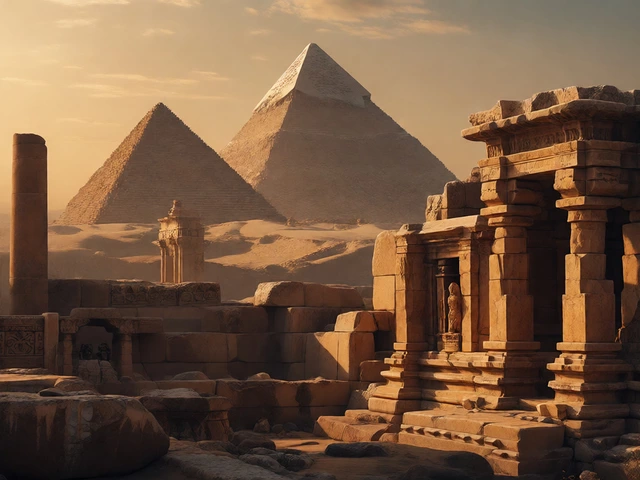
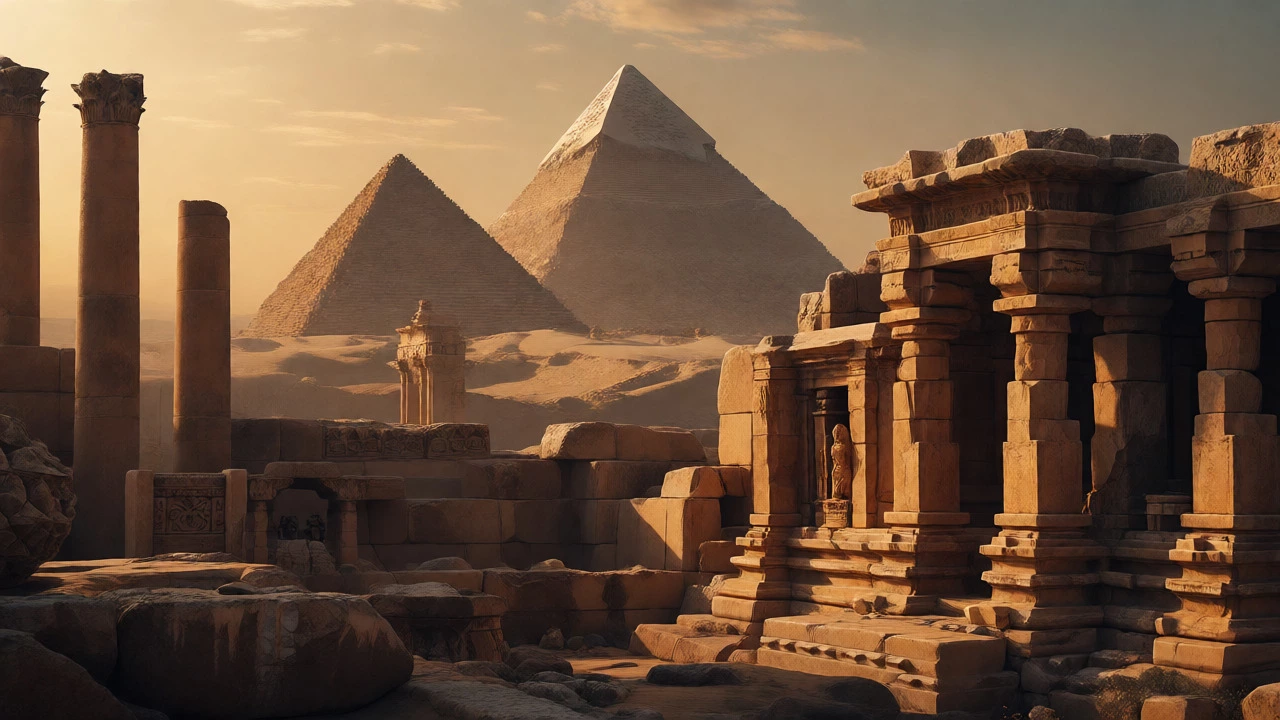
Notice Egypt’s low number? That’s misleading too. Egypt’s heritage is incredibly concentrated. You don’t need fifty sites when the Pyramids of Giza and the Valley of the Kings define human history for most people. But concentration also means fragility. If something happens to Luxor, a huge chunk of Egyptian heritage suffers. India’s spread-out nature offers resilience; if one site is damaged, there are dozens of others across different states with distinct architectural styles.
Diversity vs. Depth: Where India Shines
When we ask about richness, we should look at variety. Europe is largely dominated by Christian architecture-cathedrals, abbeys, churches. China focuses heavily on imperial dynastic structures and Confucian/Buddhist influences. Now, look at India. Within a single trip from Delhi to Chennai, you might encounter:
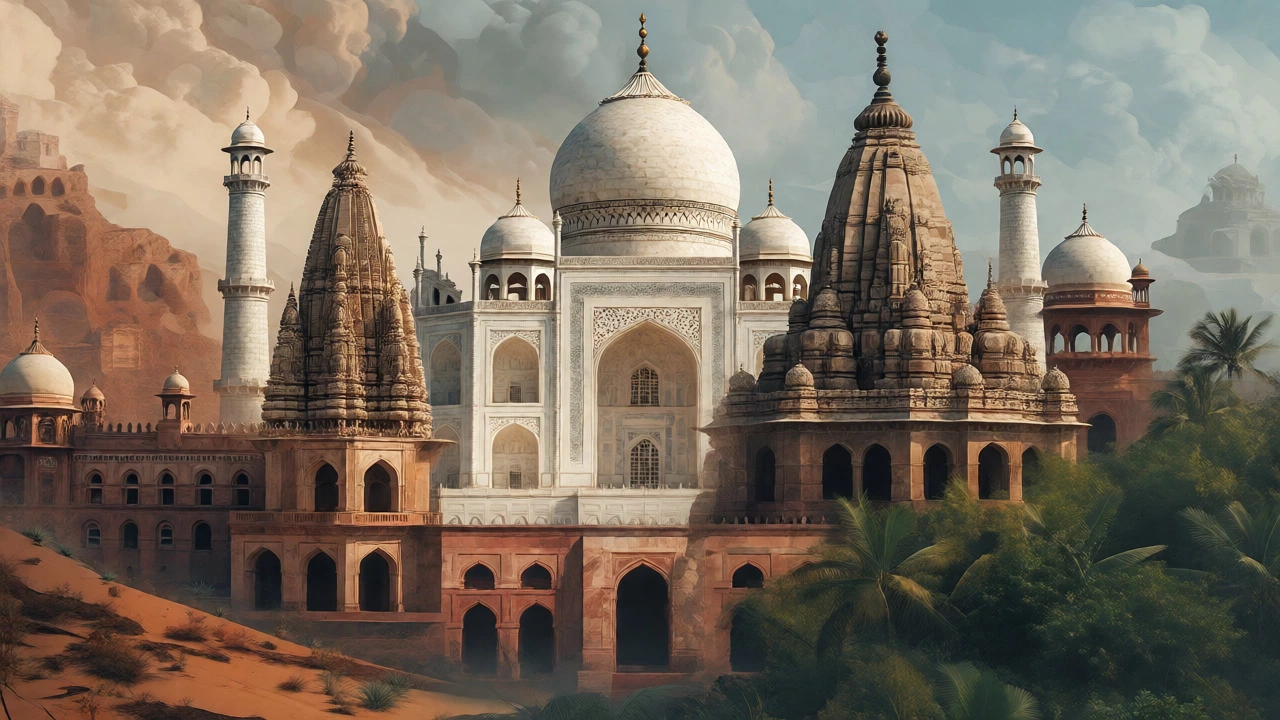
- Mughal Islamic Architecture: Think Red Fort or Taj Mahal.
- Hindu Temple Complexes: Like Khajuraho or Brihadisvara.
- Buddhist Stupas: Such as Sanchi or Ajanta Caves.
- Jain Temples: Intricate marble works like Ranakpur.
- Colonial British Heritage: Victoria Terminus or Gateway of India.
- Portuguese Influence: Old Goa churches.
This isn’t just a list of buildings. These represent overlapping civilizations that coexisted, fought, and blended over millennia. No other country has such a dense layering of religious and cultural architectures in such close geographic proximity. In Italy, you’re mostly dealing with Roman, Medieval, and Renaissance layers. In India, you’re dealing with Indus Valley, Vedic, Mauryan, Gupta, Chola, Vijayanagara, Mughal, Maratha, Sikh, and Colonial layers. That is an incredibly high semantic density of history.
Living Heritage: The Intangible Factor
Here is the part most rankings miss. Heritage isn’t just dead stone; it’s living culture. UNESCO also lists Intangible Cultural Heritage. This includes yoga, Kumbh Mela, Ramlila, Kutiyattam theatre, and traditional knowledge systems. India ranks among the top nations for intangible heritage elements. Why does this matter?
Because in many European cities, heritage is museumified. You visit the Colosseum, take a photo, and leave. In Varanasi or Udaipur, the heritage is active. People still perform rituals exactly as they did 2,000 years ago. The Ghats of Varanasi aren’t just ruins; they are functioning infrastructure for daily life. This "living" aspect adds a dimension of richness that static monuments can’t match. When you watch a classical dance form like Bharatanatyam in Tamil Nadu, you are witnessing a continuous tradition stretching back centuries. In many Western contexts, similar art forms were interrupted or revived artificially. In India, the chain of transmission remains unbroken.
Preservation Efforts: Who Does It Better?
Having rich heritage is one thing; keeping it intact is another. This is where the debate gets heated. Critics often point out that while India has more raw material, its preservation standards lag behind Italy or Japan. And they have a point. Graffiti on the Taj Mahal, pollution affecting sandstone in Rajasthan, and encroachment around heritage zones are real issues. The ASI has been underfunded for decades, relying on ticket revenue that barely covers maintenance costs.
Compare this to Italy, where the government invests heavily in conservation science. Or Japan, where wooden temples are rebuilt every few decades using original techniques-a practice recognized by UNESCO as a valid form of preservation. India is catching up. Recent initiatives like the Adopt a Monument scheme allow private companies to maintain sites like Humayun’s Tomb. The results have been mixed but promising. The key difference? In India, the challenge is scale. Protecting 3,600 major monuments across diverse climates-from the humid coasts of Kerala to the arid deserts of Rajasthan-is a logistical nightmare compared to protecting a smaller, wealthier nation’s assets.
Why Travelers Choose India Despite the Challenges
If preservation is harder, why do millions flock to India’s heritage sites? Because the experience is immersive. You can’t just "see" heritage in India; you feel it. The chaos, the smells, the sounds-it’s all part of the package. In Kyoto, you get serene, curated beauty. In Jaipur, you get vibrant, chaotic authenticity.
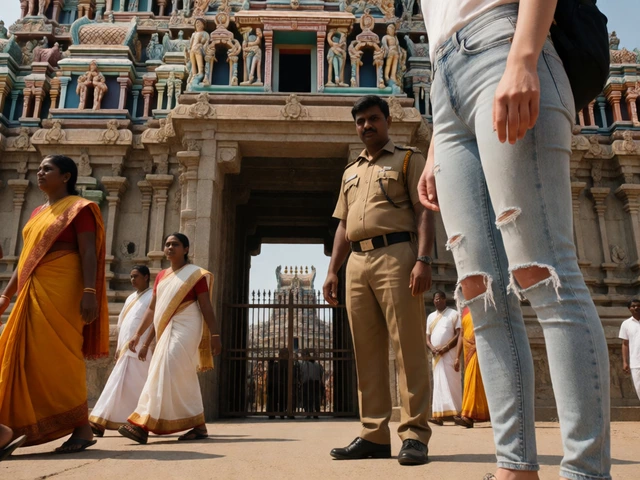
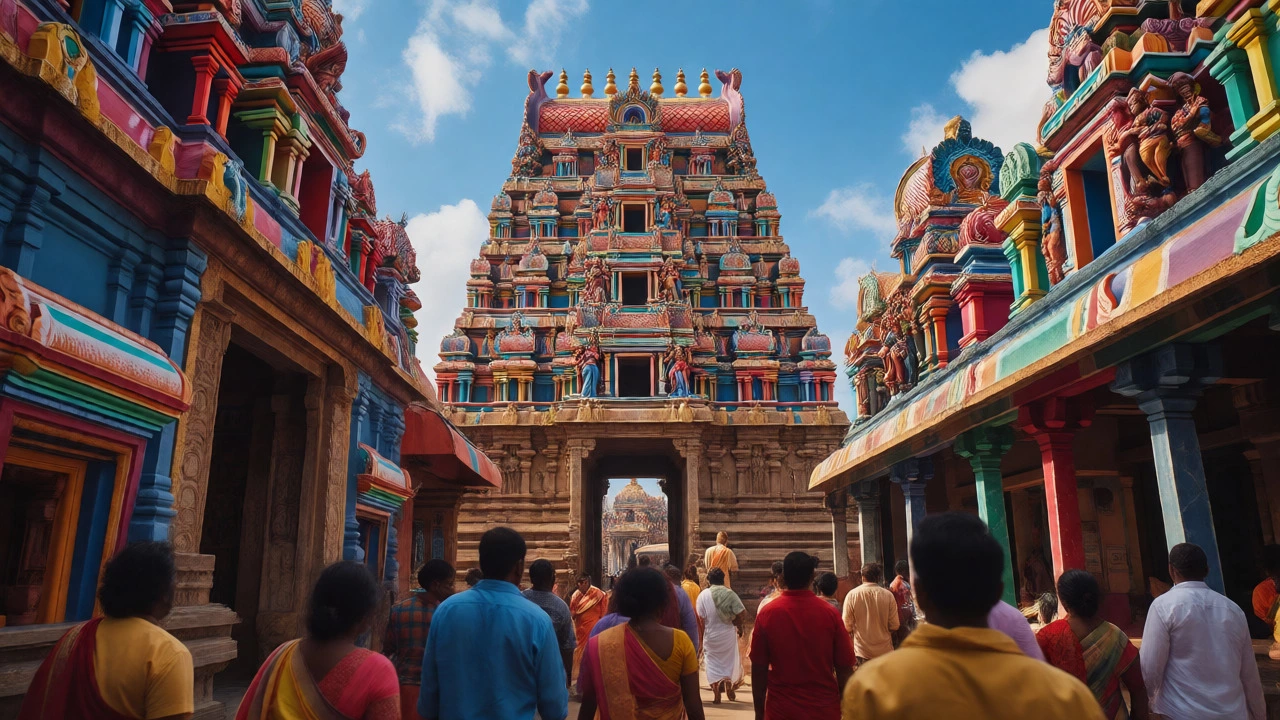
Consider the Golden Triangle (Delhi-Agra-Jaipur). It’s the most popular route for a reason. You see three distinct eras of power: Mughal, Rajput, and British. But venture further into South India, and you find Dravidian temple complexes that dwarf European cathedrals in intricate detail. The Meenakshi Temple in Madurai has 14 gopurams (gateway towers), some reaching 50 meters high, covered in thousands of colorful sculptures. There is nothing quite like it anywhere else on Earth.
Verdict: Is India the Richest?
So, who wins? If "richness" means the highest number of UNESCO plaques, Italy or China takes the crown. If it means the oldest continuous civilization, Egypt or Iraq might argue their case. But if "richness" is defined by the sheer diversity of cultures, religions, architectural styles, and living traditions packed into one national boundary, India has a very strong claim.
It’s not about beating Italy at its own game. It’s about offering something unique. India’s heritage is pluralistic. It tells the story of how Hindu, Muslim, Christian, Sikh, Jain, and Buddhist communities shaped a land together. For a traveler seeking depth, complexity, and a connection to a living past, India offers a richness that few other places can replicate. The next time someone asks you which country has the richest heritage, don’t just check the stats. Ask them if they’ve ever stood inside a 1,000-year-old temple while a priest chants verses that date back to the same era. That’s the kind of richness numbers can’t measure.
Which country has the most UNESCO World Heritage Sites?
As of recent counts, Italy and China typically hold the top positions, each with over 55-60 sites. They frequently swap first place depending on new inscriptions. India usually ranks within the top ten, with over 40 sites.
Is India's heritage older than Europe's?
Parts of India's heritage are significantly older. The Indus Valley Civilization dates back to 3300 BCE, predating the rise of Rome and contemporary with ancient Egypt and Mesopotamia. Many Hindu and Buddhist sites also predate medieval European architecture by centuries.
What is the best region in India for heritage tourism?
The Golden Triangle (Delhi, Agra, Jaipur) is the most accessible for beginners. For deeper architectural diversity, Rajasthan offers forts and palaces, while South India (Tamil Nadu, Karnataka) provides magnificent Dravidian temple complexes. North-East India offers unique tribal and Buddhist heritage.
How does India preserve its heritage sites?
Primarily through the Archaeological Survey of India (ASI), which maintains centrally protected monuments. Recent efforts include public-private partnerships like the 'Adopt a Monument' scheme, which helps fund maintenance and visitor facilities at major sites like Humayun's Tomb.
Does having more heritage sites mean better tourism?
Not necessarily. Tourism depends on accessibility, infrastructure, safety, and marketing. While India has immense heritage, challenges like overcrowding, lack of signage, and inconsistent maintenance can affect the tourist experience compared to countries with highly managed heritage circuits like Japan or France.

About Author

Popular Posts