What is India's Rich Heritage? A Guide to Cultural Sites
India Heritage Explorer
Discover the depth of India's rich heritage. Filter through architectural marvels, spiritual centers, and natural landscapes to plan your journey or learn about specific sites.
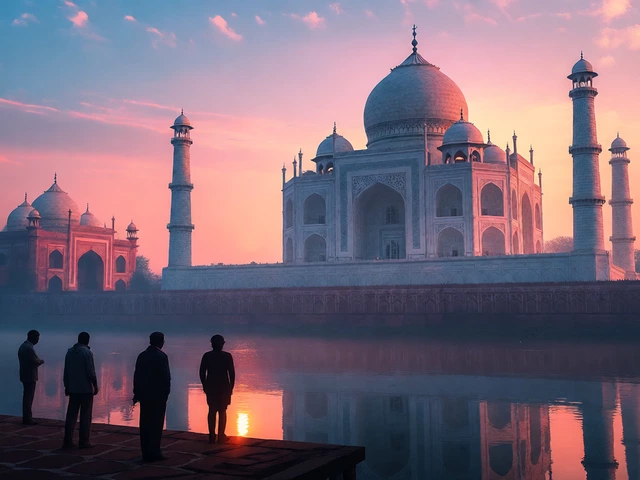
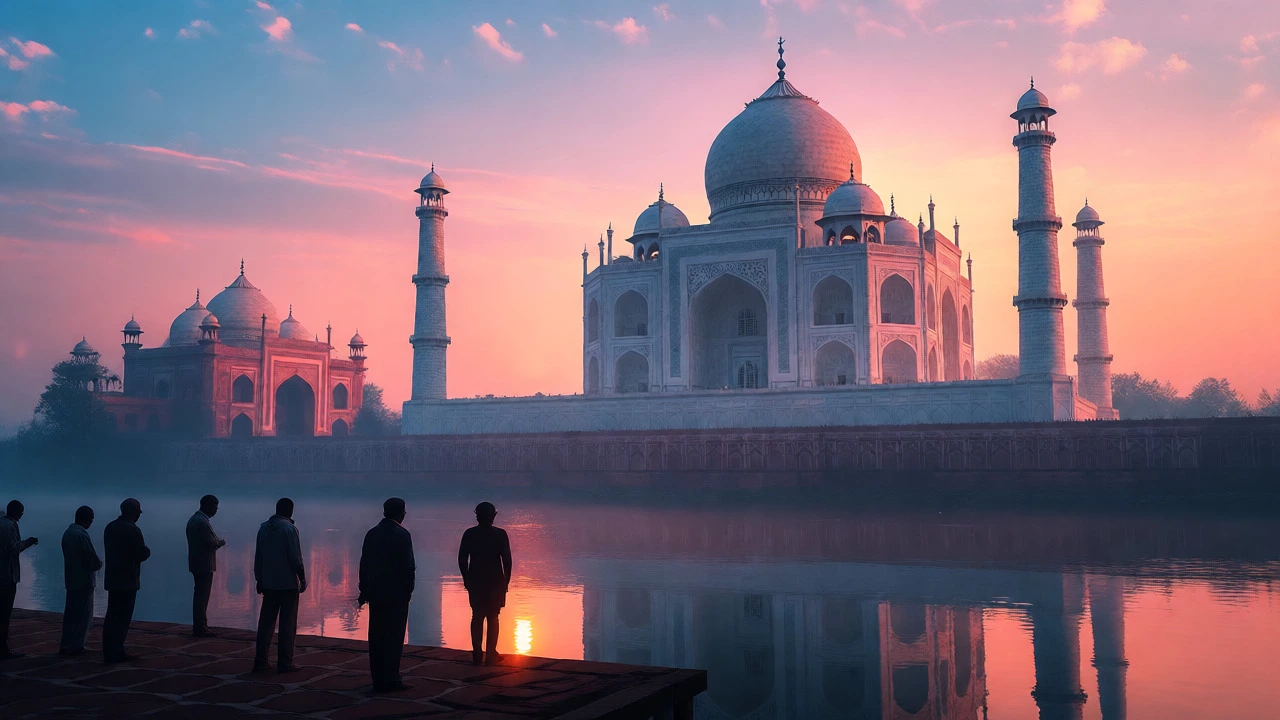
Imagine standing in front of the Taj Mahal at sunrise. The white marble glows pink, then gold, reflecting off the Yamuna River. You aren't just looking at a building; you're staring at 350 years of grief, love, and Mughal engineering perfection. This is what people mean when they talk about India's rich heritage. It isn't just old stones or dusty museum exhibits. It is a living, breathing timeline that stretches back over 4,500 years.
But here’s the thing: most travelers scratch the surface. They see the big names-Taj, Red Fort, Hawa Mahal-and call it a day. Yet, India holds 42 UNESCO World Heritage Sites as of 2026, more than any other country in Asia. From the rock-cut caves of Ajanta to the floating ruins of Hampi, the depth is staggering. If you want to truly understand what makes this subcontinent unique, you need to look beyond the postcards. Let’s break down exactly what constitutes this heritage, why it matters, and how you can experience it without getting overwhelmed.
Defining the Layers of Indian Heritage
To answer "what is it," we first have to define what counts. Indian heritage isn't a monolith. It’s a patchwork quilt stitched together by different empires, religions, and trade routes. Generally, experts categorize it into three distinct buckets: tangible, intangible, and natural.
Tangible heritage refers to physical artifacts and structures. Think monuments, archaeological sites, and historic cities. Intangible heritage is harder to touch but equally vital. It includes yoga, classical dance forms like Bharatanatyam, traditional music, and even specific culinary techniques passed down through generations. Natural heritage covers landscapes with significant cultural importance, such as the Western Ghats or the Sundarbans.
The Archaeological Survey of India (ASI) manages over 3,600 centrally protected monuments. But numbers don’t tell the whole story. The real value lies in the narrative continuity. For instance, Varanasi is often cited as one of the oldest continuously inhabited cities in the world. Walking its ghats isn't just sightseeing; it's witnessing rituals that date back to the Vedic period. That continuity is rare globally. Most ancient civilizations left only ruins. In India, the civilization is still alive around those ruins.
Architectural Marvels: Stone Tells Stories
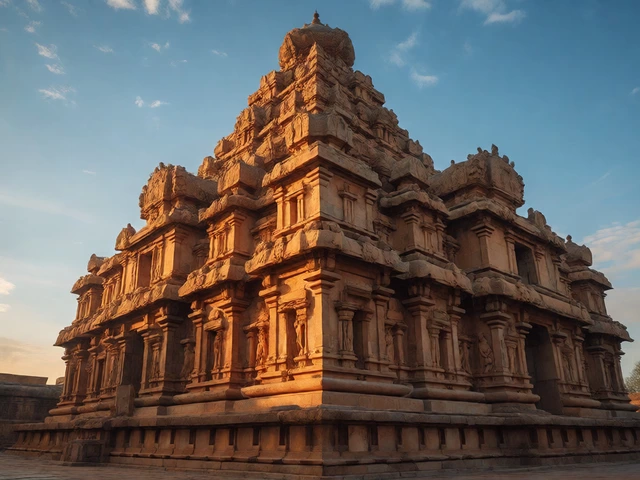
If architecture is frozen music, India’s repertoire is an orchestra. The styles vary wildly depending on the region and era. Northern India showcases the grandeur of Mughal architecture, characterized by symmetry, domes, and intricate pietra dura inlay work. Southern India, conversely, offers Dravidian temple complexes like Meenakshi Amman Temple in Madurai, which are sprawling urban centers unto themselves, covered in thousands of colorful sculptures.
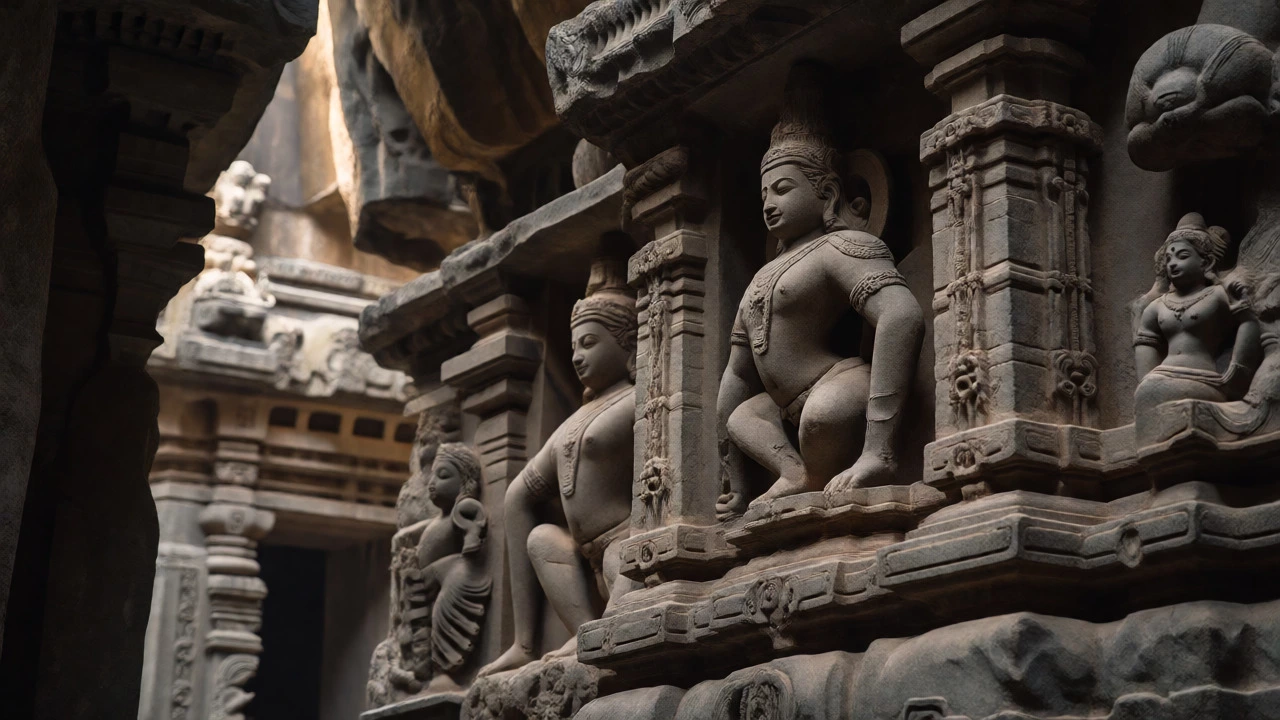
Consider the Khajuraho Group of Monuments in Madhya Pradesh. Built between 950 and 1050 CE by the Chandela dynasty, these temples are famous for their erotic sculptures. But reducing them to just sex scenes misses the point. The carvings depict daily life, warfare, musicians, and deities with startling realism. They offer a sociological snapshot of medieval Indian society. Unlike many European cathedrals where religious iconography dominates, Khajuraho celebrates the human form and earthly pleasures alongside spiritual devotion.
Then there is the Deccan Plateau, home to the rock-cut Ellora Caves. These aren't built up from bricks; they are carved downward into basalt cliffs. The Kailasa Temple within Ellora is arguably the largest monolithic structure in the world. Carvers removed over 200,000 tons of rock top-down to create it. No scaffolding was used because the structure grew out of the mountain itself. This level of engineering precision challenges modern assumptions about ancient technology.
Spiritual Crossroads: Religion Shaping Landscape
You cannot separate India's heritage from its spiritual diversity. Buddhism, Hinduism, Jainism, Sikhism, Islam, Christianity, and Zoroastrianism all found roots here. Each left a physical mark on the land.
The Sanchi Stupa in Madhya Pradesh is one of the oldest stone structures in India, commissioned by Emperor Ashoka in the 3rd century BCE. It marks the spread of Buddhism across Asia. Fast forward to Punjab, and you find the Golden Temple in Amritsar. It represents Sikh resilience and community service. Its lower floor is submerged in water, symbolizing humility before God. The langar (community kitchen) serves free meals to up to 100,000 people daily, regardless of caste or creed. This isn't just a tourist spot; it’s a functioning social welfare system operating since the 16th century.
In Goa, Portuguese colonial heritage blends with local traditions. The Basilica of Bom Jesus houses the remains of St. Francis Xavier. It’s a UNESCO site that tells the story of global trade and colonization. Similarly, the Jewish Synagogue in Kochi, Kerala, dates back to 1568, showcasing one of the oldest Jewish communities outside Israel. These sites prove that India’s heritage is inherently cosmopolitan. It absorbed foreign influences rather than rejecting them, creating hybrid cultures visible in everything from food to fashion.
Natural Heritage and Sacred Landscapes
We often think of heritage as man-made, but India’s natural sites hold deep cultural significance. The Western Ghats, a mountain range running along the western coast, is a biodiversity hotspot and a UNESCO World Heritage Site. It’s not just about tigers and elephants; these forests are sacred groves protected by local tribal communities for centuries. The interaction between humans and nature here defines a sustainable model of conservation long before the term existed.
Kaziranga National Park in Assam is another example. Famous for hosting two-thirds of the world's one-horned rhinoceros population, it also holds historical importance as a royal hunting ground during British rule. The landscape shaped the culture of the indigenous Mishing and Karbi tribes, whose festivals and folklore revolve around the river Brahmaputra and the wildlife within it. When you visit Kaziranga, you’re engaging with an ecosystem that has dictated human settlement patterns for millennia.
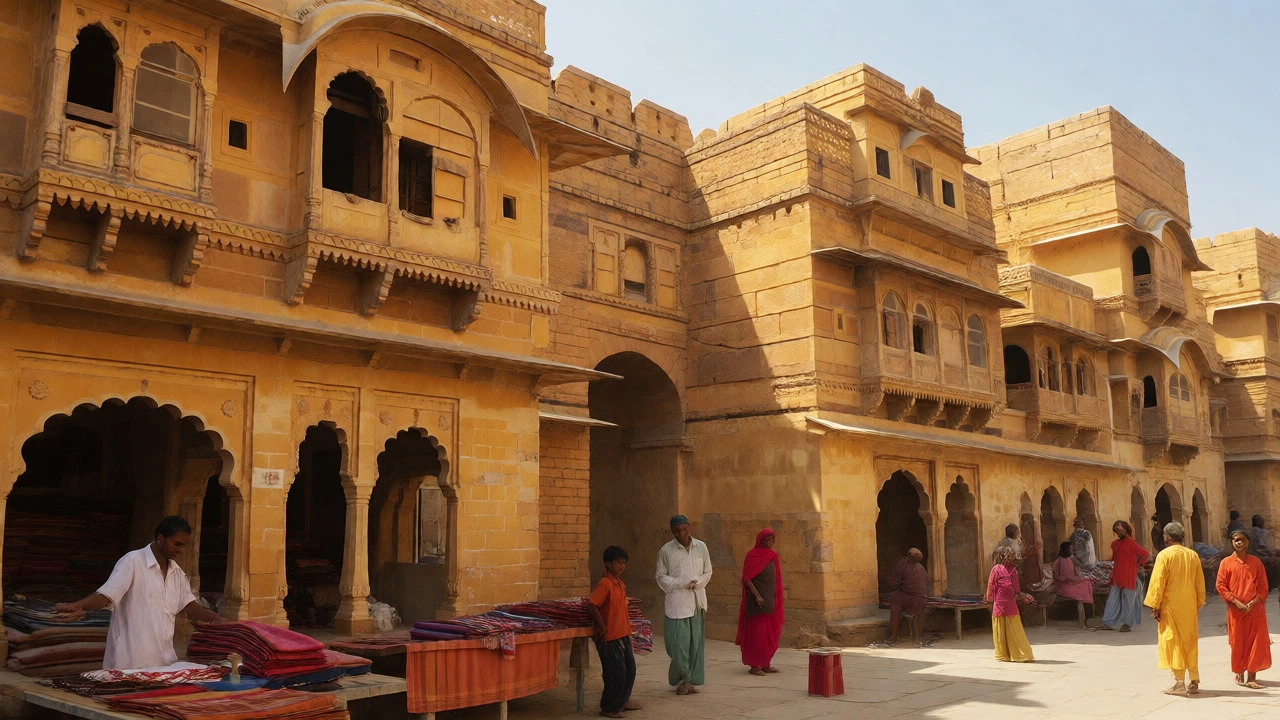
Even the deserts of Rajasthan have cultural layers. Jaisalmer Fort is a "living fort," meaning people still live inside its walls. Shops, hotels, and homes operate within the 12th-century ramparts. The Thar Desert environment influenced the architecture-thick walls keep heat out, small windows reduce glare. Understanding the climate helps you appreciate the design choices. Heritage isn't just aesthetic; it's adaptive survival.
Intangible Heritage: Living Traditions
While monuments crumble, traditions evolve. India has 14 elements inscribed on the UNESCO Representative List of the Intangible Cultural Heritage of Humanity. Yoga is perhaps the most famous. But so is Kutiyattam, a Sanskrit theater tradition from Kerala that dates back 2,000 years. It combines acting, dance, and mime, requiring decades of training. Watching a performance is intense; actors use subtle eye movements to convey complex emotions. It’s a direct link to ancient artistic practices that survived oral transmission.
Culinary heritage is another massive component. The art of making Idli-Dosa in South India or Pitha in Assam involves fermentation techniques perfected over centuries. These aren't just recipes; they represent agricultural cycles and seasonal availability. Food markets in Old Delhi or Chennai are heritage sites in themselves, where spice merchants have operated in the same lanes for generations. The aroma of roasting cumin or frying samosas triggers memories tied to place and time. Preserving these tastes is as important as preserving buildings.
Festivals act as public repositories of intangible heritage. Holi, Diwali, Eid, and Christmas are celebrated with regional variations that reflect local history. In Mathura, Holi reenacts mythological events with processions that have run uninterrupted for hundreds of years. Participating in these festivals allows tourists to step inside the heritage, not just observe it from behind velvet ropes.
| Category | Example Site | Historical Era | Primary Significance |
|---|---|---|---|
| Mughal Architecture | Taj Mahal, Agra | 17th Century | Symmetry, Love Story, Marble Craftsmanship |
| Rock-Cut Temples | Ellora Caves, Maharashtra | 6th-10th Century | Monolithic Engineering, Religious Coexistence |
| Colonial Heritage | Victoria Terminus, Mumbai | 19th Century | Gothic Revival, British Raj Infrastructure |
| Ancient Urban Planning | Dholavira, Gujarat | Indus Valley Civilization | Water Management, Harappan Culture |
| Living Forts | Jaisalmer Fort, Rajasthan | 12th Century | Desert Adaptation, Continuous Habitation |
Challenges in Preservation
Here’s the uncomfortable truth: much of this heritage is under threat. Pollution affects the Taj Mahal’s marble, turning it yellow due to acid rain and particulate matter. Climate change poses risks to coastal sites like the Shore Temple in Mamallapuram, where rising sea levels erode foundations. Urbanization pressures historic centers, leading to unauthorized construction that obscures sightlines and damages drainage systems.
Funding is another hurdle. While entry fees generate revenue, maintenance costs for thousands of sites skyrocket. The ASI relies heavily on government budgets, which fluctuate. Private sector involvement is growing, but balancing commercial interests with conservation integrity is tricky. You don’t want a luxury hotel overshadowing a 1,000-year-old temple.
Community engagement is the missing piece. When locals feel ownership over heritage, preservation improves. In villages near Hampi, residents have started homestays and guided tours, earning income while protecting the ruins. This economic incentive creates a self-sustaining cycle. Without local buy-in, heritage becomes a burden rather than an asset.
How to Experience It Authentically
So, how do you engage with this wealth without feeling like a checklist-ticking tourist? First, slow down. Pick one region and explore it deeply. Instead of trying to see Delhi, Agra, and Jaipur in four days, spend five days in Rajasthan alone. Visit smaller towns like Bikaner or Mandawa, known for their havelis (mansions) painted with frescoes depicting trains, airplanes, and cars from the early 20th century. These stories are less crowded and more intimate.
Hire local guides who specialize in history, not just photo ops. Ask questions. Why was this arch designed this way? What happened here during the independence movement? Good guides reveal layers you’d miss on your own. Also, respect the sanctity of sites. Remove shoes where required, dress modestly, and avoid touching delicate carvings. Your behavior impacts the next visitor’s experience.
Finally, connect the dots. Read a bit before you go. Knowing that the Qutub Minar in Delhi was built by Qutb-ud-din Aibak after the establishment of the Delhi Sultanate adds context. Seeing the Iron Pillar nearby, which hasn’t rusted in 1,600 years, sparks curiosity about metallurgy. Heritage becomes meaningful when you understand the cause and effect behind the creation.
How many UNESCO World Heritage Sites does India have?
As of 2026, India has 42 UNESCO World Heritage Sites. This includes cultural, natural, and mixed sites, placing it among the top countries globally for recognized heritage locations.
Is visiting heritage sites in India expensive?
Entry fees for major sites like the Taj Mahal range from ₹50 for Indians to ₹1,100 for foreigners. However, many smaller monuments and living heritage experiences like village walks or festival participations are low-cost or free, making it accessible on various budgets.
What is the best time to visit heritage sites in North India?
October to March is ideal. The weather is cool and dry, perfect for exploring outdoor monuments in Delhi, Agra, and Rajasthan. Summers (April-June) can exceed 40°C (104°F), making midday visits exhausting.
Are heritage sites safe for solo female travelers?
Yes, generally. Major tourist hubs have security personnel and CCTV. Standard travel precautions apply: avoid isolated areas after dark, dress comfortably but respectfully, and stay aware of surroundings. Many women travel solo successfully across India’s heritage circuit.
Can I take photos inside all heritage sites?
Photography rules vary. Outdoor monuments usually allow cameras, but tripods may require a permit. Inside museums or certain shrines, flash photography is often prohibited to protect artifacts. Always check signage or ask staff before shooting.


About Author

Popular Posts