Is India Older Than China? A Deep Dive into Ancient Civilizations
Ancient Civilizations Timeline Explorer
Explore the parallel timelines of early urban complexity in South Asia and East Asia. Hover over markers to see key milestones.
Select a Milestone
Hover over the dots on the timeline above to view details about specific historical developments, writing systems, and urban planning features.
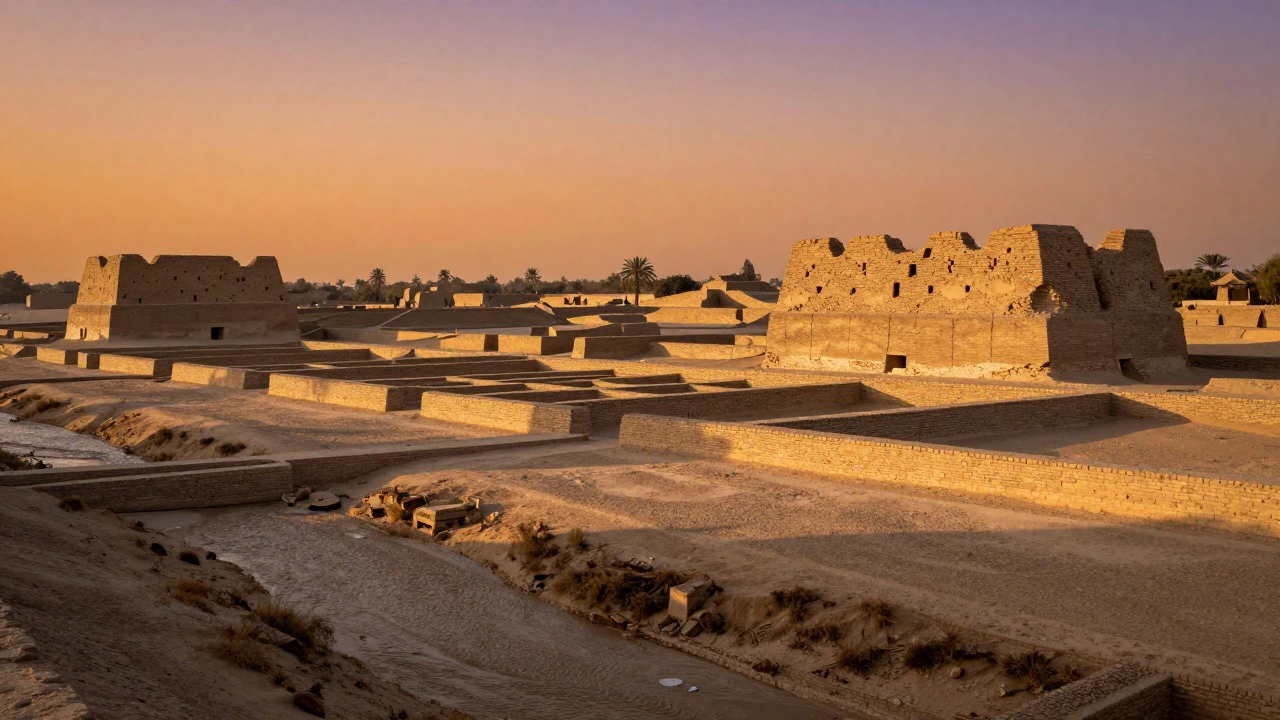
Walking through the ruins of Mohenjo-daro or standing before the Great Wall, you might wonder which civilization truly claims the title of "oldest." The debate between India and a subcontinent with one of the world's earliest urban centers and China is an East Asian region with continuous dynastic records spanning millennia isn't just about who started first. It's about how we define "civilization," what counts as evidence, and why both nations hold keys to understanding human development. This article cuts through the myth that one is definitively older than the other, showing instead that they are parallel giants in the story of human progress.
The Timeline: When Did They Start?
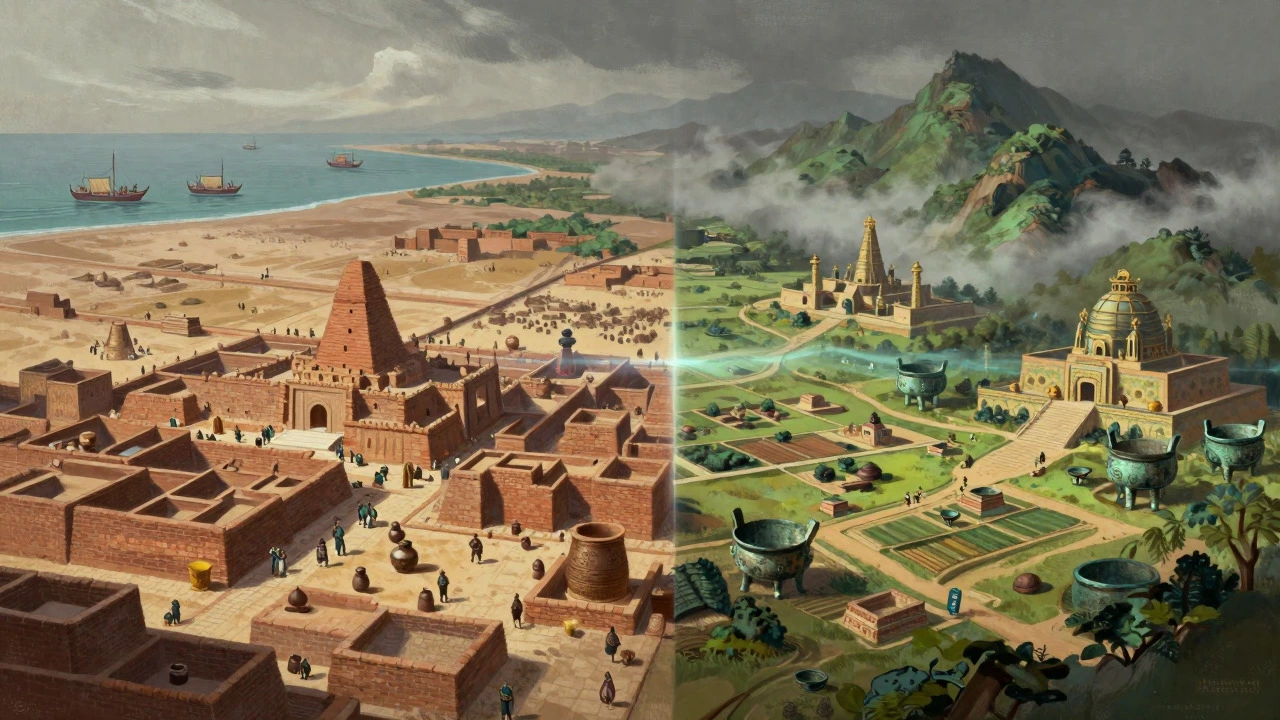
To answer if India is older than China, we have to look at archaeological dates, not just written history. In South Asia, the Indus Valley Civilization (also known as the Harappan Civilization) flourished around 3300 BCE to 1300 BCE. Its major cities, like Harappa and Mohenjo-daro, were planned with advanced drainage systems and standardized weights. On the other side of the Himalayas, the Yellow River basin saw the rise of early agricultural societies around 5000 BCE, but true urban complexity emerged later. The Erlitou Culture, often linked to the Xia Dynasty, appeared around 1900 BCE, marking a significant step toward statehood in China.
So, by the metric of complex urban planning and trade networks, the Indus Valley Civilization predates the earliest Chinese states by roughly 1,000 to 1,500 years. However, if we count simple farming communities, both regions have roots stretching back over 7,000 years. The difference lies in the type of societal structure archaeologists identify as "civilized"-usually involving writing, monumental architecture, and social stratification.
Defining "Older": Urban Complexity vs. Continuity
This is where the conversation gets tricky. India's ancient urban centers declined around 1300 BCE, leading to a gap before the Vedic period and later the Maurya Empire. China, on the other hand, experienced less fragmentation in its cultural core after the Shang and Zhou dynasties established stable political structures. If "older" means "continuous unbroken lineage," China often wins that argument due to its long-standing imperial traditions. But if "older" means "earliest emergence of sophisticated city life," India takes the lead with the Harappan sites.
Think of it this way: India built the first super-cities, but China kept the administrative flame burning longer without a total collapse of its central identity. Both models shaped their respective modern identities in profound ways.
Key Heritage Sites That Tell the Story
You don't need a textbook to feel this history; you can walk through it. In India, visiting Mohenjo-daro in Sindh, Pakistan (historically part of the Indian subcontinent), reveals brick streets and granaries that still stand after 4,000 years. In Uttar Pradesh, the site of Ayodhya and nearby Varanasi shows layers of religious continuity that span thousands of years, even if the political entities changed.
In China, the Yin Ruins near Anyang offer a glimpse into the Shang Dynasty's oracle bones and royal tombs. Further west, the Silk Road oases like Dunhuang show how China connected with Central Asia, blending cultures in a way that mirrors the maritime trade routes of ancient India. These sites aren't just tourist stops; they are physical arguments for each nation's historical depth.
| Feature | India (Indus Valley) | China (Yellow River) |
|---|---|---|
| Earliest Complex Cities | ~3300 BCE (Harappa/Mohenjo-daro) | ~1900 BCE (Erlitou/Shang) |
| Writing System | Undeciphered script found on seals | Oracle bone script (Shang Dynasty) |
| Urban Planning | Grid layouts, advanced drainage | Royal palaces, ritual centers |
| Continuity | Gap after decline, re-emergence in Vedic period | Relatively continuous dynastic succession |
| Key Trade Route | Maritime routes to Mesopotamia | Silk Road (land-based) |
Cultural Legacy: How History Shapes Today
The question of age matters because it influences national pride and tourism narratives. In India, the emphasis is often on spiritual antiquity and the diversity of languages and scripts that evolved from ancient roots. The Vedas, composed orally before being written down, represent a different kind of "record" compared to China's written archives. In China, the focus is on bureaucratic efficiency and cultural unity, with Confucian ideals shaping governance for centuries.
For travelers, this distinction changes the experience. Visiting heritage sites in India often feels like stepping into a living museum where ancient rituals are still performed. In China, the sites often emphasize imperial power and architectural grandeur. Both are valid perspectives, and neither diminishes the other's significance.
Why the Debate Persists
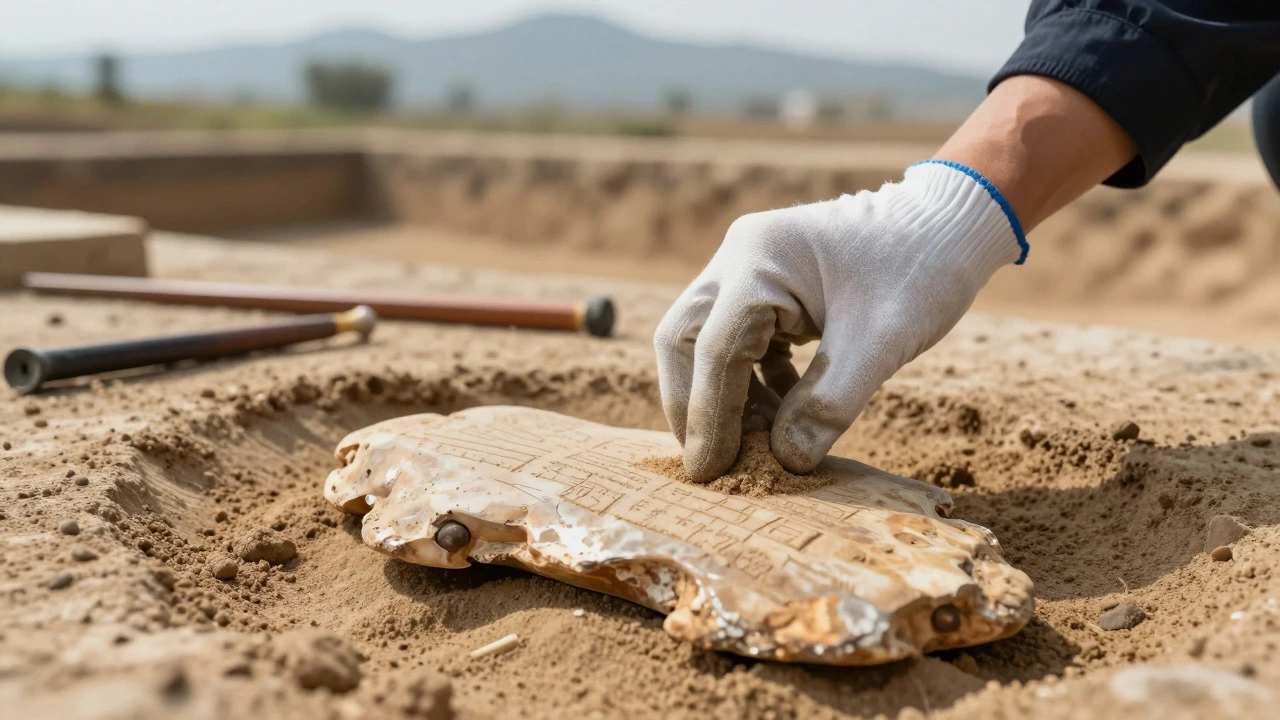
Nationalism plays a role. Each country has a rich tapestry of myths and histories that claim primacy. Archaeological findings continue to shift the timeline. For instance, recent discoveries in the Ganges plain suggest earlier habitation in India, while new digs in the Liangzhu culture in China push back the date of complex society there to around 3300 BCE, making them contemporaries in some respects. This ongoing research means the answer isn't static. It evolves with every shovel strike in the dirt.
Ultimately, asking if India is older than China is like asking if the sun rose before the moon. They are two distinct phenomena that illuminated the same dark sky of prehistory. Recognizing their parallel greatness allows us to appreciate the full spectrum of human achievement.
Frequently Asked Questions
Which civilization had writing first?
China has the earliest deciphered writing system, the Oracle Bone Script from the Shang Dynasty (~1200 BCE). India's Indus Valley script is older (~2600 BCE) but remains undeciphered, so we cannot confirm it was fully functional writing in the same way.
Are the Indus Valley and Yellow River civilizations comparable?
Yes, but they developed differently. The Indus Valley focused on trade and urban hygiene, while the Yellow River cultures emphasized agriculture and ritual hierarchy. Both were highly organized but served different environmental and social needs.
Does "older" mean more important?
Not necessarily. Importance is subjective. India contributed yoga, mathematics (zero), and democracy concepts. China contributed paper, gunpowder, and printing. Both are foundational to modern global culture, regardless of who started first.
Can I visit these ancient sites today?
Yes. Mohenjo-daro is accessible in Pakistan. In India, you can visit Varanasi, Ayodhya, and various Buddhist stupas. In China, the Yin Ruins and the Terracotta Warriors are major attractions. Check local travel advisories and visa requirements before planning.
Did India and China interact in ancient times?
Direct interaction was limited in the very early periods due to the Himalayas. However, trade via the Silk Road and maritime routes connected them significantly during the Han Dynasty and Gupta Empire periods, facilitating the spread of Buddhism and goods.


About Author