Can I Wear Jeans to a Hindu Temple? Dress Code Guide
Hindu Temple Dress Code Checker
Select your planned outfit and destination to see if you will be allowed entry or need to make adjustments.
Verdict:
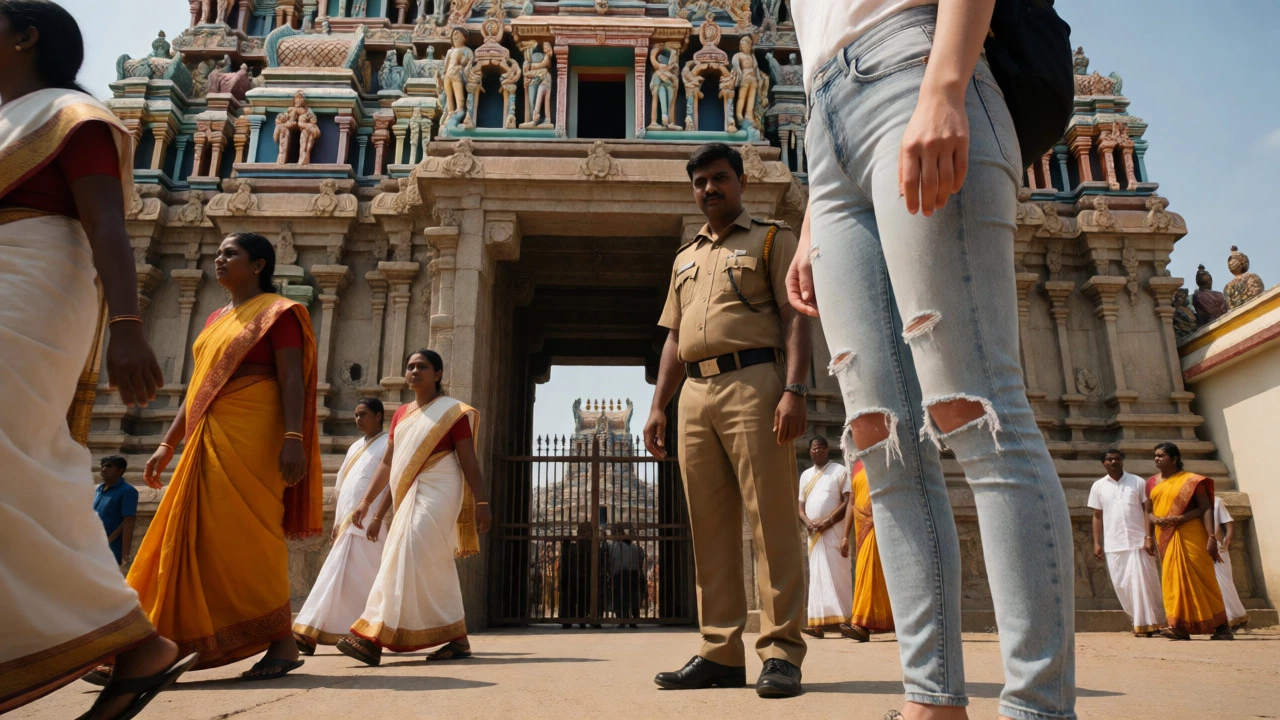
You’re standing outside the Meenakshi Amman Temple in Madurai, sweating in the humid air, and you look down at your favorite pair of ripped skinny jeans. A security guard eyes you with a mix of pity and warning. You freeze. Is this outfit going to get you kicked out? The short answer is: it depends entirely on which temple you are visiting and how strict the local enforcement is. But relying on "maybe" when you’ve traveled thousands of miles is risky business.
Most travelers underestimate the rigidity of Indian temple dress codes. It’s not just about respect; it’s often about physical access. Many major shrines have gates that literally won’t let you pass if your knees or shoulders aren’t covered. This guide breaks down exactly where you can wear denim, where you absolutely cannot, and how to navigate the tricky middle ground without looking like a clueless tourist.
The General Rule: Modesty Over Fashion
Hinduism doesn’t have a single global governing body that issues uniform fashion mandates. Instead, dress codes vary by region, deity, and even specific temple administration. However, a universal principle applies across almost all traditions: modesty. The idea isn't that God cares about your brand of Levi's, but that entering a sacred space requires shedding worldly distractions and vanity.
When you step into a temple, you are entering a zone of ritual purity. Tight, revealing, or overly casual Western wear can be seen as disrespectful or distracting. While jeans themselves aren’t inherently "impure," the way they are worn matters. Ripped jeans showing skin? Usually a no-go. Baggy, full-length jeans covering the ankles? Often acceptable in smaller, rural temples. Skinny jeans hugging every curve? Frequently rejected at major urban sites.
Think of it this way: if you wouldn’t wear that outfit to a solemn family gathering or a job interview, you probably shouldn’t wear it to a place of worship. The goal is to blend in, not stand out.
Where Jeans Are Strictly Prohibited
If you plan to visit some of India’s most famous spiritual hubs, leave the denim at the hotel. Certain temples enforce strict traditional attire rules, especially those dedicated to specific deities or located in conservative regions.
| Temple Name | Location | Jeans Policy | Required Attire |
|---|---|---|---|
| Tirumala Venkateswara Temple | Andhra Pradesh | Banned | Dhoti/Veshti for men; Saree/Salwar Kameez for women |
| Kashi Vishwanath Temple | Varanasi | Restricted | Traditional wear preferred; shorts/short skirts banned |
| Siddhi Vinayak Temple | Mumbai | Flexible | Covered knees and shoulders required |
| Golden Temple | Amritsar (Sikh) | Acceptable | Clean clothes; head covering mandatory |
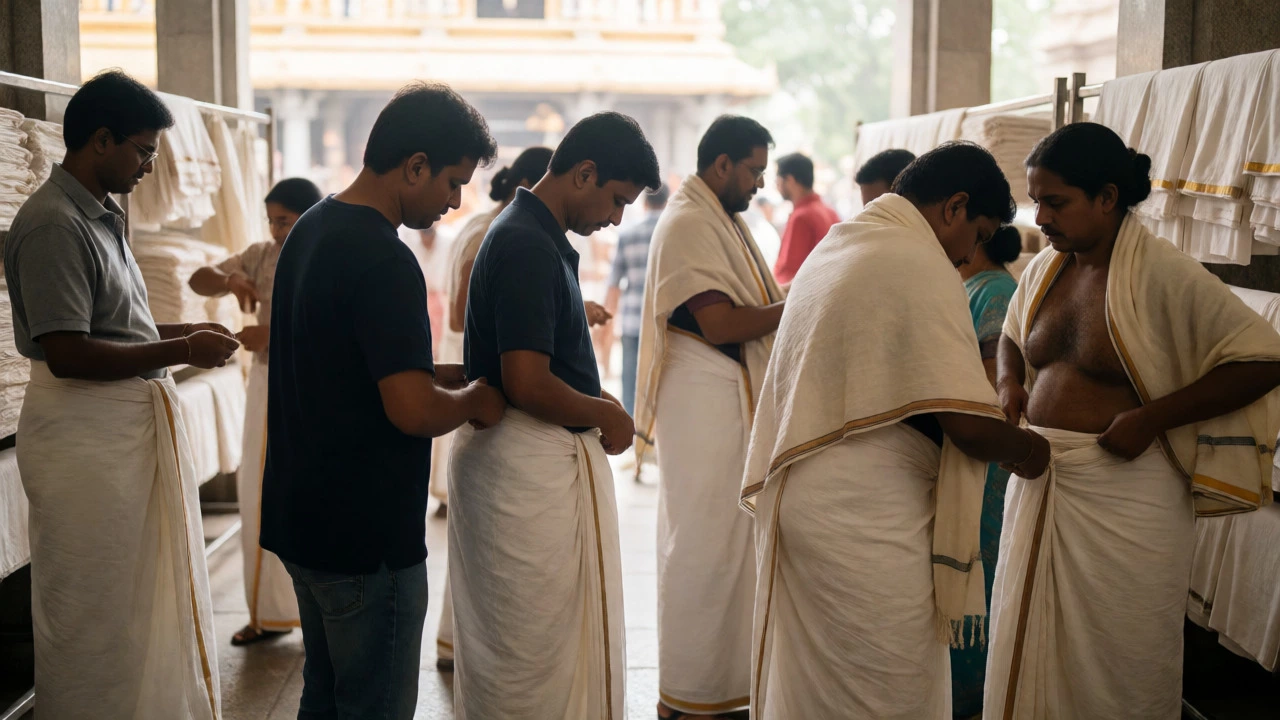
Take the Tirumala Venkateswara Temple in Tirupati as a prime example. Here, jeans are explicitly forbidden. Men must wear a dhoti or veshti (a traditional cloth wrap), and women must wear sarees or salwar kameez. If you show up in jeans, you’ll likely be directed to the free clothing counters near the entrance, where you’ll swap your pants for a white cotton wrap. It’s a hassle, but it ensures everyone looks uniform before entering the sanctum.
In Varanasi, while the rules are slightly less codified than Tirupati, the atmosphere is intensely traditional. Wearing tight jeans might not get you physically barred from the outer courtyards, but you will feel the social pressure. Local priests and devotees may frown upon Western casual wear inside the main prayer halls. In South India, particularly Tamil Nadu, the distinction between "temple wear" and "street wear" is sharp. Shorts and sleeveless tops are common street attire, but they rarely cross the threshold into a consecrated inner sanctum.
The Gray Area: When Jeans Might Be Okay
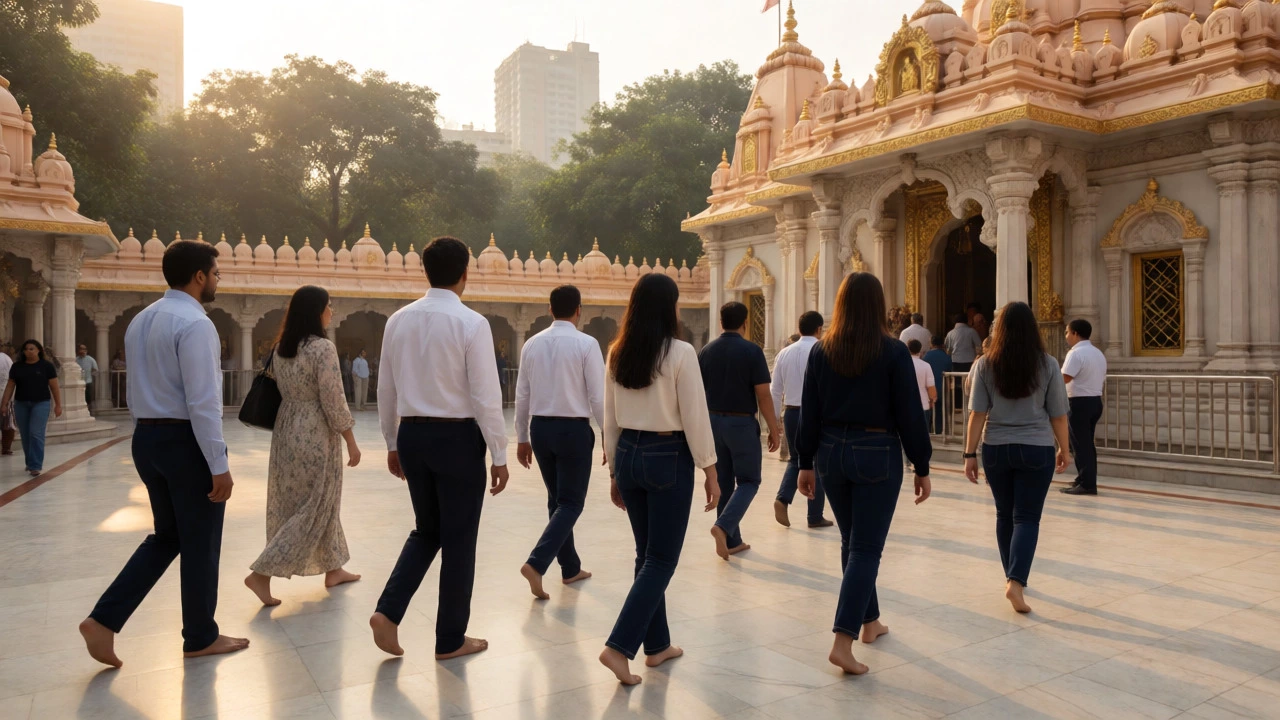
Not every temple is a fortress of tradition. In metropolitan cities like Delhi, Mumbai, Bangalore, and Kolkata, many large temples cater to working professionals who drop in during lunch breaks. These places tend to be more pragmatic. As long as your jeans are clean, intact, and paired with a modest top that covers your shoulders, you’ll usually pass inspection.
Consider the Lotus Temple in New Delhi. It’s open to all faiths and focuses on peace and meditation rather than rigid ritualistic protocols. Visitors here are encouraged to dress comfortably, and jeans are perfectly fine because the emphasis is on internal reflection, not external ritual purity. Similarly, modern ISKCON (International Society for Krishna Consciousness) temples generally welcome Western attire, provided it’s neat and respectful.
Rural temples present a different dynamic. In small village shrines, there may be no security guard checking your legs. However, community norms still apply. If you’re the only person in jeans among hundreds of locals in saris and kurtas, you’ll draw attention. It’s not necessarily a rule violation, but it marks you clearly as an outsider. Sometimes, that’s fine; other times, it creates a barrier to connecting with the devotees around you.
Practical Hacks for Temple Visits
You don’t need to pack a suitcase full of silk sarees. Here’s how to stay comfortable and compliant without overpacking.
- The Sarong Strategy: Carry a lightweight cotton sarong or shawl in your daypack. If you’re caught in shorts or capris, you can quickly wrap it around your waist. For women, it doubles as a head cover if needed. It takes up zero space and solves 90% of dress code emergencies.
- Choose Darker Denim: Light-washed, distressed jeans look more "casual beach" than "respectful visitor." Dark indigo jeans with no rips appear more formal and are less likely to trigger a guard’s scrutiny.
- Top Coverage Matters More Than Pants: Guards often check shoulders first. Even if your jeans are borderline, a t-shirt with sleeves and a collar can save you. Tank tops and spaghetti straps are far more likely to get you turned away than straight-leg trousers.
- Footwear Prep: Remember, you’ll take your shoes off. Wear slip-on shoes or sandals that are easy to remove. Avoid socks unless you know the floor is cold stone, as many temples require bare feet.
One traveler shared a story about trying to enter the Jagannath Temple in Puri. He was wearing cargo shorts and a polo shirt. Despite being covered, he was stopped because the shorts were considered too casual for the main deity’s darshan (viewing). He had to buy a cheap lungi from a nearby stall. Lesson learned: length matters, but so does fabric type. Cotton and linen breathe better in India’s heat and look more culturally appropriate than synthetic blends.
Regional Nuances You Should Know
India is vast, and culture shifts dramatically every few hundred kilometers. What works in Goa might fail in Rajasthan.
In North India, particularly in states like Uttar Pradesh and Bihar, religious conservatism is high. Temples like Kashi Vishwanath or Hanuman Garhi expect traditional modesty. Women are often expected to cover their heads, though this varies by temple. Men should avoid sleeveless shirts. Jeans are tolerated in outer areas but frowned upon in inner circles.
In South India, the architecture dictates the flow. You walk through towering gopurams (gateways) into expansive courtyards. The transition from secular to sacred is physical. Many South Indian temples have separate queues for men and women. Men often have to wear dhotis in the innermost sanctums, regardless of what they wore outside. Women can usually keep their salwar kameez or sarees, but jeans are rarely accepted past the second courtyard.
In West India (Maharashtra, Gujarat), the vibe is slightly more relaxed in urban centers. The Siddhi Vinayak Temple in Mumbai allows jeans if you’re dressed neatly. However, if you venture to Shirdi or Vaishno Devi (though Vaishno Devi is technically North), the pilgrimage aspect brings stricter expectations due to the arduous trek and intense devotion.
In East India, especially West Bengal, Durga Puja pandals are festive and allow casual wear, but established temples like Dakshineswar or Kalighat maintain traditional standards. During festivals, crowds are dense, and practicality often overrides strictness, but standard days remain conservative.
What to Do If You Get Stopped
Don’t argue. Don’t roll your eyes. Security guards are doing their jobs, often under pressure from temple trusts. If you’re denied entry, ask politely, "Is there a place nearby where I can change?" Most major temples have rental stalls or shops selling inexpensive cotton wraps. Buying one supports the local economy and gets you inside immediately.
Also, note that some temples prohibit leather items. If your belt is leather, you might have to remove it. This surprises many tourists. Check your accessories. Belts, wallets, and watch straps made of animal hide are sometimes banned in strict Vaishnavite temples.
Final Thoughts on Respect and Comfort
Wearing jeans to a Hindu temple isn’t a moral failing, but it’s a cultural misstep that can limit your experience. By dressing appropriately, you signal respect for the traditions surrounding you. This often leads to warmer interactions with locals, who appreciate the effort. Plus, you avoid the awkwardness of being turned away after waiting in line for two hours.
Next time you plan a temple tour, check the specific website of the shrine you’re visiting. Look for "Dress Code" sections. If none exist, default to modesty. Cover your knees, cover your shoulders, and carry a scarf. It’s a small adjustment that opens doors-literally and figuratively-to the heart of Indian spirituality.
Are ripped jeans allowed in Hindu temples?
Generally, no. Ripped jeans expose skin, which violates the modesty requirement in most temples. Even in lenient urban temples, significant tears above the knee are often discouraged or prohibited. Stick to intact, dark-colored denim if you choose to wear jeans.
Do I need to wear traditional Indian clothes to enter a temple?
Not always. While traditional attire like sarees, salwar kameez, or dhotis are preferred and often required in major shrines, many city temples accept modest Western wear. Key requirements are usually covered knees, covered shoulders, and non-revealing tops. Always check specific temple guidelines beforehand.
Why are leather items banned in some temples?
In Hinduism, cows are revered, and leather comes from animals. Some temples, particularly those dedicated to Vishnu or Krishna, prohibit leather items (belts, bags, shoes) within the inner sanctum to maintain ritual purity. You may need to remove your belt or leave your bag at a cloakroom.
Can I wear shorts to a Hindu temple?
Shorts are widely prohibited in most Hindu temples, especially for men. Women may occasionally wear knee-length skirts or dresses, but shorts above the knee are rarely accepted. Long pants or traditional wraps are safer choices for both genders.
What if I forget to dress properly?
Most major temples have facilities near the entrance where you can rent or purchase traditional clothing like dhotis, sarees, or scarves. These services are usually affordable and quick. Alternatively, you can buy a simple cotton wrap from street vendors outside the temple gate.


About Author

Popular Posts




What is Goa Famous For? Beyond the Beaches