Which Indian State Has the Nicest People? Real Stories from the Heart of India
Ask a hundred travelers which Indian state has the nicest people, and you’ll get a hundred different answers. Some will say Kerala because of the way strangers offer you coconut water on a hot afternoon. Others will swear by Rajasthan, where a tea shop owner in Jodhpur once walked three blocks just to return a lost camera. Then there’s the quiet kindness of Assam, where a village elder once fed a lost tourist for three days without asking for a single rupee. The truth? India doesn’t have one state with the nicest people-it has dozens, each with its own flavor of warmth.
Why ‘nicest people’ isn’t about tourism brochures
When people ask which Indian state has the nicest people, they’re often looking for a simple ranking. But hospitality in India isn’t measured in five-star ratings or Instagram likes. It’s in the way a rickshaw driver refuses extra money after seeing your tired face. It’s in the grandmother who presses a homemade ladoo into your hand because you smiled at her grandchild. These moments don’t show up on TripAdvisor.
What you’re really asking is: where does kindness feel most natural? Where do strangers treat you like family, not a source of income? That’s not about infrastructure or cleanliness. It’s about culture. And culture doesn’t stop at state borders.
Kerala: The art of quiet generosity
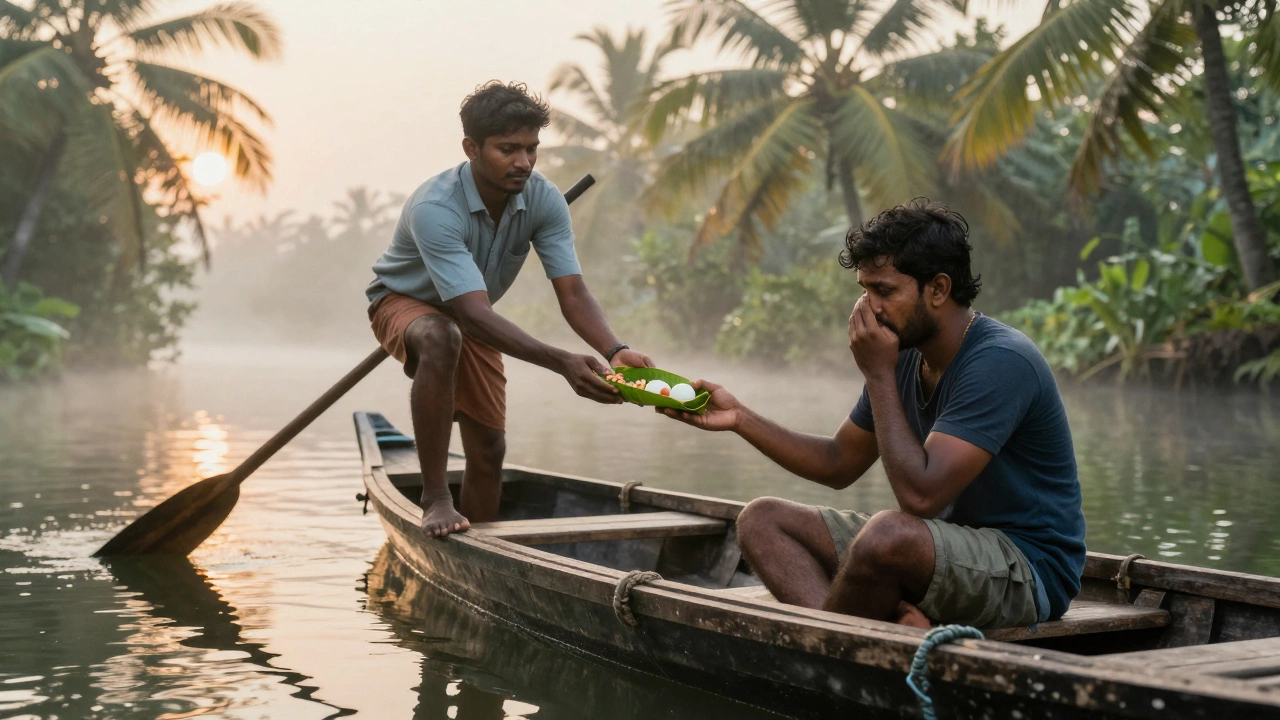
Kerala’s reputation for hospitality isn’t loud. It doesn’t need to be. In Alleppey, a boatman once rowed me past flooded backwaters for two extra hours because I was crying after missing my train. He didn’t say a word. Just handed me a warm banana leaf packet with peanuts and a boiled egg. When I tried to pay more, he shook his head and said, ‘You’re our guest.’
This isn’t rare. A 2023 survey by the Kerala Tourism Department found that 89% of foreign visitors described interactions with locals as ‘unexpectedly personal.’ That’s higher than any other Indian state. Why? Because in Kerala, hospitality isn’t a service-it’s a social contract. You help someone in need, and you’re helping your community. It’s built into the way people grow up.
Visit a temple in Thrissur, and you’ll see volunteers serving free meals to anyone who walks in. No questions asked. No registration. Just food. That’s the Kerala way. It’s not about being ‘nice.’ It’s about being human.
Rajasthan: Hospitality as heritage
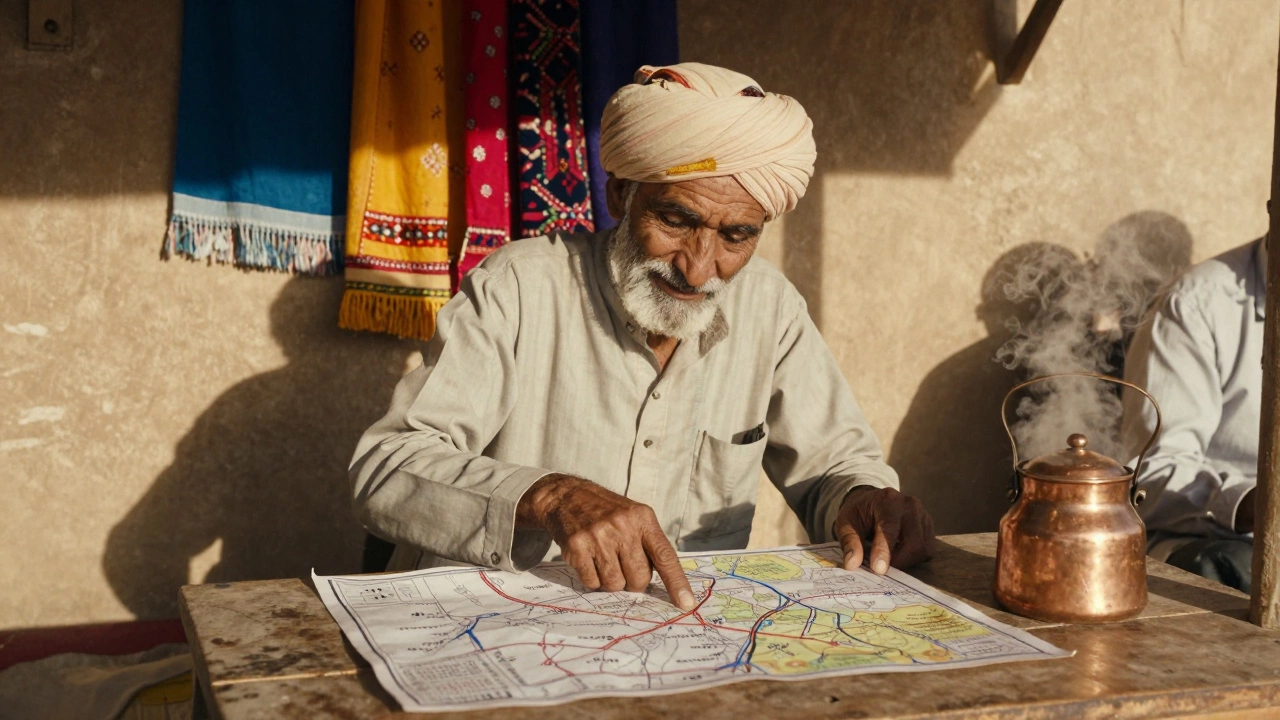
In Jaipur, a man named Ram Lal runs a tiny tea stall outside the City Palace. He’s been there for 42 years. He doesn’t speak English. But if you look lost, he’ll pull out a folded map from his pocket-drawn by hand-and point to your hotel with a grin. He once spent an hour walking with a German tourist who couldn’t find her way back. He didn’t charge her. He didn’t even ask for a photo.
Rajasthan’s culture of generosity is tied to its history. For centuries, desert caravans relied on the kindness of strangers to survive. To refuse help was to risk death. That legacy lives on. In Udaipur, a family once invited a group of backpackers to sleep on their rooftop because the guesthouse was full. They served dal baati churma, played folk music, and woke them up with fresh chai at sunrise.
It’s not performative. It’s inherited. And it shows in the way even shopkeepers in small towns like Jaisalmer will call you ‘beta’-son-and offer advice on where to find the best jalebi, even if you’re just passing through.
Uttarakhand: Kindness in the mountains
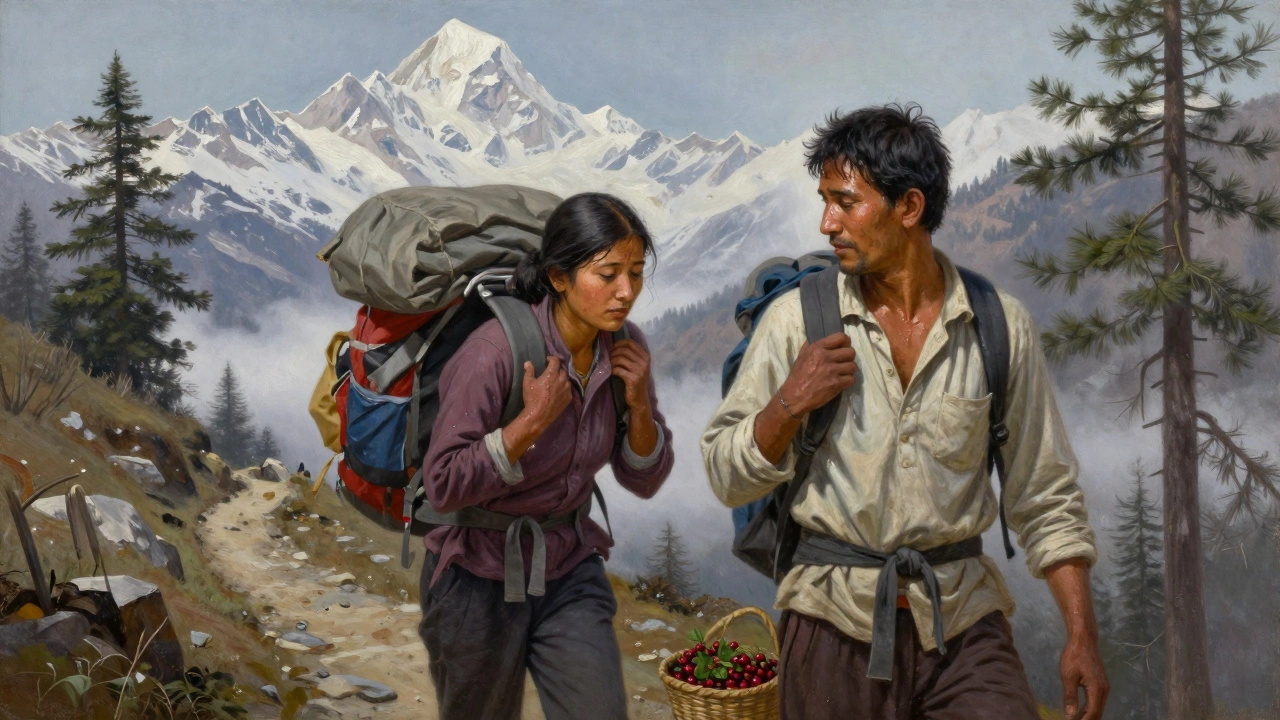
Up in the Himalayas, kindness isn’t a choice-it’s survival. In Rishikesh, a local named Bhanu once carried a tourist’s heavy backpack for 12 kilometers after seeing her struggle on a steep trail. He didn’t speak English. She didn’t speak Hindi. But he pointed to his chest and said, ‘My mother taught me.’
In Uttarakhand, people live in places where no car can reach. They walk miles to get water. They share what little they have. If you’re lost in the hills, someone will bring you food, even if they’re hungry themselves. A 2024 study by the Indian Institute of Tourism and Travel Management found that Uttarakhand ranked highest in spontaneous acts of help among tourists-more than 75% of visitors reported being offered food, shelter, or guidance without asking.
It’s not about tourism. It’s about community. In villages like Kausani, neighbors take turns watching over each other’s homes when someone’s away. That same trust extends to strangers.
Punjab: Warmth with a side of laughter
Punjab doesn’t just welcome you-it adopts you. In Amritsar, a family once pulled me into their home after seeing me waiting outside the Golden Temple, looking confused. They fed me sarson ka saag, taught me how to make roti, and then insisted I stay for dinner. ‘You’re not a guest,’ the grandmother said. ‘You’re family now.’
Punjabi hospitality is loud, joyful, and relentless. It’s in the way strangers clap you on the back and call you ‘bhaiya’ or ‘didii.’ It’s in the chai stalls that refill your cup without asking. It’s in the fact that even in crowded cities, someone will stop and ask if you need help finding your way.
And it’s not just in cities. In rural Punjab, farmers still leave baskets of fresh fruit outside their gates for travelers. No sign. No price. Just ‘for those who pass.’
Why no single state wins
Here’s the thing: India’s kindness isn’t concentrated in one place. It’s scattered across hundreds of villages, towns, and cities, shaped by local history, religion, and geography.
Kerala’s quiet care. Rajasthan’s deep-rooted tradition. Uttarakhand’s mountain-born generosity. Punjab’s exuberant warmth. Tamil Nadu’s temple-based charity. Assam’s unspoken hospitality. Each state has its own rhythm.
What ties them together? A shared belief: if you’re hungry, you eat. If you’re lost, you’re guided. If you’re tired, you rest. No transaction needed. No expectation of return.
Trying to pick one state as the ‘nicest’ is like asking which river has the purest water. The answer depends on where you stand.
What travelers really notice
When you travel through India, you don’t remember the monuments. You remember the people.
A woman in Varanasi who gave me her umbrella because I was caught in the rain.
A boy in Mysore who walked me to the palace gate because I didn’t know the way.
A mechanic in Bhopal who fixed my broken scooter for free because ‘everyone deserves to get home.’
These aren’t tourist traps. They’re everyday moments. And they happen everywhere-from the streets of Delhi to the backroads of Odisha.
There’s no state monopoly on kindness. But if you want to feel it, go where people still believe in giving without counting the cost.
How to experience real Indian hospitality
- Stay in homestays instead of hotels. Look for listings with photos of families, not just rooms.
- Learn five basic phrases in the local language. A simple ‘Dhanyavaad’ (thank you) changes everything.
- Accept food when offered. Refusing can be seen as rude, not polite.
- Carry small gifts-chocolates, pens, or notebooks. Don’t give cash. It feels transactional.
- Don’t rush. The best moments happen when you’re still.
India doesn’t need to be ‘the nicest.’ It just is.
Is there a state in India known for the friendliest locals?
There’s no single state officially labeled as the friendliest, but Kerala, Rajasthan, Uttarakhand, and Punjab consistently stand out in traveler reports. Each has a unique style-Kerala’s quiet care, Rajasthan’s deep-rooted tradition, Uttarakhand’s mountain-born generosity, and Punjab’s loud, joyful warmth. What they share is a cultural norm: helping strangers is simply what you do.
Why do people say Indian hospitality is different from other countries?
Indian hospitality often comes without expectation. In many Western cultures, helping a stranger might come with a price or a favor owed. In India, it’s common to feed, shelter, or guide someone with no strings attached. This stems from ancient traditions like ‘Atithi Devo Bhava’-the guest is God-which is still lived out in homes, temples, and roadside stalls across the country.
Do people in rural India treat tourists differently than in cities?
Often, the opposite is true. In rural areas, where tourism is rare, strangers are treated with extra care. People remember the last visitor who came through. In villages in Odisha or Chhattisgarh, locals might walk miles to show you the way or invite you to dinner because they’ve never met someone from abroad. In cities, service can feel transactional-but in villages, it’s personal.
Can you trust kindness in India? Are there scams disguised as hospitality?
Most kindness is real. But like anywhere, there are exceptions. Some tuk-tuk drivers or guides may offer ‘free help’ to later charge you. The key is to notice intent. Real hospitality doesn’t pressure you. It doesn’t follow you. It doesn’t mention money. If someone offers tea, food, or a ride and never asks for anything in return, it’s genuine. If they suddenly mention a ‘donation’ or ‘tip,’ pause. Trust your gut.
Which heritage sites in India are best for experiencing local kindness?
The best places are the ones off the main paths. Around the Stepwells of Gujarat, locals often bring water to thirsty visitors. Near the temples of Khajuraho, elderly women sell homemade snacks and insist you take extra. In the villages around Hampi, families invite travelers to eat with them after temple visits. These moments happen where tourism is light-and humanity is strong.
Final thought: Kindness isn’t a destination
You won’t find the nicest people by checking a map. You’ll find them by slowing down. By saying yes to tea. By accepting that offered ladoo. By letting go of the need to be ‘safe’ and letting people be human.
India’s greatest heritage isn’t its forts or temples. It’s the millions of quiet acts of kindness that happen every day-unrecorded, uncelebrated, and utterly unforgettable.


About Author