Which City Is Known as the Heritage Site of India?
India Heritage Cities Comparison Tool
Discover India's Heritage Cities
Compare the top cities with UNESCO World Heritage Sites using key metrics from the article. Select filters to see which cities match your interests.
Agra
#1 Most FamousJaipur
#1 Urban PlanningDelhi
#3 Most SitesVaranasi
#1 Living CultureFatehpur Sikri
Ghost CityKey Insight
The article explains there's no single "heritage site of India." This tool shows how different cities contribute to India's diverse cultural tapestry. Agra's Taj Mahal is globally famous, but Jaipur's urban planning and Varanasi's living traditions are equally significant. India's heritage isn't a single landmark but a network of sites that tell the full story.
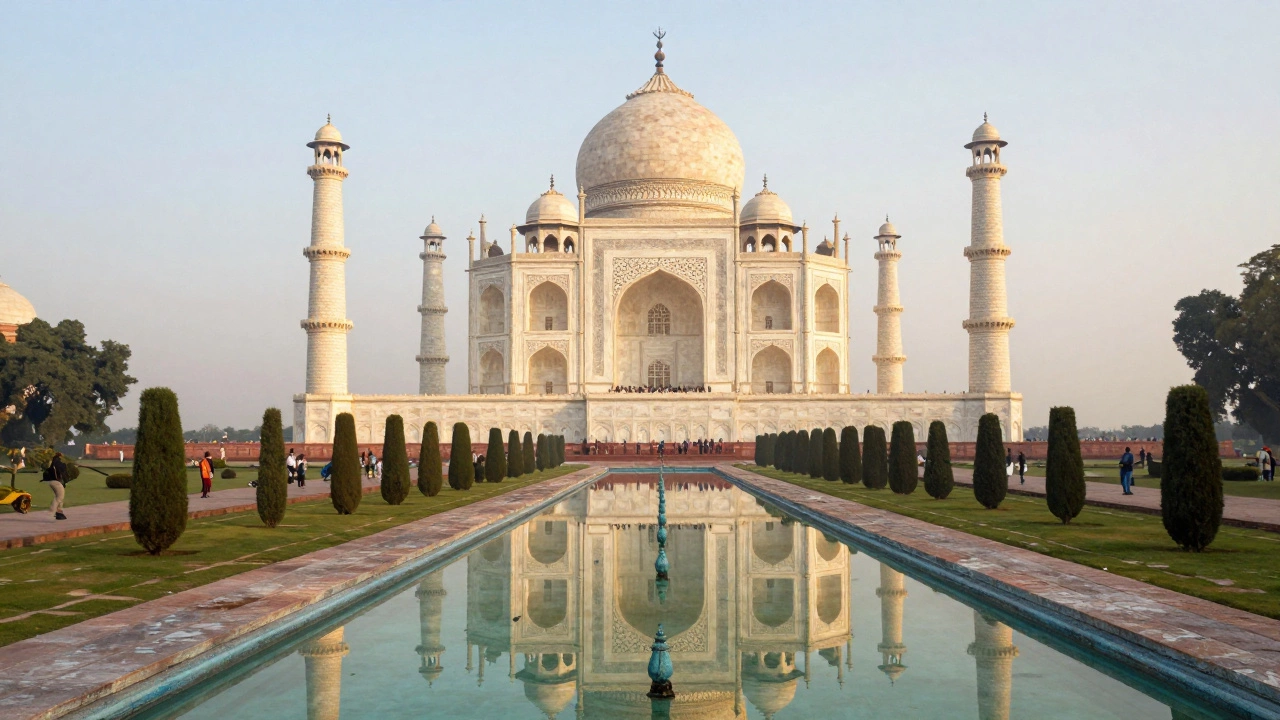
India doesn’t have just one heritage site-it has 40 UNESCO World Heritage Sites, spread across cities, forests, and mountains. But when people ask, which city is known as heritage site of India, they’re usually thinking of the one that stands out the most: Agra. Not because it’s the biggest, but because it holds the Taj Mahal, a monument so iconic it’s become the face of India itself.
Agra: The Heart of India’s Heritage
Agra isn’t just a city with a famous building. It’s a place where Mughal history lives in every stone. The Taj Mahal, built by Emperor Shah Jahan in 1653 for his wife Mumtaz Mahal, is made of white marble and took over 20,000 workers more than 20 years to complete. Its symmetry, inlay work with semi-precious stones, and changing colors at sunrise and sunset make it unlike anything else on Earth.
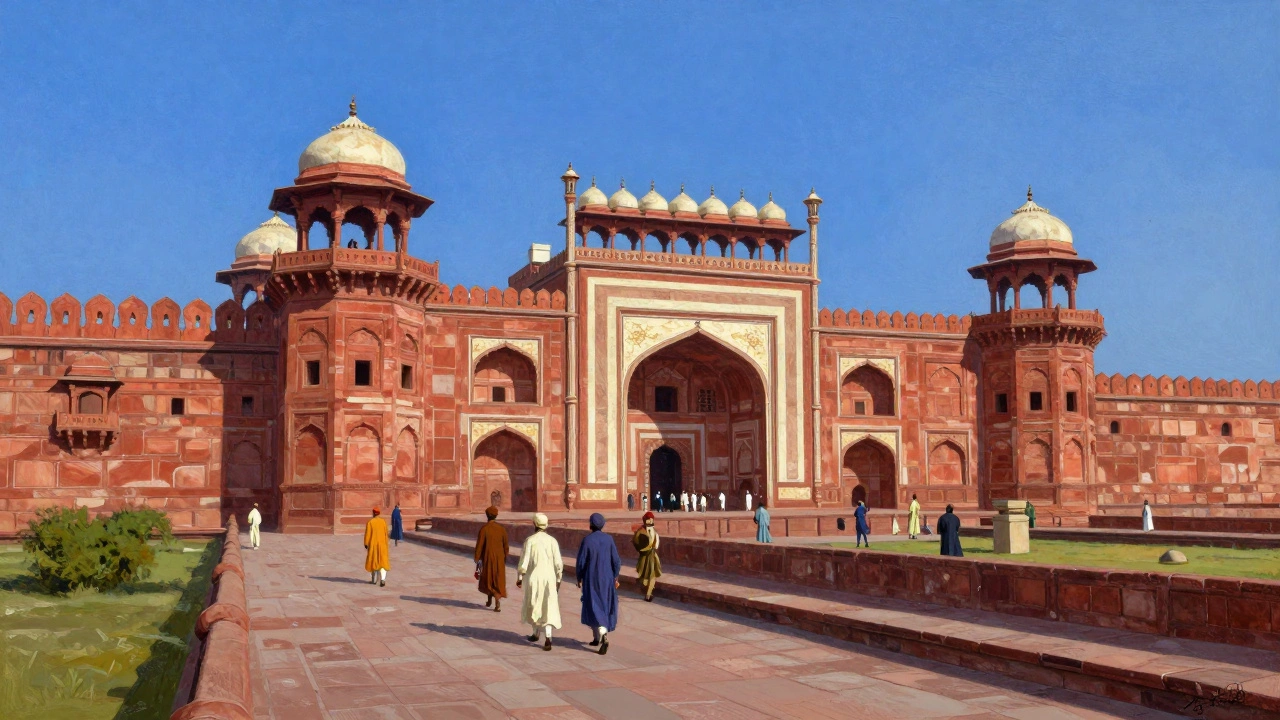
But the Taj isn’t the only reason Agra is a heritage site. Just a few kilometers away stands Agra Fort, a massive red sandstone fortress that served as the main residence of Mughal emperors for over a century. Inside, you’ll find the Diwan-i-Aam (Hall of Public Audience), the Diwan-i-Khas (Hall of Private Audience), and the Jahangiri Mahal-all built with the same precision and artistry as the Taj. Together, these two sites form a UNESCO World Heritage designation that covers nearly 5 square kilometers of imperial architecture.
Other Cities That Claim Heritage Status
While Agra is the most famous, it’s not the only Indian city with UNESCO heritage status. Jaipur, known as the Pink City, was inscribed in 2019 for its urban planning and architecture. Founded in 1727 by Maharaja Jai Singh II, Jaipur follows a grid pattern based on ancient Indian Vastu Shastra principles. Its wide streets, fortified walls, and palaces like the City Palace and Jantar Mantar (an astronomical observatory with giant instruments) make it a living example of 18th-century science and design.
Delhi has two separate heritage listings: the Red Fort and Humayun’s Tomb. The Red Fort, built by Shah Jahan in 1648, was the seat of the Mughal Empire for nearly 200 years. Its walls still echo with the voices of emperors and revolutionaries alike. Humayun’s Tomb, built in 1570, was the first garden-tomb in India and inspired the design of the Taj Mahal. It’s a prototype for Mughal mausoleums, blending Persian and Indian styles.
Then there’s Fatehpur Sikri, a ghost city built by Akbar in the 1570s. It was abandoned just 14 years later due to water shortages, but its palaces, mosques, and courtyards remain perfectly preserved. It’s like stepping into a frozen moment of Mughal ambition.
Why People Confuse the Question
Many tourists assume there’s only one heritage city in India because the Taj Mahal dominates global media. Travel blogs, Instagram posts, and documentaries rarely show anything else. But India’s heritage isn’t concentrated in one place-it’s layered across time and geography.
Varanasi, for example, is a UNESCO site not for its buildings, but for its continuous cultural practice. It’s one of the oldest living cities in the world, with rituals dating back over 3,000 years. The ghats along the Ganges, where people bathe, pray, and cremate their dead, are part of an unbroken tradition. It’s heritage not as a monument, but as a way of life.
Similarly, the Hill Forts of Rajasthan-Chittorgarh, Kumbhalgarh, Ranthambore, Gagron, Amber, and Jaisalmer-are six separate forts spread across different cities, all listed together as one site. Each has its own story, architecture, and history, yet they’re grouped under a single UNESCO title.
What Makes a Site Truly a Heritage Site?
UNESCO doesn’t just pick places because they’re old or beautiful. A site must meet at least one of ten criteria, like representing a masterpiece of human creativity or bearing exceptional testimony to a cultural tradition. The Taj Mahal qualifies because it’s a unique artistic achievement. Jaipur qualifies because it shows a planned city rooted in ancient cosmology. Varanasi qualifies because it’s a living cultural landscape.
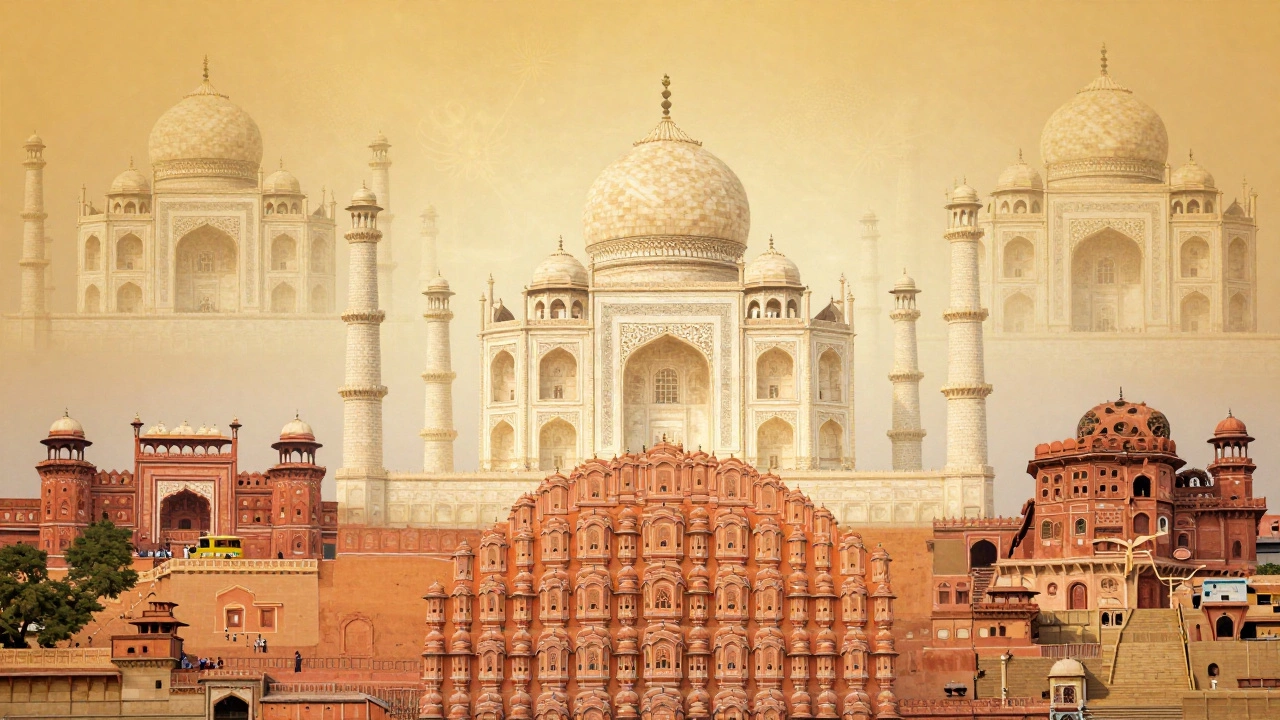
That’s why you can’t point to one city and say, “This is the heritage site of India.” India’s heritage isn’t a single landmark-it’s a network. Agra is the most visited. Jaipur is the most studied. Delhi is the most politically significant. But together, they tell the full story.
Visiting India’s Heritage Cities: What to Know
If you’re planning a trip, don’t just go to Agra. Combine it with Jaipur and Delhi to form the Golden Triangle-a classic route that covers the best of Mughal India. Book tickets online in advance. The Taj Mahal limits daily visitors, and queues can stretch for hours.
Visit early. The light at sunrise turns the Taj from pale pink to glowing white. Avoid weekends. Locals flock to these sites on Sundays, and crowds make it hard to appreciate the details.
Wear comfortable shoes. You’ll walk on uneven stone paths. Carry water. Temperatures in Agra can hit 45°C in May. Bring a scarf or shawl-many sites require modest dress, especially inside mosques and tombs.
Consider hiring a local guide. A good one won’t just recite dates-they’ll explain how the marble inlay was done with tiny chisels, why the minarets lean slightly outward to protect the tomb in an earthquake, or how the calligraphy on the walls changes size to appear uniform from the ground.
Heritage Isn’t Just About Stones
Some of India’s most powerful heritage sites aren’t made of stone at all. The Buddhist monuments at Sanchi, built in the 3rd century BCE, are simple stupas surrounded by carved gateways. But they hold some of the earliest examples of Buddhist storytelling in art. The Rock Shelters of Bhimbetka, in Madhya Pradesh, have paintings over 30,000 years old-some of the oldest human art in the world.
Even the Qutub Minar in Delhi, a 73-meter-tall tower built in the 12th century, isn’t just a monument. It’s a record of cultural change. Its lower levels show Hindu motifs, while the upper levels reflect Islamic calligraphy. It marks the transition from Hindu kingdoms to Muslim rule.
India’s heritage is not static. It’s evolving. New sites like the Dholavira Harappan City were added in 2021, proving that archaeologists are still uncovering new chapters. The country doesn’t just preserve the past-it reinterprets it every day.
Final Thought: There’s No Single Answer
So, which city is known as the heritage site of India? The honest answer is: none of them. And all of them.
Agra holds the most famous monument. Jaipur shows the genius of urban planning. Delhi carries the weight of empires. Varanasi breathes ancient rituals. Each city is a different thread in the same tapestry.
Don’t look for one place. Look for the pattern. That’s where India’s true heritage lies-not in a single landmark, but in the way history, culture, and human creativity are woven together across hundreds of years and thousands of miles.
Is the Taj Mahal the only heritage site in India?
No, the Taj Mahal is just one of 40 UNESCO World Heritage Sites in India. Other major ones include Agra Fort, Jaipur’s City Palace, the Red Fort in Delhi, Humayun’s Tomb, Fatehpur Sikri, and the Hill Forts of Rajasthan. India’s heritage is spread across many cities and types of sites-from ancient rock paintings to living cultural traditions.
Which city has the most heritage sites in India?
Delhi has the most UNESCO-listed sites within its city limits, with three: the Red Fort, Humayun’s Tomb, and Qutub Minar. Agra has two: the Taj Mahal and Agra Fort. Jaipur has one, but it’s a whole city site. So while Delhi leads in number, Agra and Jaipur have the most concentrated and iconic examples.
Can I visit all the heritage sites in one trip?
You can visit the major ones in a 7-10 day trip by following the Golden Triangle route: Delhi → Agra → Jaipur. Add Fatehpur Sikri (just 40 km from Agra) and the Qutub Minar for a fuller experience. Sites like Sanchi, Bhimbetka, or Dholavira are farther away and require separate trips. Most tourists focus on the top five or six sites due to time and logistics.
Why is Agra more famous than other heritage cities?
Agra is more famous because of the Taj Mahal’s global recognition. It’s been featured in movies, textbooks, and travel ads for over a century. Its perfect symmetry, romantic backstory, and visual impact make it instantly memorable. Other sites are equally important historically, but they don’t have the same universal emotional pull.
Are heritage sites in India well-maintained?
Most major sites like the Taj Mahal, Red Fort, and Jaipur’s monuments are well-maintained by the Archaeological Survey of India. But some smaller sites suffer from neglect, pollution, or overcrowding. The Taj Mahal, for example, has faced issues with air pollution turning its marble yellow. Restoration efforts are ongoing, but funding and public awareness remain challenges.

About Author