Which Country Has the Most World Heritage Sites? Italy vs China
World Heritage Site Planner
Select a destination and click "Generate Itinerary Estimate" to see recommendations.
You might assume that a country with a vast landmass and thousands of years of continuous history automatically tops the list for World Heritage Sites. You would be wrong. While nations like India, Mexico, and Germany boast impressive numbers, the race for the top spot is actually a tight tug-of-war between two specific countries: Italy and China. As of August 2026, these two giants are neck-and-neck, each holding over 59 sites on the UNESCO list. But who is currently in first place? And more importantly, why does this matter if you’re planning your next trip?
The answer isn’t just about bragging rights. It’s about understanding how preservation works, where the best travel opportunities lie, and why some ancient wonders get recognized while others remain hidden gems. If you’ve ever wondered which nation holds the key to the most preserved pieces of human history, stick around. We’re breaking down the current rankings, the reasons behind them, and what it means for travelers looking to explore the world’s most protected landmarks.
The Current Leaders: Italy and China
Let’s cut straight to the chase. According to the latest updates from the United Nations Educational, Scientific and Cultural Organization (UNESCO), Italy is the country with the most World Heritage Sites in the world, closely followed by China. For years, Italy held the sole lead, but China has been aggressively adding new sites, particularly those related to its natural landscapes and ancient engineering feats.
As of mid-2026, the count stands at approximately 60 sites for Italy and 59 for China. The gap is razor-thin. In fact, depending on the exact date of the last UNESCO session review, these numbers can swap places within months. This rivalry highlights a crucial point: being number one isn’t static. It changes as new nominations are accepted or as existing sites face threats that could lead to their removal from the list.
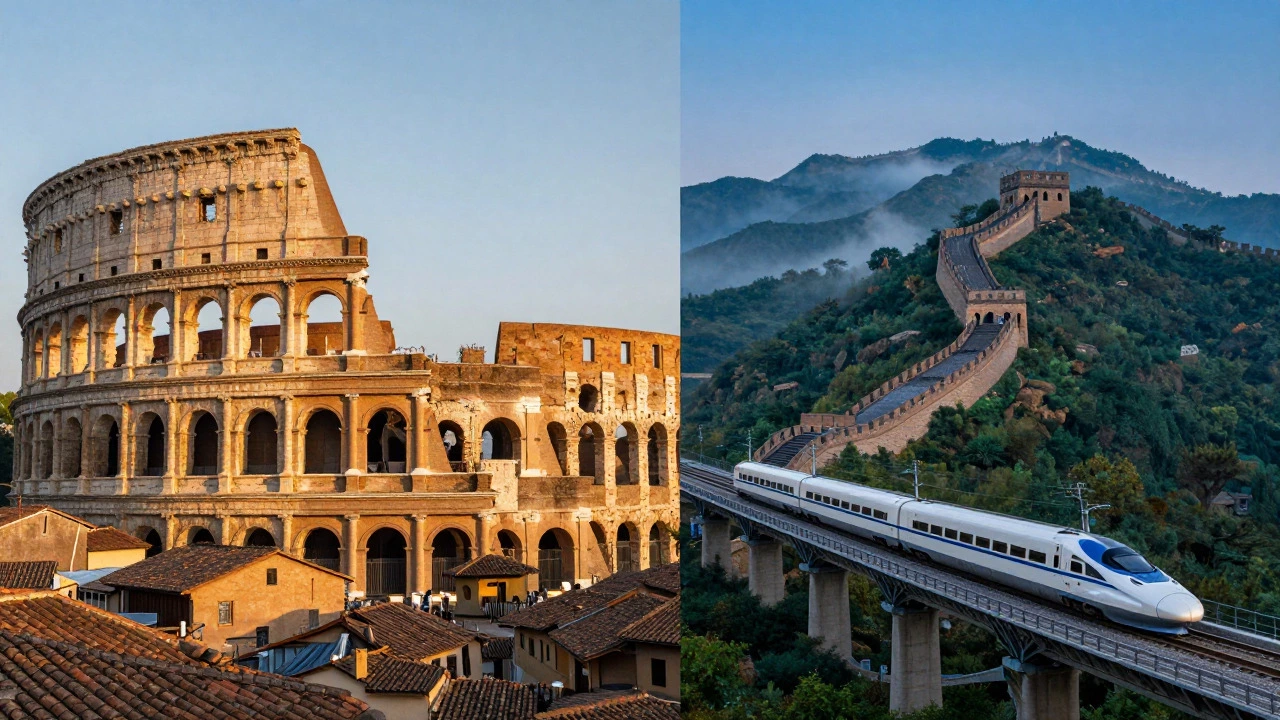
Why do these two countries dominate? It comes down to density and diversity. Italy packs an incredible amount of history into a relatively small geographic area. From the Roman Colosseum in Rome to the historic center of Florence and the archaeological areas of Pompeii, every region seems to have something worth protecting. China, on the other hand, leverages its massive size. Its sites range from the Great Wall and the Forbidden City to the karst landscapes of South China and the complex water management systems of the Dujiangyan Irrigation System.
Why Does the Ranking Matter?
You might ask, "So what if Italy has one more site than China?" For travelers, this ranking is a powerful filter. When a site gets UNESCO status, it undergoes rigorous evaluation for authenticity, integrity, and universal value. This doesn’t mean non-listed sites aren’t beautiful-India’s stepwells or Peru’s remote ruins are stunning-but UNESCO recognition acts as a global stamp of quality and preservation effort.
For tourists, choosing a destination based on the number of World Heritage Sites ensures a high concentration of culturally significant experiences. If you go to Italy, you can spend a week hopping between Venice, Milan, and Naples without running out of major historical attractions. In China, the scale is different; you might need two weeks just to cover Beijing, Xi’an, and the Yangtze River gorge. The ranking helps you gauge the density of "must-see" locations.
Moreover, UNESCO status often brings better infrastructure. Listed sites usually receive international funding for conservation, meaning the pathways are maintained, the information centers are up-to-date, and the local communities are often better equipped to handle tourism. It’s not a guarantee, but it’s a strong indicator of a well-managed tourist experience.

Beyond the Top Two: The Rest of the Podium
While Italy and China fight for gold, the battle for third place is equally interesting. Countries like Germany, a central European nation known for its rich industrial and medieval heritage, and France, home to iconic landmarks like Versailles and Mont-Saint-Michel, consistently hover around the 50-site mark. These nations don’t just rely on ancient ruins; they include modern architecture, industrial complexes, and even wine-growing regions in their totals.
Spain also deserves a mention. With over 50 sites, Spain offers a mix of Moorish architecture in Andalusia, Gothic cathedrals in the north, and prehistoric cave art in Cantabria. Then there’s India. Often overlooked in the top-three conversation, India sits firmly in the top five globally, with over 40 sites. From the Taj Mahal to the Ajanta Caves and the Western Ghats, India’s representation is robust, reflecting its diverse cultural and natural wealth.
Here is a quick look at how the top contenders stack up in terms of site types:
| Country | Total Sites | Primary Focus Areas | Travel Tip |
|---|---|---|---|
| Italy | ~60 | Renaissance Art, Ancient Rome, Coastal Towns | Visit during shoulder season (April/May) to avoid crowds. |
| China | ~59 | Imperial History, Natural Landscapes, Engineering | Plan for longer travel times between sites due to geography. |
| Germany | ~53 | Cathedrals, Castles, Industrial Heritage | Combine city visits with rural castle tours for variety. |
| France | ~52 | Palaces, Prehistoric Caves, Modern Architecture | Use the TGV rail network to connect distant sites efficiently. |
| Spain | ~51 | Moorish History, Colonial Architecture, Cave Art | Explore the south for Islamic influence and the north for green landscapes. |
| India | ~42 | Mughal Architecture, Buddhist Monasteries, Biodiversity | Hire a local guide for deeper context at complex temple sites. |
How Sites Get Added to the List
It’s not enough to just be old or pretty. To become a World Heritage Site, a location must meet at least one of ten strict criteria set by UNESCO. These criteria are divided into cultural and natural categories. A cultural site might represent a masterpiece of human creative genius, like the Sydney Opera House, or exhibit an important interchange of human values, like the historic cities along the Silk Road.
Natural sites, on the other hand, must contain superlative natural phenomena or areas of exceptional natural beauty and aesthetic importance. Think of the Great Barrier Reef in Australia or the Galápagos Islands in Ecuador. The nomination process takes years. A country must submit a detailed dossier proving the site’s "Outstanding Universal Value." Then, experts from the International Council on Monuments and Sites (ICOMOS) or the International Union for Conservation of Nature (IUCN) evaluate it. Only after passing this scrutiny does the World Heritage Committee vote to inscribe the site.
This rigorous process explains why some famous places aren’t on the list. Being famous doesn’t equal being universally valuable in the eyes of UNESCO. For instance, many popular tourist spots fail because they lack sufficient protection laws or have been too heavily altered by development.
What This Means for Travelers Planning Trips
If you’re building an itinerary, use the UNESCO list as a roadmap, but don’t let it limit you. Here are three practical strategies:
- Cluster Your Visits: Since Italy and Germany have high densities of sites, plan road trips that hit multiple locations in a short drive. In contrast, in China or Australia, you’ll need to budget time for long train rides or flights between sites.
- Check for Threats: Some sites are on the "List of World Heritage in Danger." This doesn’t mean you shouldn’t visit-in fact, your tourism dollars might help support conservation efforts-but it does mean access might be restricted or the site might look different than photos suggest. Always check the latest status before booking.
- Look Beyond the Headliners: Everyone knows the Taj Mahal, but few know about the Hill Forts of Rajasthan or the Jantar Mantar observatories. Exploring lesser-known listed sites often provides a more authentic and less crowded experience.
Also, consider the type of experience you want. If you love architecture and urban history, stick to Europe. If you prefer dramatic natural scenery mixed with ancient culture, Asia and the Americas offer incredible depth. The ranking tells you where the quantity is, but your personal interests should dictate the quality of your journey.
The Future of the List
The list is never finished. Every year, new sites are added, and occasionally, sites lose their status. Recently, there has been a push to include more sites from Africa and Latin America, aiming for better geographic balance. This shift matters because it opens up new travel frontiers. Countries like Ethiopia and Brazil are gaining more representation, highlighting their unique contributions to global heritage.
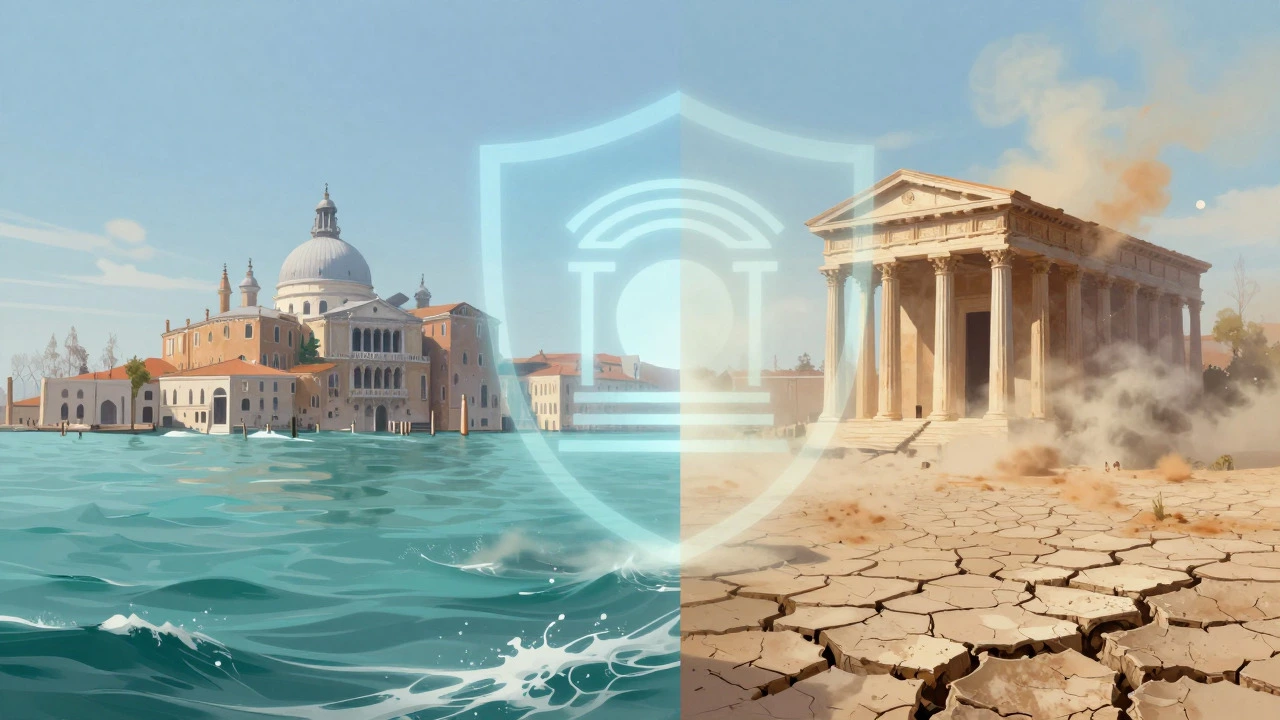
Climate change is another big factor. Rising sea levels threaten coastal sites, while extreme weather events endanger natural wonders. UNESCO is increasingly focusing on resilience, helping sites adapt so they remain visitable for future generations. As a traveler, supporting sustainable tourism practices helps ensure these places stay on the list-and open to us.
Which country currently has the most World Heritage Sites?
As of 2026, Italy holds the title with approximately 60 sites, closely followed by China with 59. The numbers fluctuate slightly as new sites are nominated and approved annually.
Does having more World Heritage Sites make a country better for tourists?
Not necessarily. It indicates a high density of historically and naturally significant locations, which can be great for culture-focused travelers. However, the quality of your trip depends on infrastructure, accessibility, and your personal interests, not just the count.
Can a site lose its World Heritage status?
Yes. If a site loses its outstanding universal value due to poor management, excessive development, or neglect, it can be removed from the list. Liverpool Maritime Mercantile City was famously delisted in 2021 due to large-scale development projects.
How many World Heritage Sites does India have?
India has over 40 World Heritage Sites, placing it among the top five countries globally. These include iconic structures like the Taj Mahal, natural reserves like Kaziranga National Park, and architectural marvels like the Ellora Caves.
Are all UNESCO sites free to visit?
No. Many UNESCO sites charge entrance fees to fund maintenance and conservation. Costs vary widely; some national parks have modest entry fees, while major museums or palaces may charge significantly more. Always check local ticketing policies before visiting.


About Author