What Is Trekking vs. Hiking? Key Differences for India’s Trails
Trekking vs Hiking Calculator
People often use the words trekking and hiking interchangeably, but if you’ve ever stood at the base of a Himalayan pass or walked a forest trail in the Western Ghats, you know they’re not the same. In India, where you can hike through tea plantations in Munnar one day and trek across high-altitude passes in Ladakh the next, understanding the difference isn’t just helpful-it’s essential for safety, preparation, and enjoyment.
Trekking is a Multi-Day Expedition
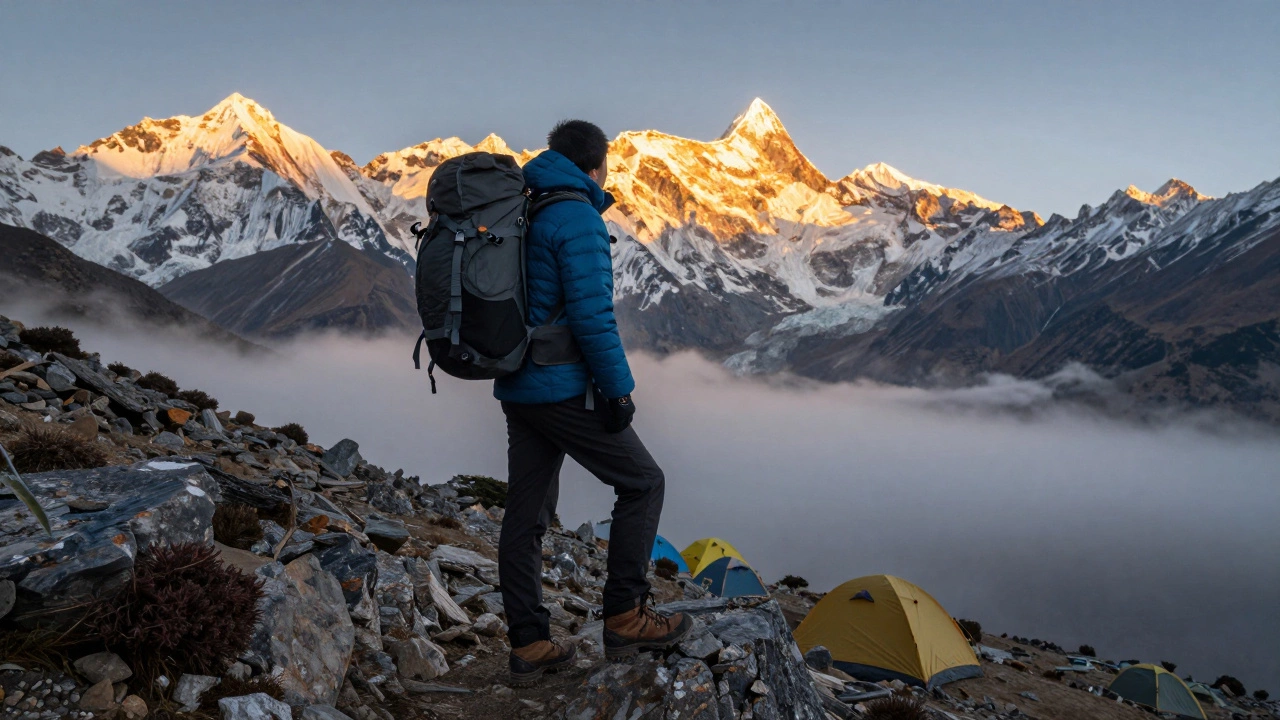
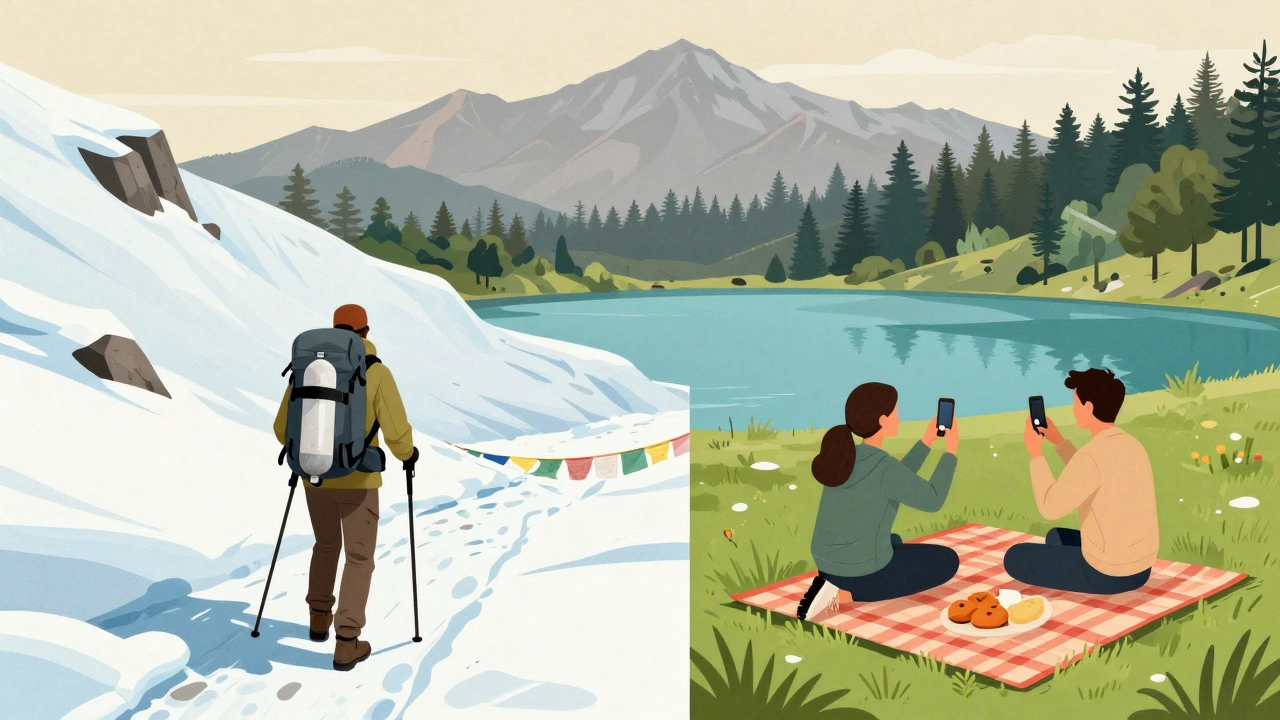
Trekking in India isn’t a morning walk with snacks and a camera. It’s a multi-day journey through remote, rugged terrain, often requiring overnight stays, specialized gear, and physical endurance. Think of the Roopkund Trek in Uttarakhand, where you climb above 16,000 feet over five days, sleeping in tents, crossing icy streams, and navigating thin air. Or the Sandakphu Trek in West Bengal, where you hike for days through rhododendron forests with views of Everest and Kanchenjunga.Trekking routes are rarely marked like regular trails. You follow guides, local porters, or GPS waypoints. Weather changes fast in the mountains-sunshine turns to snow squalls in hours. That’s why trekkers carry sleeping bags, stoves, extra food, and emergency kits. Most organized treks in India include porters, cooks, and sometimes even oxygen cylinders for high-altitude routes.
India’s most famous treks-like the Kashmir Great Lakes, Nag Tibba, or the Valley of Flowers-are designed to take you deep into nature, away from roads, villages, and cell service. You’re not just walking-you’re surviving, adapting, and moving through landscapes few people ever see.
Hiking Is a Day Trip with a View
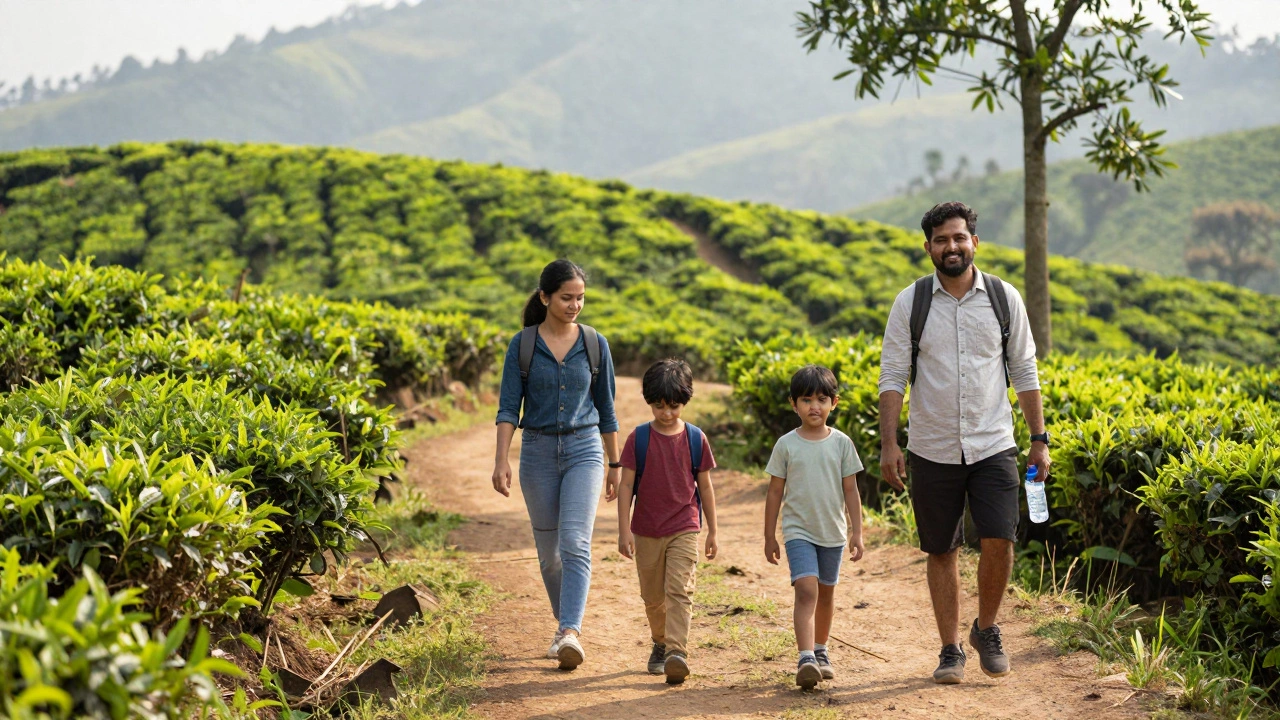
Hiking, on the other hand, is what you do when you want fresh air, a good workout, and a decent photo opportunity-all within a few hours. In India, that could mean walking the trails around Ooty’s Botanical Garden, climbing the steps to the top of Doddabetta, or strolling the forest paths in Coorg. These are usually well-maintained, marked, and accessible by car or bus.Hikers carry water, a light snack, maybe a rain jacket, and a phone. They wear sneakers or trail shoes, not mountaineering boots. There’s no need for tents, sleeping bags, or cooking gear. Most hikes in India last between two to six hours. You start in the morning, reach a viewpoint or waterfall, take pictures, eat lunch, and head back by evening.
Hiking doesn’t require permits in most places (unlike some treks in restricted zones like Spiti or Nanda Devi). You don’t need to train for weeks. You just need comfortable shoes and a sense of adventure. In places like Munnar, Coonoor, or Panchgani, hiking is a weekend activity for families, retirees, and office workers looking to escape the city.
Distance and Elevation: The Real Divide
The easiest way to tell the difference? Look at the numbers.A typical hike in India covers 5 to 15 kilometers with a climb of under 500 meters. The Kodaikanal Lake Loop is about 10 km round trip, gaining 200 meters in elevation. You’re done by lunchtime.
A trek? That’s 15 to 40+ kilometers per day, with elevation gains of 1,000 to 2,500 meters. The Hampta Pass Trek, for example, involves climbing from 12,000 feet to 14,000 feet in one day, then camping overnight before continuing. Most treks in India span 3 to 10 days total, covering 50 to 150 kilometers.
Altitude sickness isn’t a concern on most hikes. But on treks above 10,000 feet-like those in Ladakh, Sikkim, or Uttarakhand-it’s a real risk. That’s why experienced trekkers acclimatize for days before starting. Hikers don’t need to worry about that.
Equipment: What You Actually Need
If you’re planning a trek in India, your packing list looks like this:- Waterproof, ankle-supporting trekking boots
- Thermal layers, down jacket, windproof shell
- Sleeping bag rated for sub-zero temperatures
- Headlamp, water purifier, first-aid kit
- Backpack (40-60 liters), trekking poles
- Permits (required for many high-altitude routes)
For a hike, you need:
- Comfortable walking shoes or trail runners
- Light rain jacket or windbreaker
- Water bottle or small hydration pack
- Sunscreen, hat, and snacks
- Phone with offline maps (optional)
There’s no overlap. You can’t do the Markha Valley Trek in running shoes. And you don’t need a 50-liter backpack to walk to the top of Elephant’s Head in Lonavala.
Who Goes Where? The People Behind the Trails
Hiking in India is for everyone. Families with kids, elderly couples, solo travelers, and fitness enthusiasts all hit the trails on weekends. In Kerala, you’ll see grandparents walking the Munnar tea trail. In Maharashtra, you’ll find teenagers hiking to Rajmachi Fort.Trekking? That’s a different crowd. Most trekkers are between 20 and 40 years old, physically fit, and looking for challenge-not just scenery. Many book through adventure tour operators like Indiahikes, Trek The Himalayas, or Alpine Ascents. They train for months. They track their heart rate, hydration, and altitude gain. They post their summit photos on Instagram with hashtags like #TrekkingIndia and #HighAltitudeLife.
There’s also a cultural divide. Hiking is casual. Trekking is ritual. In the Himalayas, trekkers often carry prayer flags, stop at small shrines, and follow local customs. Hikers? They’re more likely to be snapping selfies at a viewpoint.
When to Choose Trekking Over Hiking (and Vice Versa)
If you have:- One day? Go hiking.
- Three to ten days? Go trekking.
- No experience? Start with a hike like Kalsubai or Tungnath.
- Want to push your limits? Try the Goecha La or Rupin Pass.
- Traveling with kids under 12? Stick to hikes.
- Want to see remote monasteries, nomadic villages, or glacial lakes? Trekking only.
India’s landscape gives you both. You can hike in the Western Ghats, then fly to Ladakh and trek for a week. The country doesn’t force you to pick one. But knowing the difference means you won’t show up to a 12-day trek with flip-flops and a daypack.
Top 5 Hikes vs. Top 5 Treks in India
| Hikes (Day Trips) | Treks (Multi-Day Expeditions) |
|---|---|
| Kodaikanal Lake Loop (Tamil Nadu) | Roopkund Trek (Uttarakhand) |
| Munnar Tea Garden Walk (Kerala) | Hampta Pass (Himachal Pradesh) |
| Rajmachi Fort (Maharashtra) | Markha Valley (Ladakh) |
| Elephant’s Head (Maharashtra) | Goecha La (Sikkim) |
| Panchgani Table Land (Maharashtra) | Kashmir Great Lakes (Jammu & Kashmir) |
Notice how the hikes are all under 15 km and close to towns? The treks? They’re remote, high, and require planning. One is a walk. The other is an expedition.
Common Mistakes First-Timers Make
Many people think trekking is just a longer hike. That’s how they end up:- Trying to do the Valley of Flowers Trek in sneakers
- Not bringing warm clothes on a Ladakh trek in June
- Expecting Wi-Fi on the Rupin Pass
- Booking a 7-day trek without prior fitness training
- Carrying a 20-liter backpack on a 10-day expedition
India’s mountains don’t care if you’re Instagram-ready. They care if you’re prepared.
Final Tip: Start Small, Think Big
If you’ve never trekked before, don’t jump into the Everest Base Camp route. Start with a day hike like the one to Kalsubai Peak-the highest point in Maharashtra. Then try a 2-day trek like Nag Tibba. After that, you’ll know if you’re ready for the Himalayas.Trekking isn’t just about reaching the top. It’s about the silence between the steps, the smell of pine at dawn, the way your legs burn and then learn to trust themselves again. Hiking is nice. Trekking? It changes you.
Can you hike in the Himalayas without trekking gear?
You can hike on lower trails like the one near Mussoorie or Dharamshala without full trekking gear. But if you’re going above 3,000 meters, even on a day trip, you need at least waterproof boots, a warm layer, and a rain jacket. Many so-called "hikes" in the Himalayas are actually short treks in disguise.
Is trekking in India safe for beginners?
Yes-but only if you choose the right trek. Routes like Nag Tibba, Kedarkantha, or Dayara Bugyal are beginner-friendly and well-supported. Avoid high-altitude treks like Goecha La or Pin Parvati until you’ve done at least two shorter treks. Always go with a reputable guide or group. Don’t go solo on your first trek.
Do I need a permit for trekking in India?
Many popular treks require permits, especially in protected areas like Ladakh, Sikkim, Uttarakhand’s Nanda Devi, and parts of Himachal Pradesh. Some are easy to get online. Others need a registered guide to apply for you. Hiking trails in national parks like Jim Corbett or Bandipur usually don’t require permits unless you’re entering restricted zones.
What’s the best time to go trekking in India?
The best months are April to June and September to November. Spring offers blooming rhododendrons; autumn gives clear skies and stable weather. Avoid monsoon season (July-August)-trails turn muddy and landslides are common. Winter treks (December-February) are possible in lower regions like Nag Tibba, but high-altitude routes like Roopkund are snowed in.
Can I do a trek without a guide in India?
Some treks like Valley of Flowers or Kedarkantha can be done solo if you’re experienced and have good GPS. But in restricted areas like Ladakh, Spiti, or Arunachal Pradesh, a registered guide is mandatory. Even on open trails, a guide adds safety, local knowledge, and helps with permits. For first-timers, going with a group is strongly recommended.
About Author

Popular Posts