Bhubaneswar Temples: Explore Odisha's Sacred Architecture and Spiritual Heart
When you think of Bhubaneswar temples, a dense cluster of ancient Hindu shrines concentrated in one of India’s oldest continuously inhabited cities. Also known as the Temple City of India, Bhubaneswar holds over 500 temples, many dating back to the 7th to 12th centuries, built by dynasties who saw stone as scripture. These aren’t just relics—they’re living places of worship where daily rituals, chants, and offerings continue exactly as they did a thousand years ago.
The Lingaraja Temple, the largest and most revered shrine in Bhubaneswar, dedicated to Lord Shiva in his form as Harihara dominates the skyline with its towering spire and intricate carvings of dancers, gods, and mythical beasts. Just steps away, the Mukteshvara Temple, often called the gem of Odishan architecture, offers a quieter, more intimate experience with its delicate torana arch and sculpted panels that tell stories of devotion and daily life. These aren’t museum pieces—they’re active spiritual centers where locals light incense, tie threads for wishes, and bathe in sacred tanks before prayer.
What makes Bhubaneswar’s temples different from others in India? It’s the Kalinga style, a distinct regional architecture with curvilinear towers, carved stone walls, and precise symmetry. Unlike the towering gopurams of Tamil Nadu or the golden spires of North India, Odisha’s temples rise like lotus buds from the earth, each detail carved by hand without modern tools. You’ll see lions guarding doorways, apsaras mid-dance, and serpents coiled around pillars—all part of a visual language that turns stone into prayer.
Visiting these temples doesn’t require a scholar’s background—just respect. Remove your shoes, cover your shoulders, and avoid leather belts or bags inside. Many temples open early, before the heat hits, and close by late afternoon. Locals will guide you gently if you’re unsure; don’t be afraid to ask. The real magic isn’t just in the carvings—it’s in the quiet moments: the smell of sandalwood, the echo of temple bells, the way sunlight falls across a 1,000-year-old wall.
Below, you’ll find real travel stories and practical tips from people who’ve walked these temple paths—whether they came for the history, the peace, or the hidden food stalls near the gates. From how to avoid crowds at sunrise to which temple has the best prasad, these posts cut through the noise and give you what actually matters.
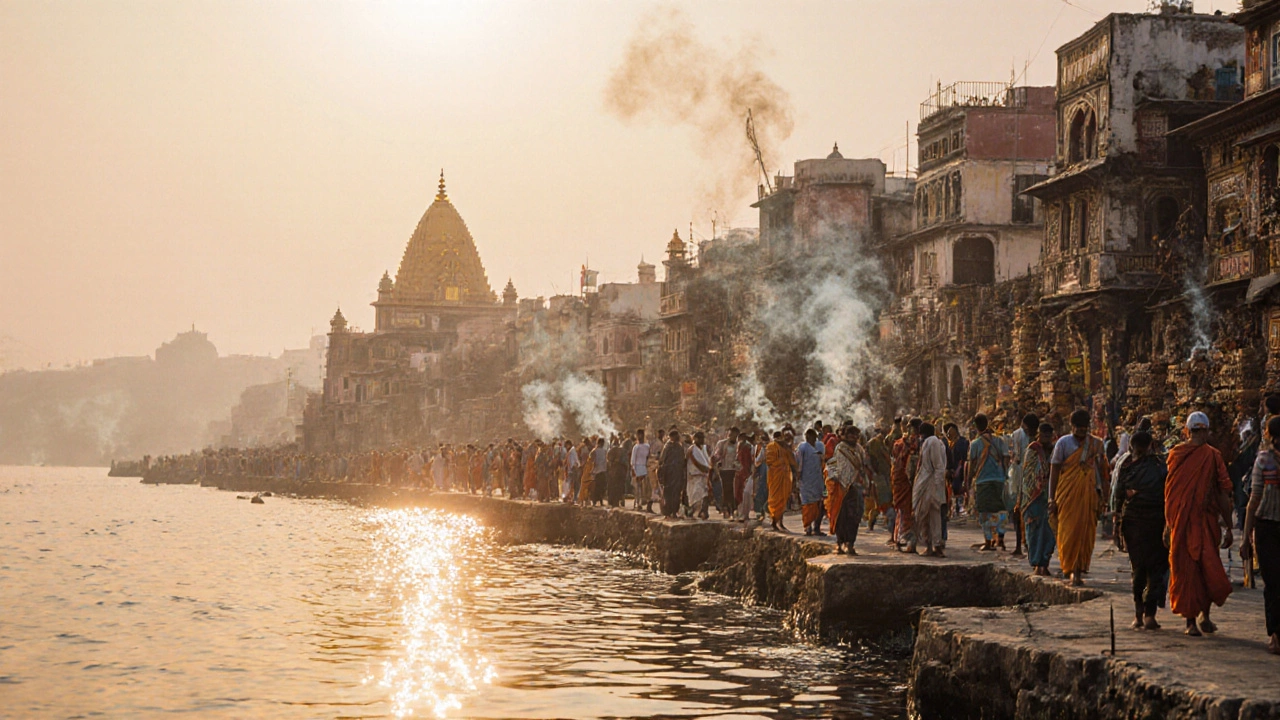
Which Indian City Has the Most Temples? Top Contenders for Temple Tourism
Varanasi has over 2,100 temples, making it India's temple capital. Bhubaneswar and Madurai also lead in temple density and heritage. Discover which city offers the deepest spiritual experience for temple tours in India.