What Does a US Citizen Need to Travel to India in 2026: Visa, Passport & Entry Rules
India Travel Readiness Checker
Passport Validity Check
Your US passport must be valid for at least 6 months beyond your arrival date in India.
Select Your Visa Type
Choose the e-Visa that best matches your travel purpose.
e-Tourist (30 Days)
Short holidays & quick visits
- Validity: 30 days from issue
- Max Stay: 30 days
- Entries: Single/Multiple
e-Tourist (1 Year)
Multiple short trips over a year
- Validity: 1 year from issue
- Max Stay: 90 days/visit
- Entries: Multiple
e-Tourist (5 Years)
Frequent travelers & long-term planning
- Validity: 5 years from issue
- Max Stay: 180 days/visit
- Entries: Multiple
e-Business Visa
Meetings, conferences, trade fairs
- Validity: 1 year
- Max Stay: 180 days/visit
- Entries: Multiple
e-Medical Visa
Medical treatment & attendants
- Validity: 60 days
- Max Stay: 60 days
- Entries: Triple entry
Final Travel Details
Complete these details to generate your personalized checklist.
Your India Travel Readiness Report
Planning a trip from the United States to India feels like organizing a major expedition. The distance is vast, the cultures are distinct, and the paperwork can feel overwhelming if you start late. For US citizens, the biggest hurdle isn't the flight cost-it's getting the right permission to land. Since mid-2024, India has tightened its digital entry rules, making the old "apply at the embassy" method largely obsolete for tourists.
You don't need a physical sticker in your passport anymore for most short trips. Instead, you need an e-Visa, which is an electronic travel authorization linked digitally to your passport number. But that’s just the first step. Your passport needs specific validity margins, your return ticket must be booked, and you need to know exactly what you can bring into the country without paying surprise taxes. Let’s break down every document and rule you need to clear immigration smoothly.
The Golden Rule: Passport Validity
Before you even think about applying for a visa, check your passport expiration date. This is where most travelers get stuck. Indian immigration officers are strict about this rule, and airlines will often deny boarding if you don’t meet it.
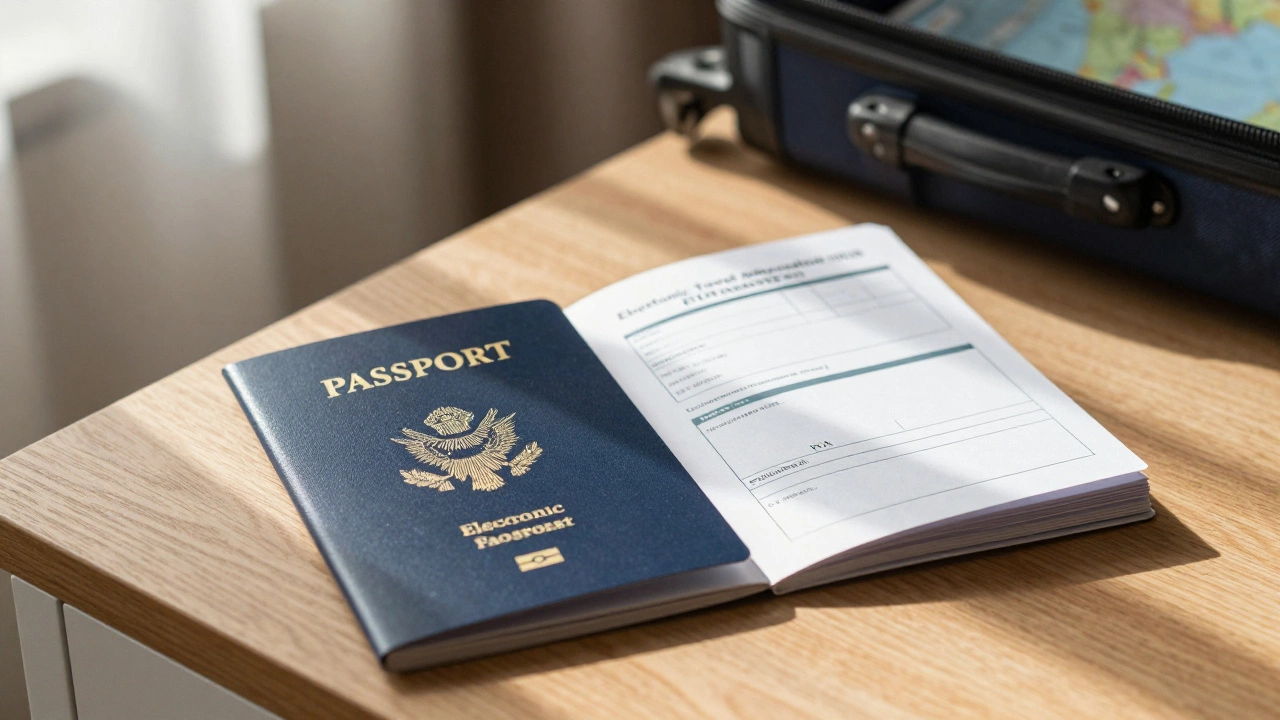
Your US passport must be valid for at least six months beyond your planned date of arrival in India. If you plan to arrive on December 1, 2026, your passport cannot expire before June 1, 2027. There are no exceptions for short trips. Even if you’re only staying for five days, that six-month buffer is mandatory.
Additionally, your passport must have at least two blank pages. These aren’t for stamps-India uses digital records now-but immigration officers sometimes still want to write notes or attach temporary documentation if there’s a system glitch. It’s better to have them than to argue with an officer at Delhi’s Indira Gandhi International Airport.
Understanding the E-Visa System
Gone are the days of mailing passports to consulates. India now offers three main types of e-Visas for US citizens. You need to pick the right one based on why you’re traveling. Applying for the wrong type can lead to rejection or denial of entry.
| Visa Type | Best For | Validity Period | Max Stay Per Visit |
|---|---|---|---|
| e-Tourist Visa (30 Days) | Short holidays, quick visits | 30 days from issue | 30 days |
| e-Tourist Visa (1 Year) | Multiple short trips over a year | 1 year from issue | 90 days per visit |
| e-Tourist Visa (5 Years) | Frequent travelers, long-term planning | 5 years from issue | 180 days per visit |
| e-Business Visa | Meetings, conferences, trade fairs | 1 year | 180 days per visit |
| e-Medical Visa | Medical treatment, accompanying attendants | 60 days | 60 days |
Most US tourists choose the 1-year or 5-year e-Tourist Visa because it allows multiple entries. If you’re just visiting family for a week, the 30-day option is cheaper but risky if your flights get delayed. The application happens entirely online through the official Indian government portal. You’ll need a digital photo, a scan of your passport bio page, and a credit card to pay the fee.
Processing usually takes 72 hours, but during peak seasons (October to March), it can take longer. Apply at least one week before your flight. Once approved, you’ll receive an Electronic Travel Authorization (ETA) via email. Print a copy. While the data is linked to your passport, having a physical backup saves headaches if airport Wi-Fi fails.
Entry Points and Immigration Process
You can’t fly into just any airport in India with an e-Visa. You must enter through one of the designated international airports or seaports. Major hubs like Delhi (DEL), Mumbai (BOM), Bangalore (BLR), Chennai (MAA), Hyderabad (HYD), Kolkata (CCU), Goa (GOI), Kochi (COK), and Thiruvananthapuram (TRV) all accept e-Visas.
If you’re flying into a smaller regional airport, double-check the list on the official visa website. Some smaller airstrips do not have the infrastructure to process e-Visa holders, and you could be turned away or forced to fly out immediately.
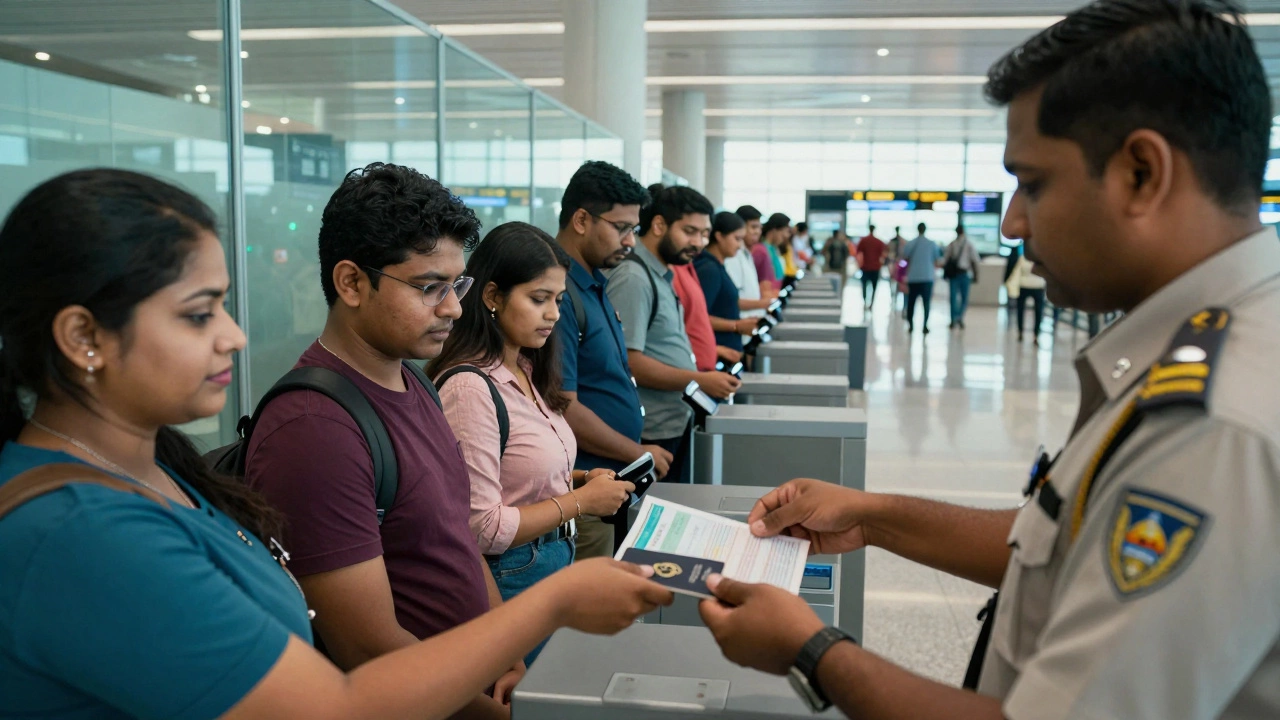
At immigration, expect these steps:
- Present your passport and printed ETA.
- Undergo biometric scanning (fingerprints and iris scan).
- Answer basic questions about your purpose of visit and accommodation.
- Receive a stamp or digital confirmation of entry.
Have your hotel booking confirmation ready. Officers may ask to see where you’re staying for the first night. If you’re staying with friends, bring their address and phone number. Vague answers like "I'll figure it out later" raise red flags.
Health Requirements and Vaccinations
As of 2026, India does not require proof of vaccination for most US travelers unless you’re arriving from a country with active yellow fever outbreaks. Since the US is not on that list, you won’t need a Yellow Fever Certificate.
However, health precautions are smart. Typhoid, Hepatitis A, and Japanese Encephalitis vaccines are recommended by the CDC for travelers going beyond major cities. Malaria risk exists in rural areas and forested regions, so consult your doctor about prophylactics if you’re trekking in places like Kerala’s backwaters or Rajasthan’s outskirts.
Travel insurance is not legally required, but it’s practically essential. Medical care in private hospitals in cities like Mumbai and Delhi is world-class but expensive for foreigners. A policy covering $100,000+ in medical expenses and emergency evacuation is wise.
Customs Regulations: What You Can Bring
India has strict customs rules. Breaking them can lead to fines, confiscation, or even deportation. Here’s what you need to know:
- Currency: You can carry unlimited foreign currency, but you must declare amounts exceeding $5,000 in cash or $10,000 in total value (including checks and traveler’s checks). Indian Rupees (INR) are restricted: you can bring in up to ₹50,000, but you can’t take more than ₹25,000 out unless you bought it through authorized channels and have receipts.
- Electronics: Bringing laptops, cameras, and phones is fine. Declare high-value items if asked. Avoid bringing duplicate electronics unless you’re a professional photographer or journalist.
- Food and Plants: Do not bring fresh fruits, vegetables, seeds, or soil. They are confiscated and destroyed. Packaged snacks are usually okay, but meat products are banned.
- Alcohol and Tobacco: Duty-free allowances are limited: 1 liter of alcohol and 100 cigarettes or 25 cigars. Exceeding this means paying heavy duties.
- Cultural Items: Exporting antiques, artifacts, or religious icons requires special permits. Don’t buy old statues or manuscripts from street vendors-they might be illegal exports.
Also, note that drugs enforcement is extremely strict. Possession of even small amounts of cannabis or other controlled substances can result in severe prison sentences. Zero tolerance applies.
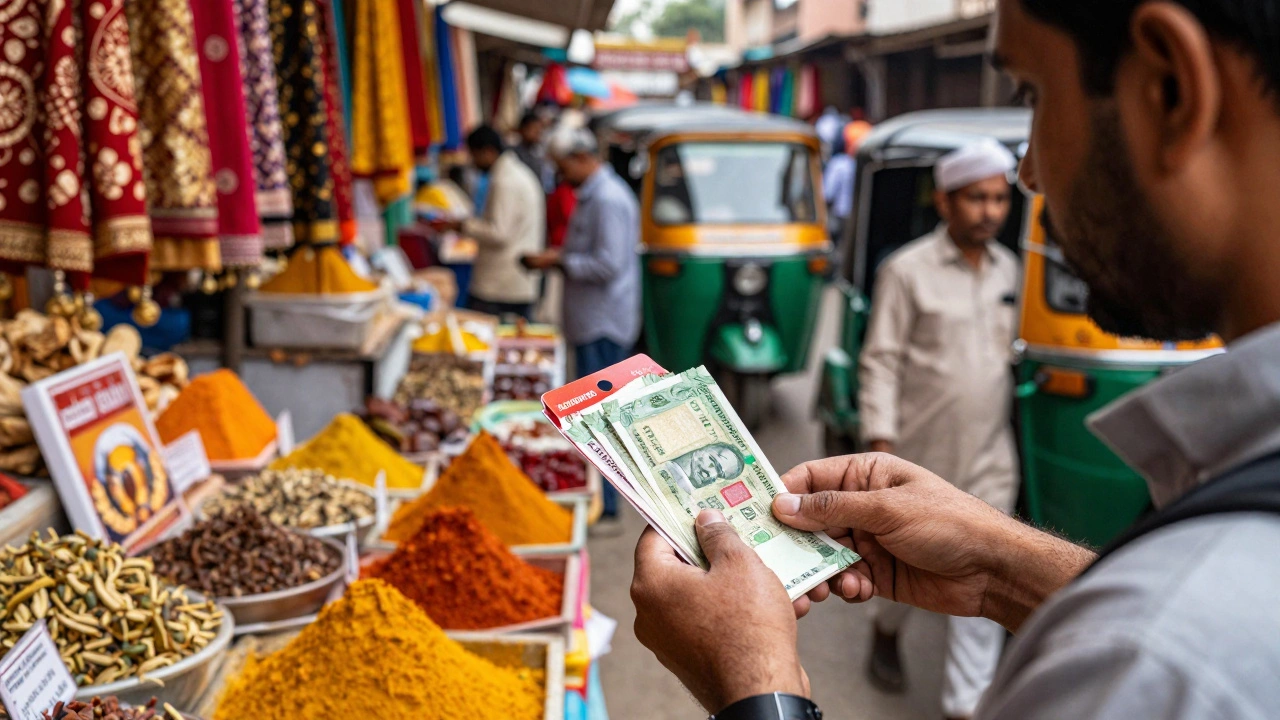
Money Matters: ATMs, Cards, and Cash
While major hotels and restaurants in tourist areas accept credit cards, cash is king in India. Small shops, auto-rickshaws, and local markets operate on cash. Carry enough rupees for daily expenses.
ATMs are widely available in cities and towns. Most accept Visa and Mastercard. However, some charge transaction fees, and others have low withdrawal limits (around ₹10,000-₹20,000 per day). Notify your bank before traveling to avoid frozen cards due to suspicious overseas activity.
Dollar-to-rupee exchange rates fluctuate. As of mid-2026, 1 USD ≈ ₹83-85 INR. Exchange money at authorized dealers or banks, not on the street. Street exchangers offer better rates but are often scams or involve counterfeit notes.
Safety and Connectivity Tips
India is generally safe for tourists, but petty theft and scams target foreigners. Keep copies of your passport and visa separately from the originals. Use hotel safes. Avoid flashing expensive jewelry or cameras in crowded areas.
For connectivity, buy a local SIM card upon arrival. Airtel and Jio offer affordable prepaid plans with good coverage. You’ll need your passport for registration. Roaming from US carriers is possible but costly.
Finally, respect local customs. Dress modestly, especially in religious sites. Ask before taking photos of people. Learning a few Hindi phrases goes a long way in building rapport.
Can I apply for an India visa on arrival as a US citizen?
No. India abolished the traditional Visa on Arrival for most nationalities. US citizens must obtain an e-Visa online before traveling. The e-Visa serves the same purpose but must be approved prior to departure.
How long does it take to get an e-Visa for India?
Standard processing is 72 hours. However, during peak travel seasons, it can take up to 5-7 business days. Apply at least one week before your flight to account for delays or additional document requests.
Do I need to show proof of funds when entering India?
Immigration officers rarely ask for proof of funds, but they can request evidence that you can support yourself financially during your stay. Carry some cash or show recent bank statements if questioned. Having a confirmed return ticket also helps demonstrate intent to leave.
Is it legal to use drones in India as a tourist?
Flying drones in India is heavily regulated. Tourists generally cannot operate drones without prior permission from the Directorate General of Civil Aviation (DGCA). Unauthorized drone usage can lead to confiscation and legal penalties. Check current DGCA guidelines before bringing one.
What should I do if my e-Visa application is rejected?
Rejections usually happen due to incorrect photo specifications, unclear passport scans, or mismatched information. You can reapply after addressing the issues. There’s no formal appeal process for e-Visas. If repeated applications fail, contact the nearest Indian consulate for assistance.
Can I extend my stay in India beyond the e-Visa limit?
E-Visas are non-extendable and non-convertible. If you need to stay longer, you must exit India before your visa expires and reapply for a new visa from abroad. Overstaying results in heavy fines, bans on future entry, and potential detention.
Are there any restrictions on photography in India?
Photographing military installations, airports, bridges, and government buildings is prohibited. Always ask permission before photographing people, especially women and children. In religious sites, flash photography may be banned. Respect local sensitivities to avoid conflicts.


About Author

Popular Posts