Valley of Flowers: India’s Magical High-Altitude Wildflower Haven
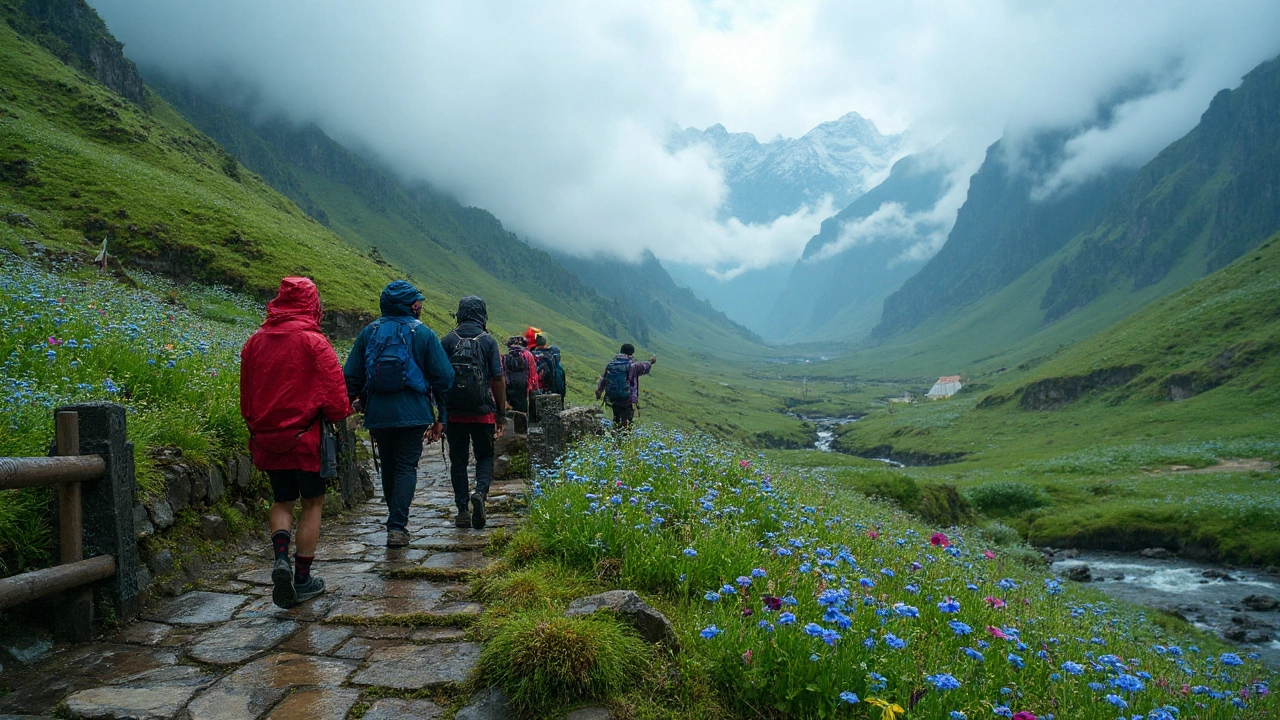
When you think of India’s natural wonders, temples and beaches often come to mind—but few places match the quiet magic of the Valley of Flowers, a high-altitude Himalayan meadow in Uttarakhand, renowned for its explosion of rare alpine blooms and untouched wilderness. Also known as Valley of Flowers National Park, this UNESCO World Heritage Site isn’t just a pretty sight—it’s a living ecosystem that draws botanists, trekkers, and soul-searchers from across the world. Unlike crowded pilgrimage routes or busy hill stations, this valley stays hidden for most of the year, buried under snow until late June. By July, the ground transforms into a carpet of over 500 species of wildflowers—blue poppies, brahma kamal, geraniums, and more—each blooming in perfect sync with the short summer season.
The journey to the Valley of Flowers begins in the town of Govindghat, a small base camp in Uttarakhand where trekkers start their 14-kilometer hike to the valley. From there, the trail winds past waterfalls, through pine forests, and along the Pushpawati River, slowly climbing to 3,600 meters. It’s not a technical climb, but altitude and weather make it challenging. Most travelers do it as a day trip from Hemkund Sahib, a sacred Sikh shrine perched above the valley, often visited together as a spiritual and natural pilgrimage. The two sites are so closely linked that many visitors combine them—praying at the gurudwara in the morning and wandering through the flowers in the afternoon.
What makes this place special isn’t just the flowers. It’s the silence. No loud vendors, no traffic, no crowds—just wind, birds, and the occasional whisper of a trekker in awe. Unlike other Indian destinations where culture dominates, here, nature speaks louder. The valley was discovered by British mountaineers in 1931, but it’s been sacred to locals for centuries, tied to stories from the Mahabharata. Today, it’s protected by strict rules: no plastic, no camping inside, no picking flowers. These limits keep it alive.
If you’re planning a trip, timing is everything. The window is narrow—July to early September. Outside that, it’s snow and silence. You’ll need a permit, a good pair of boots, and patience for changing weather. But if you go when the blooms are at their peak, you’ll understand why this place is called a living rainbow. You won’t just see flowers—you’ll feel them. The scent, the colors, the stillness—it sticks with you long after you leave.
Below, you’ll find real travel stories, tips, and insights from people who’ve made the trek—whether they came for the peace, the photography, or the challenge. No fluff. Just what you need to know before you go.
What Is the Prettiest Place in India? Valley of Flowers + Best Alternatives
Shortlist one clear winner-Valley of Flowers-plus stunning alternatives by season and style. Get when to go, costs, itineraries, and quick decision tips.