Temple Etiquette India: What to Know Before You Visit
When you step into a temple etiquette India, the unwritten rules that guide respectful behavior at Hindu places of worship. Also known as Hindu temple customs, it’s not just about what you wear—it’s about how you move, speak, and think in sacred spaces. India’s temples aren’t museums. They’re alive with prayer, offerings, and daily rituals that have continued for centuries. Showing respect isn’t optional—it’s expected. And if you don’t know the basics, you might accidentally offend someone—or worse, disrupt someone’s prayer.
First, dress code India temples, the standard of modest clothing required when entering religious sites matters more than you think. Shoulders and knees must be covered. No shorts, tank tops, or revealing dresses. In South India, men often go bare-chested inside the inner sanctum, but tourists should still wear shirts. Women should avoid wearing skirts or tight pants. Many temples provide shawls or sarongs at the entrance, but don’t count on it. Bring your own. Footwear is always left outside—no exceptions. Even if you’re just popping in for a photo, take off your shoes. The ground is sacred. And yes, that includes flip-flops.
Then there’s behavior. Hindu temple rules, the practices that maintain spiritual purity and order within temple grounds are strict but simple. Don’t point your feet at deities. Don’t turn your back to the main idol. Don’t touch the idols or offerings unless invited. Photography? Often allowed outside, but rarely inside the inner chamber. Look for signs or ask quietly. Some temples ban phones entirely. Don’t bring leather items inside—belts, wallets, or shoes made from animal skin are considered impure. And never eat or drink on temple grounds. Even water bottles are frowned upon unless you’re part of a ritual.
What about touching? You’ll see people pressing foreheads to the temple floor, circling the sanctum, or offering coins. That’s all normal. But as a visitor, you don’t have to join in. Just stand quietly, observe, and move with the flow. If you’re unsure, follow someone who looks like they know what they’re doing. Most locals will understand you’re a guest. But don’t stand in front of someone praying. Don’t block the path. Don’t talk loudly. Keep your voice low. This isn’t a tourist attraction—it’s someone’s church, mosque, or synagogue, rolled into one.
And don’t forget the Indian religious customs, the cultural traditions tied to worship, offerings, and daily rituals across India’s diverse regions. In some temples, only Hindus are allowed inside the main shrine. In others, everyone is welcome. It varies by place. In Tirupati, you’ll be given a hair-cutting ticket and a sacred thread. In Varanasi, you’ll see people bathing in the Ganges before entering. In Kerala, you’ll be offered a flower and a coconut. These aren’t tourist shows—they’re part of the ritual. Don’t refuse unless you have a religious reason. Accepting is a sign of respect.
Temple etiquette India isn’t about fear or restriction. It’s about connection. When you follow the rules, you’re not just being polite—you’re honoring centuries of devotion. You’re stepping into a rhythm older than most countries. And when you do it right, you’ll feel it. The quiet hum of chants, the smell of incense, the warmth of shared silence. That’s what you came for. Not just to see a temple. But to understand it.
Below, you’ll find real stories and practical tips from travelers who’ve been there—what worked, what didn’t, and how to avoid the mistakes that make locals shake their heads. Whether you’re heading to the Golden Temple, Meenakshi Amman, or a quiet village shrine, these posts will help you walk in with confidence, not confusion.
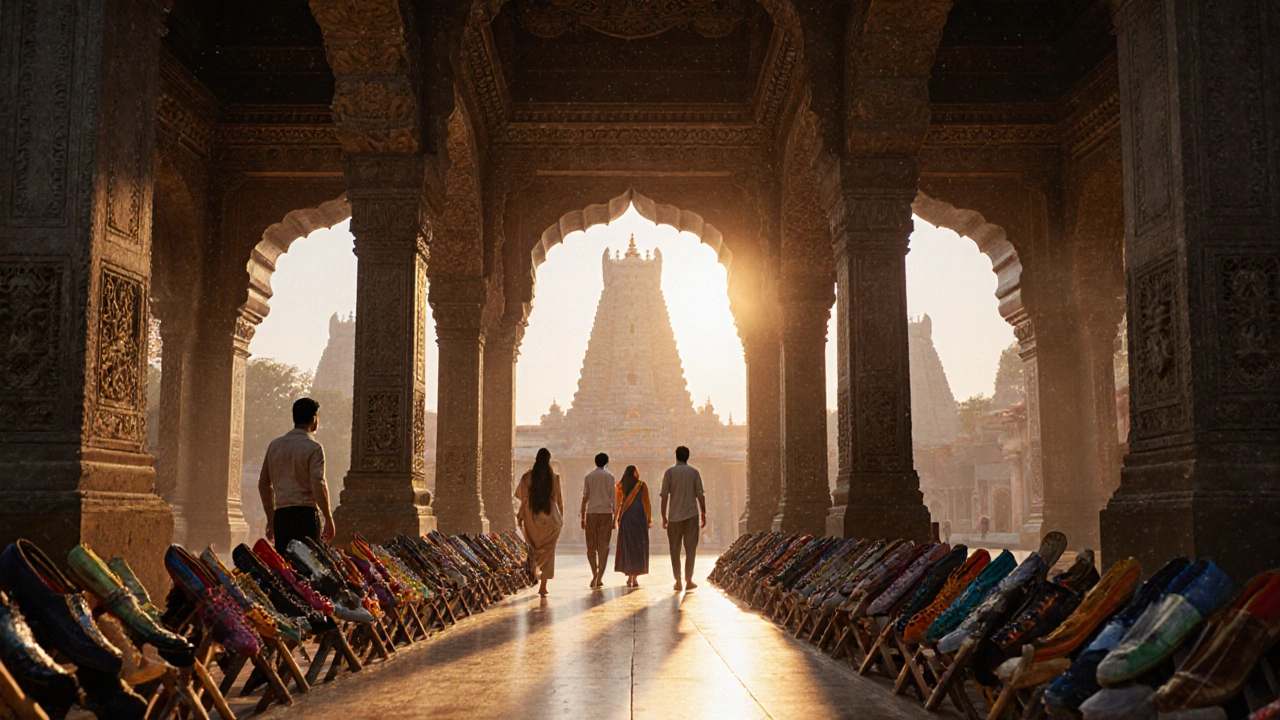
What to Do Before Entering a Temple in India: A Simple Guide for Visitors
Learn the essential customs before entering a temple in India - from removing shoes and dressing modestly to avoiding leather and respecting sacred spaces. A practical guide for travelers.