Must Visit Indian Temples: Top Sacred Sites and What to Know Before You Go
When you think of must visit Indian temples, sacred spaces where faith, art, and daily life blend into one. Also known as Hindu pilgrimage sites, these aren’t just buildings—they’re living centers of community, ritual, and centuries-old tradition. India doesn’t have one temple that stands above all others. Instead, it has dozens, each with its own story, energy, and way of connecting people to something bigger.
Some, like the Tirumala Venkateswara Temple, the most visited temple in the world, welcoming over 50 million pilgrims yearly, hum with nonstop devotion. Others, like the Golden Temple, the spiritual heart of Sikhism in Amritsar, where free meals are served to anyone, no questions asked, show how faith can also mean radical kindness. Then there’s the Kashi Vishwanath Temple, in Varanasi, where the river Ganges flows beside ancient stone halls and the air smells of incense and prayer. These aren’t tourist stops—they’re places where people come to be reborn, to grieve, to give thanks, or simply to sit in silence.
What makes these temples different from museums or historical ruins? They’re still alive. People touch the walls for luck. Children run through courtyards chasing pigeons. Priests chant in Sanskrit while offering flowers to gods carved from stone over a thousand years ago. You don’t just visit them—you feel them. And if you go, you’ll need to know the basics: remove your shoes before stepping in, cover your shoulders and knees, avoid leather belts or bags, and never point your feet at the deity. These aren’t rules to punish you—they’re ways to show respect in a space that’s sacred to millions.
You’ll find temple cities where every street leads to another shrine—Varanasi has over 2,100, and Bhubaneswar is packed with stone temples older than most European cathedrals. In South India, the Meenakshi Amman Temple in Madurai explodes with color: towering gateways covered in thousands of painted gods, elephants, and dancers. It’s not just architecture—it’s storytelling in stone and plaster.
Some of these places are hard to reach. The Kailash Mansarovar trek isn’t just a hike—it’s a spiritual journey that takes weeks and tests your body and mind. Others, like the Jagannath Temple in Puri, sit right on the coast, where the sea breeze mixes with the scent of offerings. Whether you’re drawn by faith, history, or pure curiosity, these temples don’t just show you India’s past—they show you how Indians live today.
What you’ll find below isn’t just a list of temples. It’s a guide to the ones that matter most, the ones that change people who walk through their doors. You’ll learn why one temple draws more visitors than any other, what makes a temple truly sacred, and how to walk into these spaces without stumbling into a cultural misstep. These aren’t just places to see—they’re places to understand.
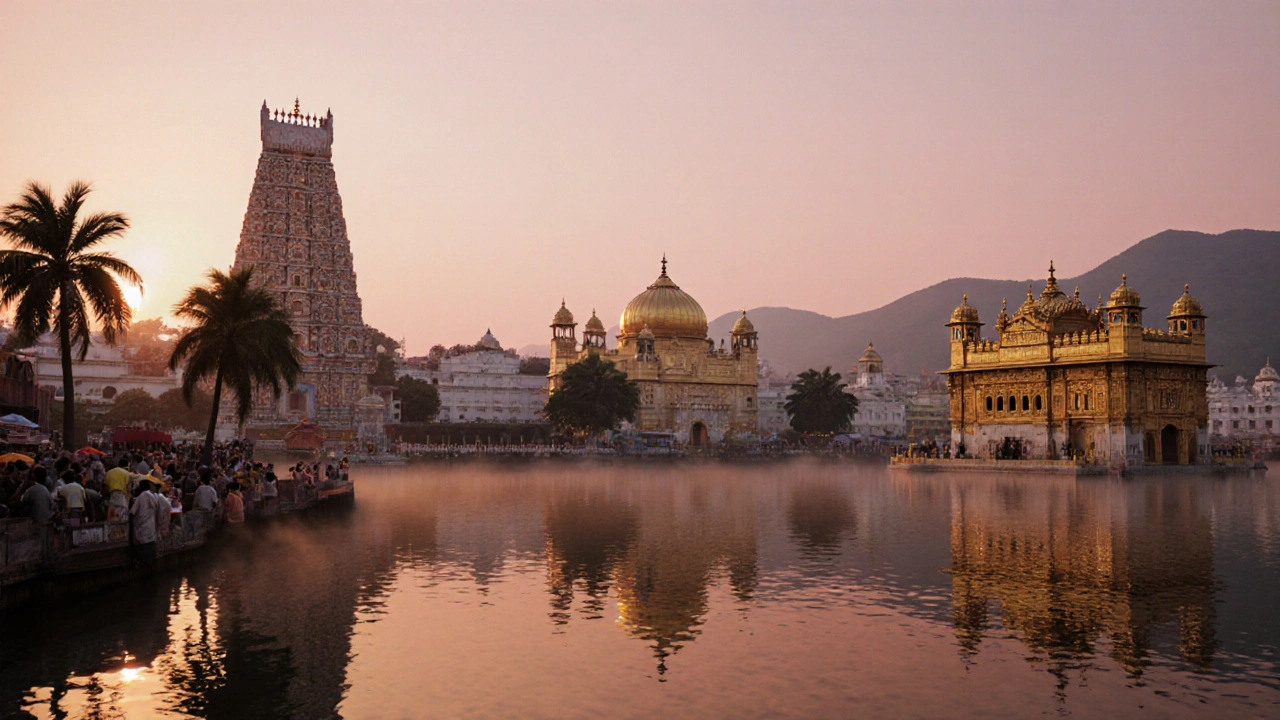
Discover India's Most Beautiful Temples: A Traveler's Guide
Explore India's most beautiful temples with practical travel tips, etiquette, and a comparison guide to plan an unforgettable pilgrimage.