Indian Culinary Traditions: Flavors, Festivals, and Family Recipes That Define India
When you think of Indian culinary traditions, the deep-rooted food practices shaped by religion, region, and family over thousands of years. Also known as Indian food culture, it’s not just about spices—it’s about ritual, rhythm, and resilience. Every bite carries history: the way rice is steamed in banana leaves in Kerala, the slow-cooked curries of Awadh that simmer for hours, or the daily offering of prasad in temples across the country. This isn’t cuisine you find in a cookbook—it’s alive in the hands of grandmothers, the smoke of tandoors, and the morning chants of temple cooks.
These traditions don’t stop at taste—they’re tied to regional Indian cuisine, how food changes from village to village, state to state, with no single "Indian" flavor. Also known as local Indian food, it’s what makes a Chettinad pepper curry so different from a Punjabi butter chicken, or a Bengali fish curry from a Gujarati dhokla. Each region has its own rules: no onions or garlic in some temple kitchens, fasting foods during Navratri, or the strict vegetarianism of Jain households. Even the way you eat matters—right hand only, no plates in some homes, eating with your fingers to feel the texture of the food. Then there’s traditional Indian dishes, the recipes that survive because they’re loved, not because they’re trendy. Also known as home-cooked Indian meals, these are the dal tadkas your mother made, the pickles your aunt jars every summer, the khichdi served when you’re sick. They’re not on Instagram—they’re in the corners of kitchens, passed down without written instructions. And let’s not forget Indian street food, the heartbeat of daily life in cities and towns, where safety, flavor, and speed meet. Also known as chaat culture, it’s the crispy samosas from a cart that’s been there for 40 years, the masala chai brewed fresh every morning, the pani puri that bursts with tang and spice in one bite. This is where tourists eat safely—because if a stall has a line, it’s because the food turns fast and the oil is hot.
What you’ll find in the posts below isn’t a list of recipes. It’s proof that Indian food isn’t monolithic—it’s personal. You’ll read how Americans navigate North Indian meals without getting sick, why South India’s food travels by train and boat, and how temple offerings connect to daily eating habits. You’ll see how food ties into festivals, travel, and even beauty standards. There’s no grand theory here—just real stories from real kitchens. Whether you’re planning a trip, curious about what to eat, or just want to understand why Indian food feels so different, this collection gives you the truth behind the spices.
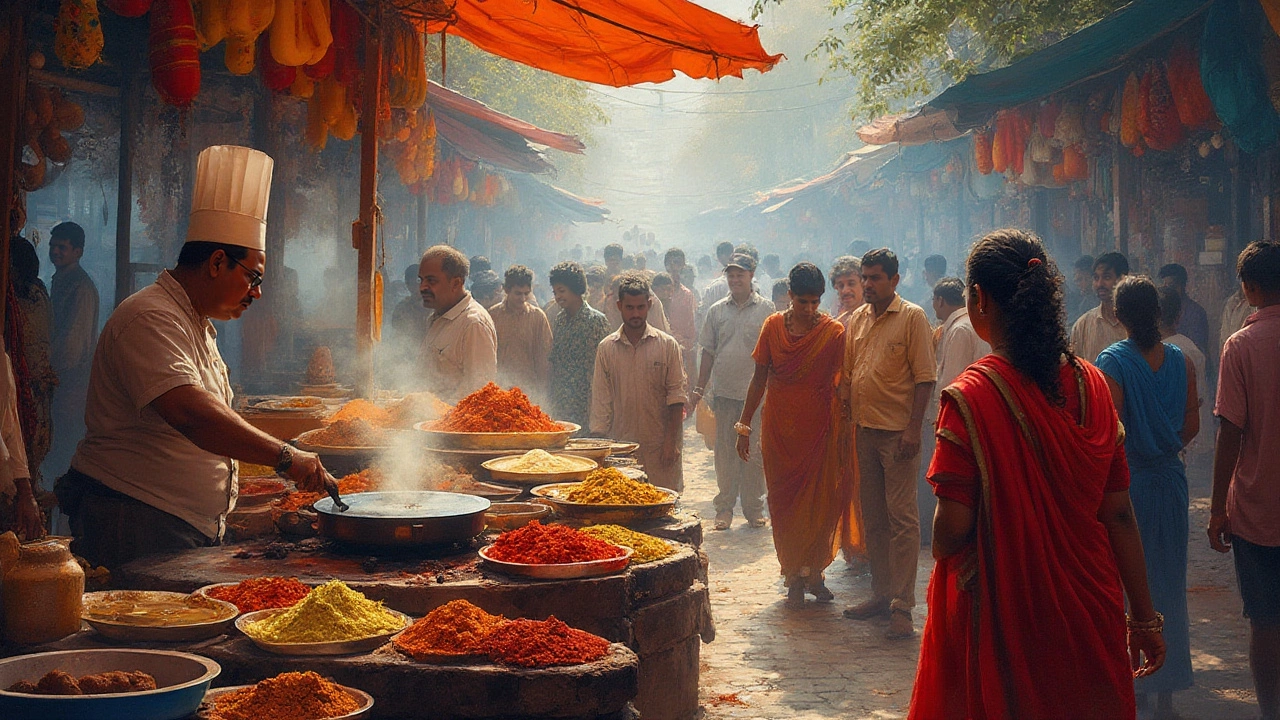
Discovering the Flavors: South Indian vs North Indian Cuisine
Indian cuisine is a vibrant tapestry of flavors, aromas, and spices. This article explores the unique characteristics of South and North Indian food, showcasing the traditional dishes and culinary differences between these two regions. By understanding the ingredients and cooking styles, travelers can embark on an exciting gastronomic journey through India.