Bihar Heritage: Discover India's Forgotten Crown of Culture and History
When you think of Bihar heritage, the deep-rooted cultural and spiritual legacy of India’s eastern heartland, centered on ancient cities like Patna, Rajgir, and Bodh Gaya. Also known as the cradle of Indian civilization, it’s where empires rose, religions were born, and knowledge was preserved long before modern cities took shape. This isn’t just another region on the map—it’s where Siddhartha Gautama attained enlightenment under the Bodhi tree, where the Mauryan Empire ruled one of the world’s largest territories, and where centuries-old temples still echo with daily prayers.
Bihar heritage isn’t defined by flashy resorts or crowded tourist traps. It’s in the quiet corners of Nalanda’s ruins, where scholars from China, Persia, and Central Asia once studied philosophy and astronomy. It’s in the towering walls of the Mahabodhi Temple in Bodh Gaya, a UNESCO World Heritage Site, a sacred Buddhist pilgrimage destination recognized globally for its spiritual and architectural significance. It’s in the stone carvings of Rajgir’s ancient fort, built by kings who shaped early Indian politics. And it’s in the simple rituals of villagers in Gaya, where families still perform ancestral rites by the banks of the Falgu River—just as they have for over 2,000 years.
What makes Bihar heritage different? It’s the absence of noise. No loud advertisements. No overpriced souvenirs. Just raw, living history. You won’t find crowds here like you do in Jaipur or Varanasi—but you’ll find authenticity. The temples of Bihar aren’t just buildings; they’re time capsules. The Mauryan Empire, the first major Indian empire, founded by Chandragupta Maurya and expanded by Ashoka, whose edicts still mark roads and rocks across the state, left behind pillars that survived wars, weather, and centuries. Ashoka’s rock edicts in Lauriya-Nandangarh? Still readable. His lion capital? Now India’s national emblem.
People overlook Bihar because it doesn’t market itself like other states. But if you want to feel the pulse of ancient India—where Buddhism and Jainism took root, where the first universities were built, where the idea of non-violence changed the world—you come here. You walk the same paths as pilgrims from Tibet, Thailand, and Sri Lanka. You sit where monks once debated logic and ethics. You taste the same dal-bhat that fed emperors and peasants alike.
What you’ll find in the posts below isn’t a list of must-see spots. It’s a deeper look at what makes Bihar’s past alive today. You’ll read about the temples that still draw millions, the forgotten ruins that tell stories no textbook can, and the traditions that survive despite modern neglect. You’ll learn why this region, often ignored, holds the keys to understanding India’s soul.
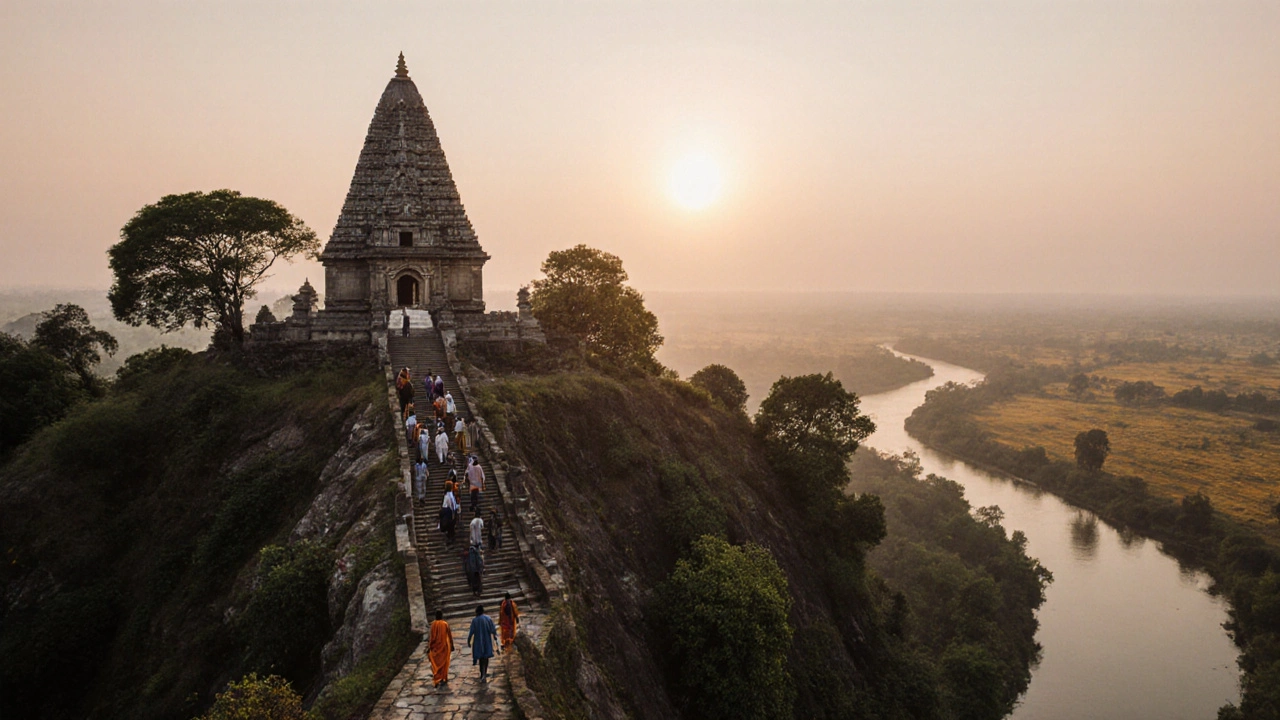
Mundeshwari Temple: India's 10,000‑Year‑Old Ancient Shrine
Discover the mystery of India's 10,000‑year‑old temple. Learn about Mundeshwari Temple’s legends, archaeology, architecture, travel tips, and how it compares to other ancient shrines.