Ancient Indian Caves: Hidden Sacred Sites and Rock-Hewn History
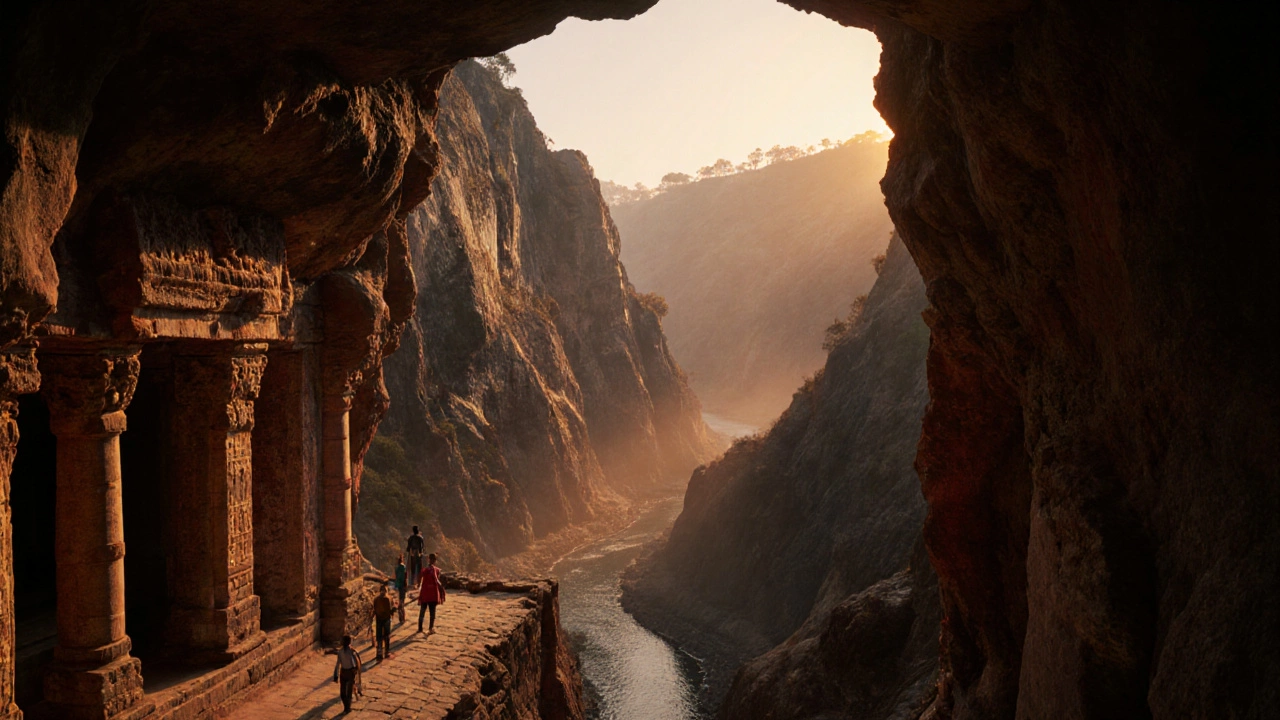
When you think of India’s ancient past, temples and palaces come to mind—but some of its most powerful stories are carved into stone. Ancient Indian caves, rock-cut sanctuaries carved by hand over centuries, serving as monasteries, temples, and places of meditation. Also known as rock-cut architecture, these caves are not just relics—they’re living records of spiritual life, artistic skill, and quiet endurance. Unlike built structures that crumble or get rebuilt, these caves were shaped from solid rock and have survived wars, weather, and time.
Some of the most famous are the Ajanta Caves, a series of 30 Buddhist caves in Maharashtra, filled with murals that show the life of the Buddha in vivid, fading colors. Then there’s the Ellora Caves, a UNESCO site where Hindu, Buddhist, and Jain temples sit side by side, carved from the same cliff face. The Kailasa Temple at Ellora? It’s a single mountain turned upside down into a temple complex—no bricks, no mortar, just chisels and sweat. These aren’t just tourist spots; they’re proof that ancient Indian builders didn’t just construct buildings—they sculpted sacred spaces into the earth itself.
What makes these caves different from temples you walk into? They’re quiet. They’re dark. You have to go deep—sometimes hundreds of feet into the rock—to reach them. The monks who lived here didn’t need grand courtyards or golden domes. They needed silence, shadow, and stone. And the art? It wasn’t for show. Murals of dancers and gods were meant to guide meditation. Carvings of lotus flowers and elephants weren’t decoration—they were symbols of enlightenment and strength.
You won’t find crowds here like you do at the Taj Mahal. But if you’ve ever wondered how people lived, prayed, and created beauty without modern tools, these caves answer that. They’re not just old. They’re alive with intention.
Below, you’ll find real stories from travelers who’ve walked these tunnels, seen the faded frescoes, and felt the weight of centuries in the stillness. Whether you’re planning a trip to Maharashtra or just curious about India’s hidden past, these posts will show you what’s really there—not just what’s written in guidebooks.
India’s Oldest UNESCO World Heritage Site: The Ajanta Caves Explained
Discover why Ajanta Caves hold the title of India's oldest UNESCO World Heritage Site, explore its history, compare it with other 1983 sites, and get practical travel tips.