Is Amtrak Faster Than a Car? Real Travel Times Compared
Amtrak vs. Car Travel Time Calculator
Compare Your Journey
See how long it takes to travel between popular US cities by Amtrak vs. car. Based on real data from the article.
When you’re planning a cross-country trip, the question isn’t just Amtrak faster than a car? It’s: Which one actually gets you there with less stress, more comfort, and real time saved? For many, the answer isn’t obvious. You see a train gliding past on the tracks and assume it’s speeding ahead. But when you’re stuck in traffic on I-80 or I-95, you wonder if renting a car might’ve been smarter.
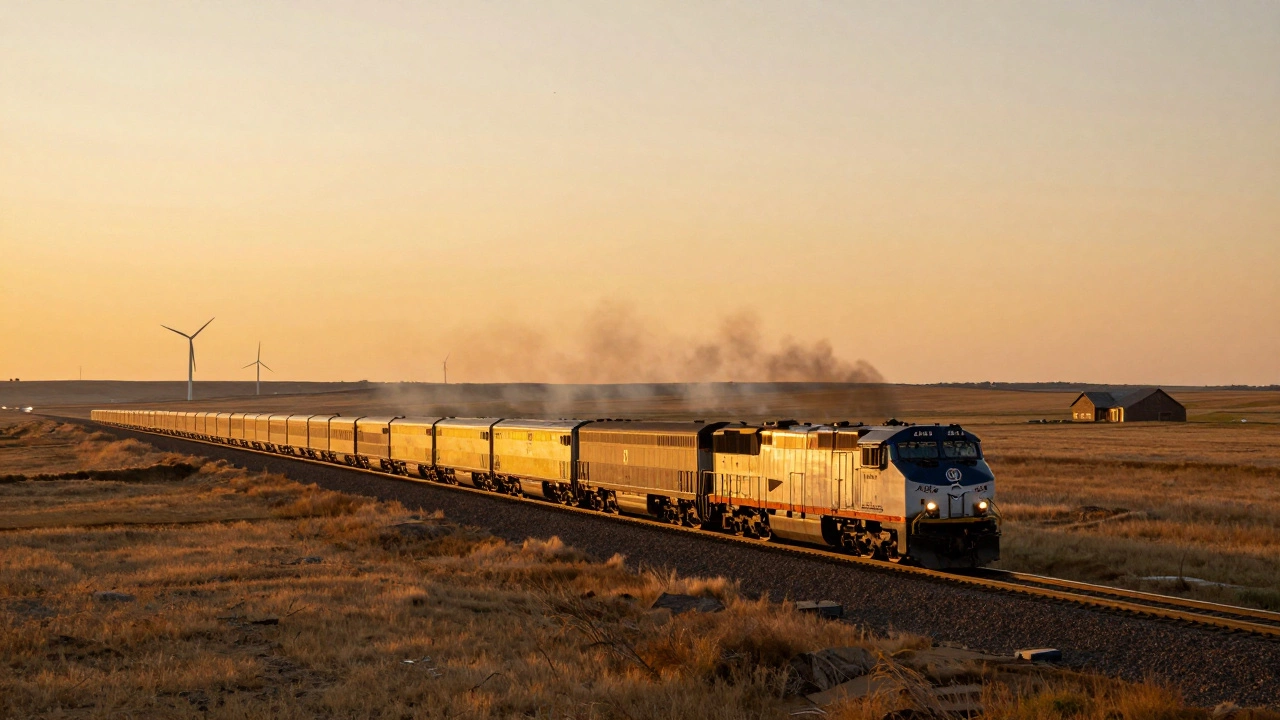
Let’s cut through the noise. Amtrak isn’t designed to be a bullet train. It’s a passenger rail system built on century-old tracks, shared with freight trains, and often delayed by weather, track maintenance, or signal issues. The average speed of an Amtrak train across the U.S. is about 50-60 mph. That sounds fast-until you realize that’s an average. On long stretches, especially in rural areas, trains crawl at 30 mph. In cities, they stop every 20-40 miles. A direct drive from Chicago to New York? About 790 miles. By car, at legal highway speeds with minimal stops, you can do it in 12-13 hours. By Amtrak’s Lake Shore Limited? It takes 19-20 hours.
That’s not a typo. You’re spending 7 extra hours on the train. Why? Because Amtrak doesn’t own most of the tracks it runs on. Freight companies prioritize their cargo. If a 100-car coal train needs to pass, your 10-car passenger train waits. There’s no bypass. No express lane. Just a polite wait while the system moves tons of goods, not people.
Now, let’s talk about door-to-door time. If you drive, you leave your driveway at 8 a.m. and pull into your hotel parking at 8 p.m. That’s 12 hours. If you take Amtrak, you need to get to the station 30-45 minutes early. The train might be late. Then you wait another 20 minutes to collect your bags. Then you need a taxi or ride-share to your final destination. Add 45 minutes on each end. Now you’re looking at 20 hours of travel time versus 12. That’s a 67% increase in total time.
But here’s the twist: sometimes, Amtrak wins.
Take the Northeast Corridor-Boston to Washington D.C. That’s 450 miles. By car, it’s 6-7 hours, but only if you avoid rush hour, construction, or a multi-car pileup on I-95. On Amtrak’s Acela, the same trip takes 6 hours 40 minutes. And you don’t have to drive. You can work, nap, eat, or watch a movie. No traffic. No gas stops. No bathroom lines at rest stops. You get to your destination relaxed, not tense. That’s not speed-it’s efficiency.
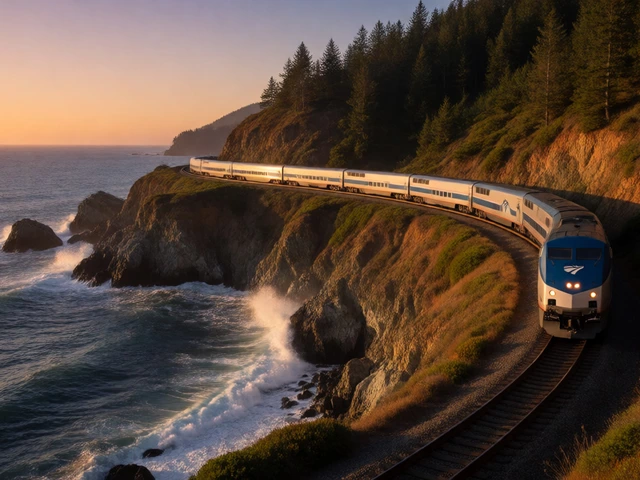
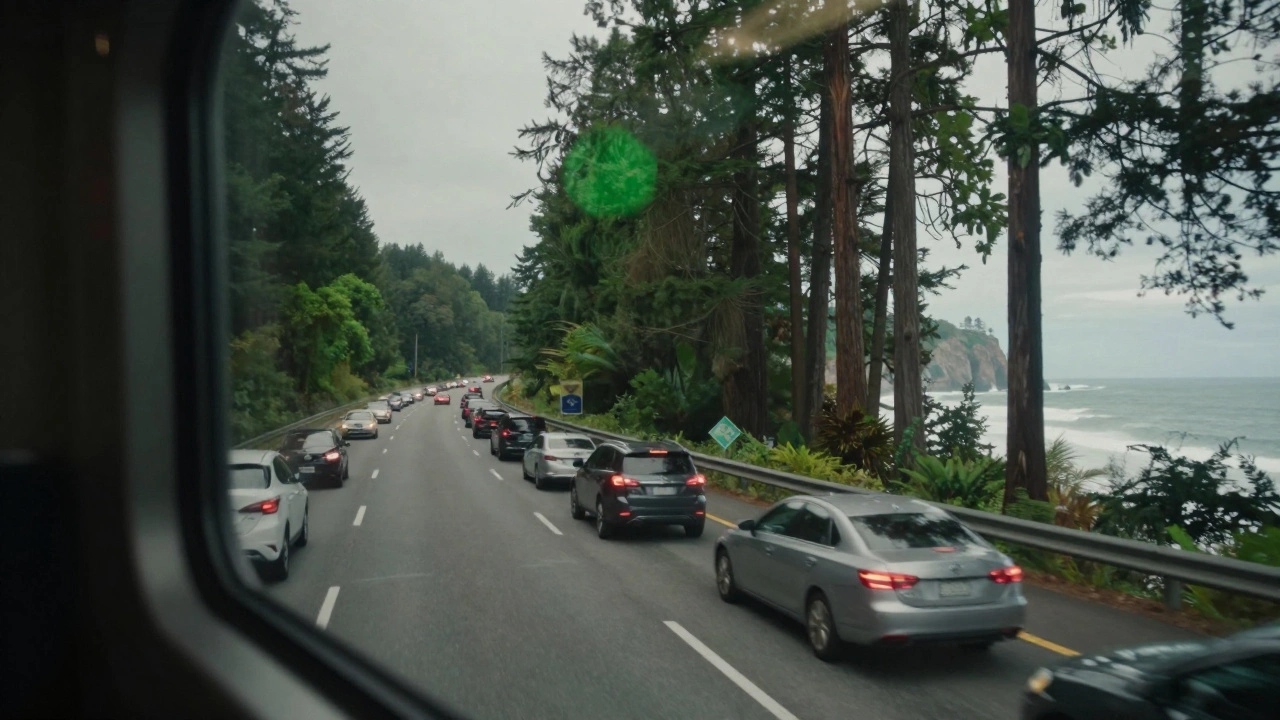
Another example: San Francisco to Los Angeles. Driving is about 6 hours. Amtrak’s Coast Starlight? 10 hours. But the scenery? Unmatched. You pass through vineyards, redwoods, and the Pacific coastline. You don’t see any of that behind the wheel. You’re staring at taillights. The train doesn’t just move you-it transforms the journey.
And then there’s the cost factor. Gas prices in 2025 are still volatile. Parking in Manhattan or downtown Chicago? $50-$80 a day. Tolls on the Pennsylvania Turnpike? $30 round trip. Add in wear and tear on your car-oil changes, tire wear, brake pads-and suddenly your $200 gas bill turns into a $400 trip. Amtrak’s coach ticket? $110-$150 for the same route. First class? $250-$300. You get a seat that reclines, a table, complimentary snacks, and Wi-Fi. No hidden fees.
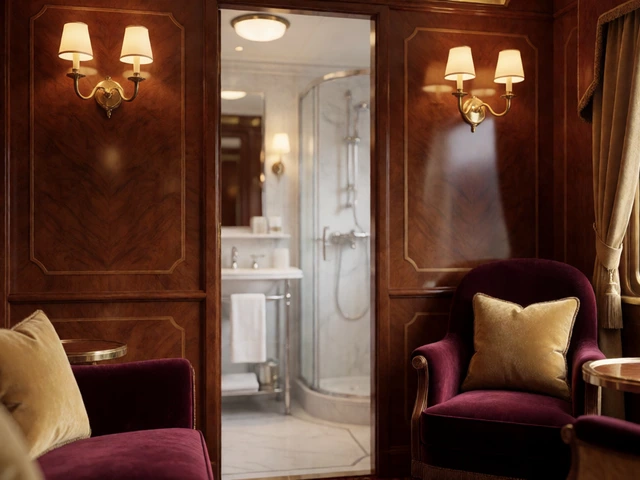
Let’s talk about the luxury angle. If you’re on one of Amtrak’s premium routes-the California Zephyr, the Empire Builder, or the Sunset Limited-you’re not just riding a train. You’re in a private room with a bed, a private bathroom, meals included, and floor-to-ceiling windows. You wake up in the Rockies. You eat dinner as the sun sets over the desert. You don’t need to stop. You don’t need to plan. You just drift. That’s not about speed. It’s about experience. And that’s why people pay $800 for a roomette on the Coast Starlight.
Here’s the truth: Amtrak isn’t faster than a car on most routes. But it doesn’t need to be. It’s not trying to beat you in a race. It’s offering something else: space, peace, and perspective. If your goal is to get from A to B as quickly as possible, drive. If your goal is to arrive feeling like you’ve already had a vacation, take the train.
There’s also the environmental math. A single Amtrak passenger emits about 70% less CO2 than a solo driver on the same route. That’s not just good for the planet-it’s good for your conscience. And in 2025, more travelers are factoring that in.
So, is Amtrak faster than a car? In raw minutes? Almost never. But in value? Sometimes, yes.
When Amtrak Actually Beats Driving
- Between major Northeast Corridor cities: Boston, New York, Philadelphia, Washington D.C.
- If you’re traveling with kids or elderly passengers-no driving fatigue.
- If you’re carrying bulky luggage (think ski gear, musical instruments, or gifts).
- If you want to work or read without distraction.
- If you’re traveling solo and don’t want to be alone in a car for hours.
When Driving Is the Clear Winner
- Traveling to rural areas with no train station nearby.
- Need to make multiple stops (grocery runs, detours, sightseeing).
- On a tight schedule-you can’t afford a 2-hour delay.
- Traveling with pets-Amtrak allows only small service animals.
- Going to a destination without a nearby station-last-mile transport adds hours.
Real-Time Comparison: Chicago to Seattle
| Factor | Amtrak (Empire Builder) | Driving |
|---|---|---|
| Distance | 2,000 miles | 2,000 miles |
| Travel Time | 45 hours | 30 hours |
| Stops | 18 stations | 4-5 rest stops |
| Scenery | Great Plains, Rockies, Cascade Mountains | Highway views, limited |
| Cost (Coach) | $180-$250 | $250-$350 (gas, tolls, parking) |
| Comfort | Reclining seats, dining car, sleeper options | Car seat, limited legroom |
Notice something? The train takes 50% longer. But it costs less. And you don’t have to drive. You don’t have to find a hotel every night. You just sleep, eat, and watch the world go by.
What Most People Miss About Amtrak
It’s not about the speed. It’s about the rhythm. Driving is linear: gas, brake, turn, repeat. Trains are cyclical: board, sit, eat, sleep, wake, repeat. That rhythm changes how you experience distance. You stop thinking about arrival. You start thinking about the journey.
On Amtrak, you meet people. The retiree from Montana who’s seen every state by rail. The college student heading home for winter break with a backpack full of books. The couple celebrating their 25th anniversary with a roomette and a bottle of wine. These aren’t just passengers. They’re part of the story.
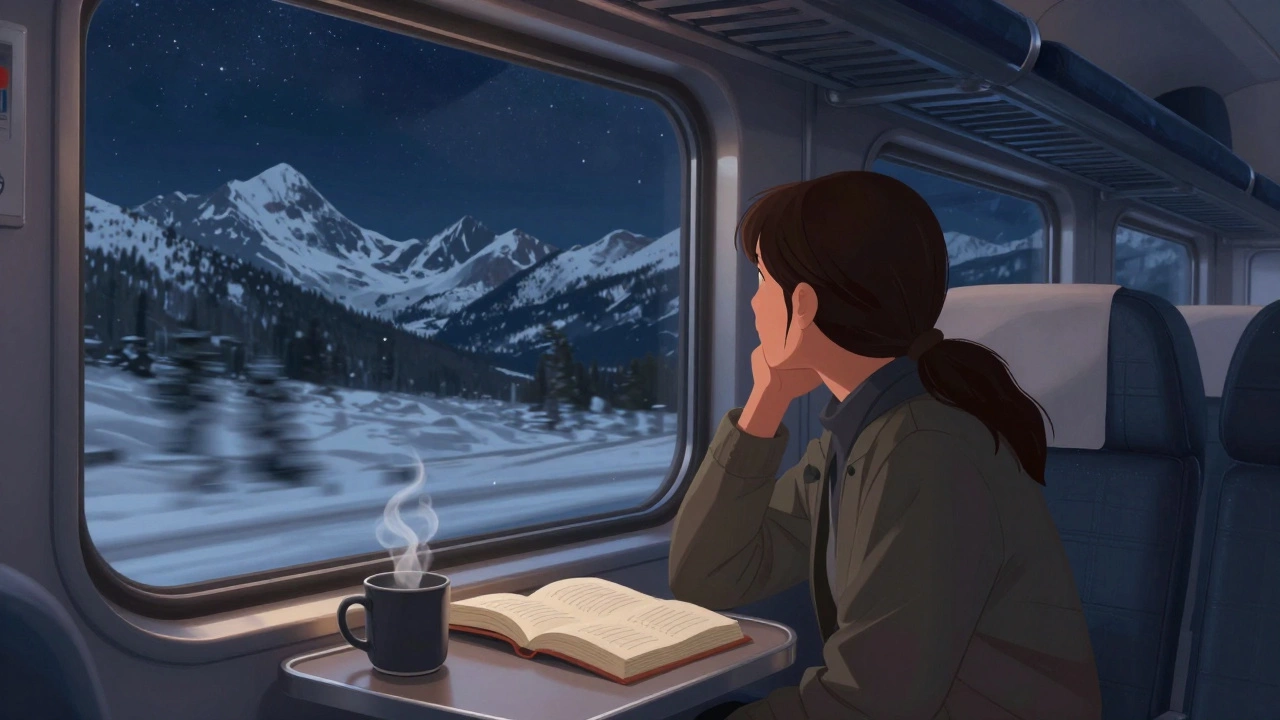
And the views? No car window can match the wide, uninterrupted panorama of a train. You don’t just see the Grand Canyon-you feel it. You watch the sun rise over the Rockies without turning your head. You don’t need to pause for photos. The train slows down just enough.
Bottom Line: Speed Isn’t Everything
If you’re measuring Amtrak against a car on pure speed, you’re missing the point. The car wins the race. But the train wins the trip.
Amtrak won’t get you there faster. But it might get you there better.
Is Amtrak faster than driving between major U.S. cities?
Only on the Northeast Corridor-Boston to Washington D.C.-does Amtrak’s Acela match or beat driving time. For nearly every other route, driving is faster. But Amtrak offers more comfort, no traffic, and no parking hassles.
Why is Amtrak so slow compared to trains in Europe or Japan?
The U.S. rail system was built for freight, not passengers. Most tracks are owned by freight companies that prioritize cargo. Passenger trains get priority only on a few corridors. In contrast, countries like Japan and France own their tracks and design them for high-speed passenger service. Amtrak is working on upgrades, but progress is slow and underfunded.
Can I bring a car on Amtrak?
No, Amtrak doesn’t transport private vehicles. But if you’re traveling long-distance and want to avoid driving the whole way, you can rent a car at your destination. Some stations have rental agencies on-site.
Is Amtrak safe for solo travelers?
Yes. Amtrak has a strong safety record. Stations are staffed, trains are monitored, and crew members patrol regularly. Solo travelers often find the environment more welcoming than airports or bus stations. Sleeping cars have locked doors and attendants who check in overnight.
What’s the best Amtrak route for scenic views?
The California Zephyr (Chicago to San Francisco) and the Coast Starlight (Seattle to Los Angeles) are top picks. Both pass through mountains, deserts, forests, and coastlines. The Empire Builder (Chicago to Seattle) offers sweeping plains and glacier views. Book a roomette with a window seat for the full experience.
Next Steps: Should You Take the Train?
Ask yourself: Do you value time or experience more?
If you’re a business traveler with a packed schedule, drive. If you’re a photographer, a writer, or someone who wants to slow down, take the train. If you’re tired of the same highways, the same gas stations, the same silence-Amtrak offers something different. Not speed. But stillness. Stillness you can’t buy.

About Author

Popular Posts