Best Mountain to Climb for a Beginner in India
Beginner Trek Selector
Find Your Perfect First Mountain
Are you a complete beginner to mountain trekking?
If you’ve never climbed a mountain before but want to try something real - not just a hike in the park - India has more than enough options to get you started. You don’t need to be an athlete or have gear from a mountaineering catalog. What you need is the right mountain: not too steep, not too high, with clear trails and reliable weather. The best beginner mountain in India isn’t the tallest, and it’s not the most famous. It’s the one that welcomes you without breaking you.
Why Start with the Right Mountain?
Climbing a mountain for the first time isn’t like running a 5K. It’s slower. It’s more unpredictable. One wrong choice - a trail that’s too high, too technical, or too exposed - can turn excitement into fear. Many beginners try Everest Base Camp or Kedarnath first because they’ve heard the names. But those aren’t beginner trails. They’re long, high-altitude treks with steep sections, thin air, and crowded routes. You’ll be exhausted before you even see the view.
The goal isn’t to reach the summit as fast as possible. It’s to feel strong, safe, and proud when you get there. That’s why the best beginner mountain in India is one that gives you altitude without altitude sickness, views without exposure, and challenge without danger.
Kuari Pass: The Perfect First Mountain
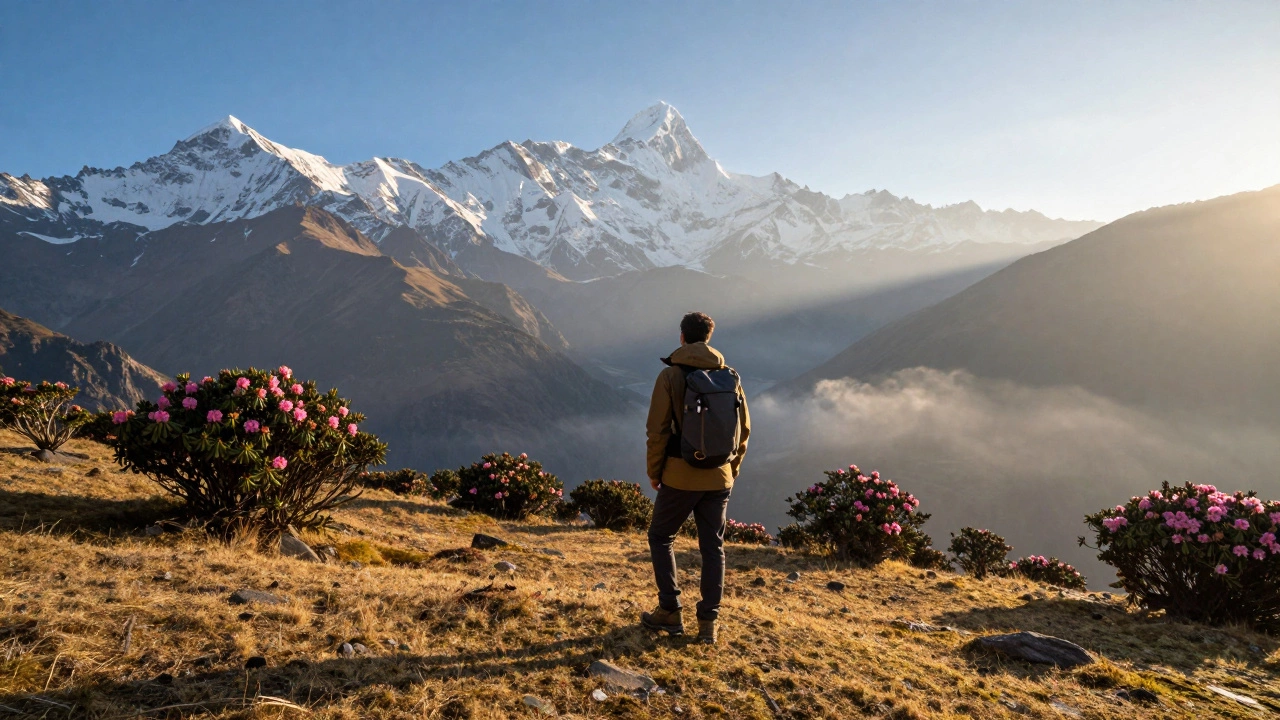
Kuari Pass, in Uttarakhand, is the most balanced option for first-time climbers. At 3,900 meters (12,800 feet), it’s high enough to feel like you’ve climbed a mountain, but low enough that most people don’t get altitude sickness. The trail is well-marked, mostly gradual, and passes through quiet villages, rhododendron forests, and open meadows with 360-degree views of peaks like Nanda Devi, Dunagiri, and Kamet.
The full trek takes four days, with a total elevation gain of about 1,200 meters. That’s less than half of what you’d face on a typical Himalayan trek. You sleep in basic guesthouses or camps, and you don’t need oxygen tanks or special gear. A good pair of hiking boots, a warm jacket, and a daypack are enough. The trail is used by locals, school groups, and foreign trekkers alike - so you’re never truly alone.
Best time to go: late March to early June, or late September to early December. Snow is rare in spring, and the skies are clear in autumn. Avoid monsoon season (July-August) - the trails turn muddy and slippery.
Indrahar Pass: A Step Up, Still Beginner-Friendly
If Kuari Pass feels too easy after your first try, Indrahar Pass is the next natural step. Located in the Dhauladhar Range near Dharamshala, this 4,342-meter (14,245-foot) pass is a bit longer - five days round trip - but still manageable for someone with decent fitness.
What makes Indrahar special is the variety. You walk through pine forests, cross alpine meadows filled with wildflowers, and pass by small temples and shepherd huts. The final ascent is steep, but short - just 90 minutes from the last camp. The reward? A panoramic view of the Kangra Valley and snow-capped peaks stretching to the north. On a clear day, you can even see Mount Fuji-shaped peaks like Hanuman Tibba.
Unlike Kuari, Indrahar is less crowded. You’ll likely share the trail with just a few other groups. That means quieter nights and more space to breathe. The trail is well-maintained by local trekking associations, and guides are easy to find in McLeod Ganj if you want company.
What to Avoid as a Beginner
There are mountains in India that look tempting but aren’t safe for first-timers. Here’s what to skip:
- Everest Base Camp (Nepal): Too long (12+ days), too high (5,364m), and too crowded. Not a beginner trek.
- Kedarnath: Steep stone stairs, high altitude (3,583m), and unpredictable weather. Even experienced trekkers get caught in sudden snow.
- Roopkund: Famous for the skeleton lake, but the trail is rocky, exposed, and requires scrambling. Not for beginners.
- Hampta Pass: Beautiful, but the descent is steep and loose. Better after you’ve done one or two easier treks.
These aren’t bad mountains. They’re just not the right starting point. Treat your first climb like learning to swim - don’t jump into the deep end.
What Gear Do You Really Need?
You don’t need to spend $1,000 on gear. Here’s the real list:
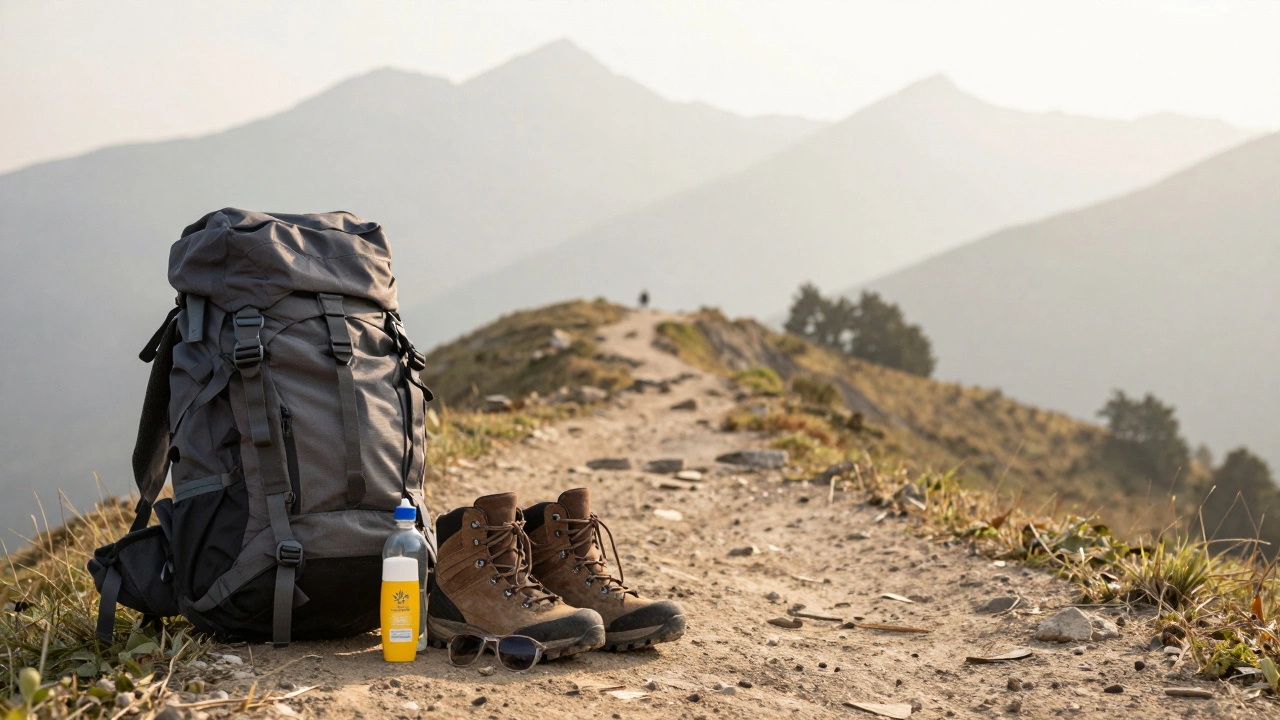
- Hiking boots: Broken in, waterproof, with good grip. No new boots on the trail.
- Layered clothing: Base layer (merino wool), fleece, and a windproof outer shell. Temperatures drop fast after sunset.
- Backpack (30-40L): With a rain cover. You’ll carry your own water, snacks, and jacket.
- Water bottle or hydration bladder: At least 2 liters. Water sources are available, but you’ll pay for filtered water at camps.
- Sunscreen and sunglasses: UV rays are stronger at altitude. Even on cloudy days, you can burn quickly.
- Headlamp: Most treks start early to avoid afternoon clouds. You’ll need light for morning walks.
That’s it. No crampons. No ice axes. No satellite phones. If you’re trekking with a group, they’ll usually carry a first-aid kit and extra oxygen. Just pack smart, not heavy.
How to Prepare Physically
You don’t need to train like a soldier, but you should be able to walk for 5-6 hours straight with a light pack. Start four to six weeks before your trip:
- Walk 30-45 minutes daily, preferably on hills or stairs.
- Do squats and lunges twice a week to strengthen your legs.
- Practice breathing slowly - inhale through your nose, exhale through your mouth. This helps at altitude.
- Drink more water than usual. Dehydration worsens altitude sickness.
On the trail, take breaks. Walk slow. Talk to your guide. If your head hurts, your stomach feels off, or you’re dizzy, tell someone. Altitude sickness is real - but it’s preventable if you listen to your body.
Why These Mountains Work for Beginners
Kuari Pass and Indrahar Pass share key traits that make them beginner-friendly:
- Altitude: Below 4,500 meters - low enough to avoid severe altitude sickness.
- Trail quality: Marked, maintained, and not technical. No ropes or ladders.
- Support: Local guesthouses, guides, and food available along the route.
- Weather: Predictable in spring and autumn. No monsoon or blizzards.
- Views: Immediate payoff. You don’t have to walk for days to see something amazing.
These aren’t just trails. They’re experiences that build confidence. After Kuari Pass, you’ll know you can handle a mountain. After Indrahar, you’ll start thinking about your next one.
Final Tip: Go With a Group or Guide
Even if you’re confident, go with a local guide or small group. They know the trail, the weather, and the safest campsites. Companies like India Hikes and Go Trekking offer beginner-specific treks with fixed departure dates, gear checks, and trained staff. You pay a bit more, but you save time, stress, and risk.
And remember - the goal isn’t to conquer the mountain. It’s to fall in love with the climb.
Can a complete beginner climb a mountain in India?
Yes, absolutely. Mountains like Kuari Pass and Indrahar Pass are designed for people with no prior experience. You don’t need special skills - just good walking fitness and the right gear. Many first-timers complete these treks without any issues.
What’s the easiest mountain to climb in India?
Kuari Pass is widely considered the easiest and most rewarding first mountain in India. It’s not the shortest, but it’s the most forgiving. The trail is gentle, the altitude is manageable, and the views are unforgettable. It’s the perfect introduction to Himalayan trekking.
Do I need a permit to climb Kuari Pass?
Yes, you need a permit, but your trekking operator will handle it. The permit is free for Indian citizens and costs around ₹500 for foreigners. It’s part of the standard booking process with registered guides or tour companies.
Is it safe to climb alone as a beginner?
It’s not recommended. Even experienced trekkers avoid solo climbs in the Himalayas due to sudden weather changes and remote terrain. Stick with a group or guide. You’ll learn more, stay safer, and enjoy the experience more.
How long does it take to climb Kuari Pass?
The standard trek takes four days: Day 1 is the approach to Ghat, Day 2 is the ascent to Kuari Pass, Day 3 is the descent to Auli, and Day 4 is the return to Joshimath. Most people walk 5-7 hours per day. It’s doable for anyone who walks regularly.

About Author